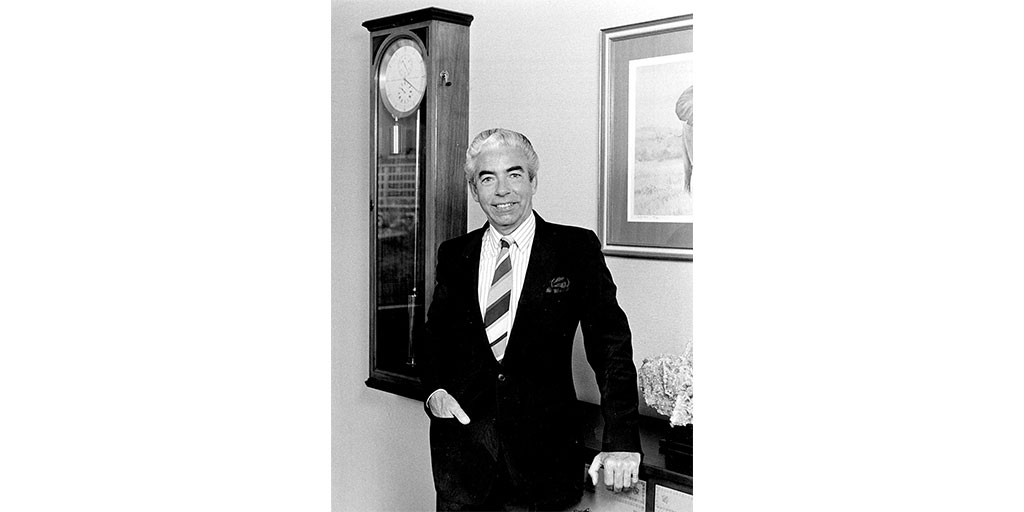
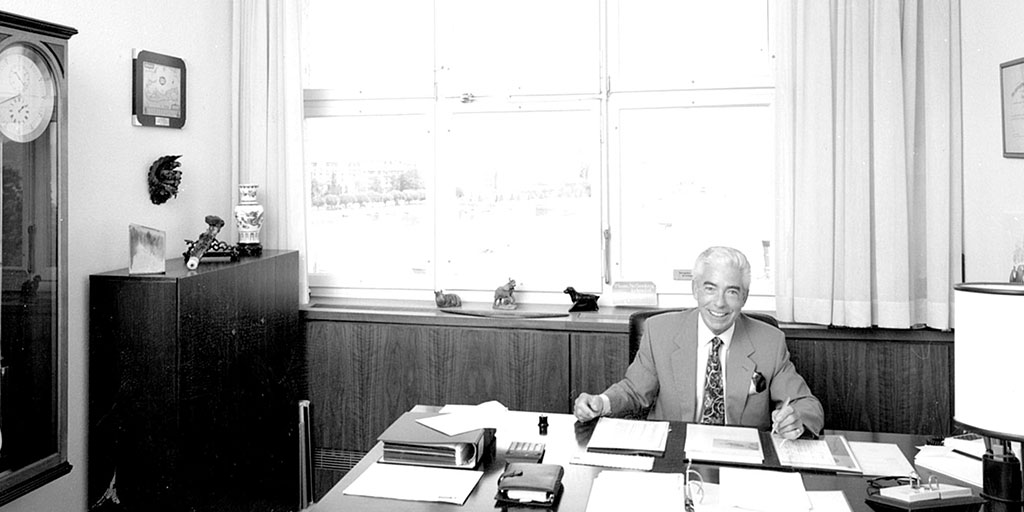
From the moment he arrived on Rue du Rhône, Alan Banbery found himself at a crossroads inside Patek Philippe. He had one foot in the workshop and one in the commercial world, and his fluent English gave him a natural role in the company’s dealings with North America and other English-speaking markets.
What follows in Part II, is Patek Philippe’s story as he tells it: a series of episodes that show how a watchmaker became a key interpreter of the brand’s modern history.
Trial by Fire in Montreal and New York
To begin with, Alan was learning the Patek Philippe ropes in general, “Throw him in the deep end and see what happens” as Alan describes this time. However, things quickly changed in 1966, Thomas H. “Tommy” Graf, head of the commercial department and married to Philippe Stern’s elder sister, had a serious riding accident and suffered a concussion. Tommy, like his father-in-law, Henri Stern, was a keen equestrian. (As an aside, Alan Banbery, also an accomplished rider from his days in the military, would ride Henri Stern’s stallion, Lucky, when Stern was traveling). Graf had been scheduled to lead a Patek Philippe exhibition at Birks in Montreal.
Because Alan spoke English, he was abruptly told to take Graf’s place. It was his first trip outside Europe and his first major responsibility for the brand abroad.
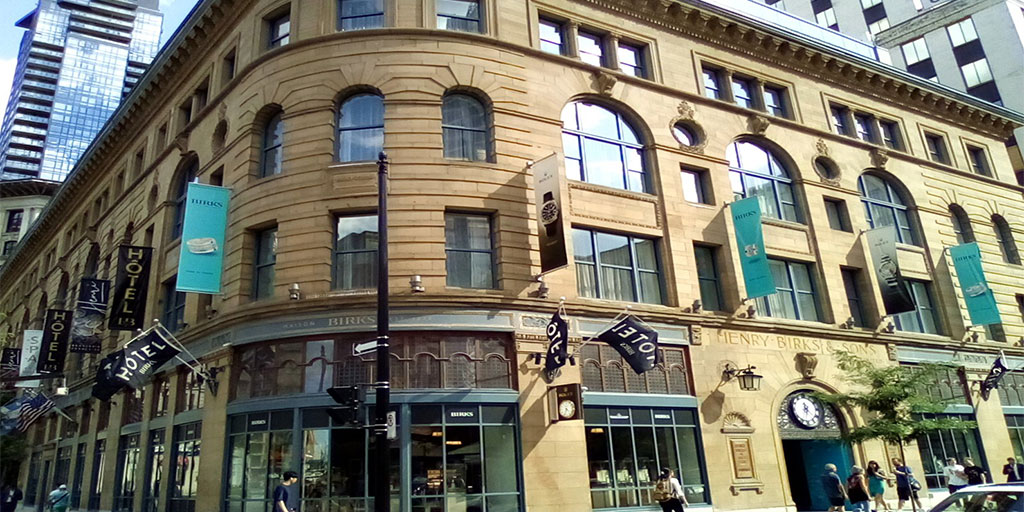
In Montreal, he met Philippe Stern for the first time. Philippe had been working in New York at the Henri Stern Watch Agency (HSWA), learning the business from the ground up, literally fitting straps with another young employee, Hank Edelman (who would later become president of HSWA). Philippe Stern visited Birks to view the exhibition that Alan was suddenly responsible for. In preparing the exhibition watches, Banbery had navigated a new administrative experiment: arranging an ATA Carnet, an international Customs document allowing valuable goods to travel temporarily for exhibitions without paying import duties. A Carnet is something we now take for granted, but on that trip in 1966, rarely had anyone transported goods of any sort that way. Customs officials were naturally curious; the process was new and intricate.
When Alan returned to Geneva, Philippe Stern accompanied him to the New York airport, where more Customs officers quizzed him about the Carnet. After clearing the timepieces and securing them at JFK Airport, he and Philippe had time to visit the nearby New York World’s Fair which was coming to an end at Flushing Meadows-Corona Park, Queens. They ended the evening in the Mexican Pavilion, sharing tequila and stories before Alan boarded the night flight to Geneva.
Alan carried the exhibition set in a custom-made case wedged between his feet and tied to his wrist for security as he slept on the overnight flight to Geneva. In retrospect, that trip was his initiation. From one day to the next, he had stepped into a new role, and into the network that linked Geneva to North America.
Reorganizing After-Sales Service
Back in Switzerland, Patek Philippe was still relatively small and informal by today’s standards. The global Patek Philippe markets were managed by five people: Tommy Graf, who preferred to stay closer to home and oversaw the Swiss market (after releasing the American market to Alan Banbery); Francis Floquet, who was responsible for France and the Middle East; Robert Daester, who in addition to Switzerland, looked after English-speaking countries in Europe such as Scandinavia, and Henri Stern who managed Asia and South America (Henri Stern first traveled to Japan in 1963; Philippe Stern would first accompany his father in 1967).

“Little by little, I picked up the vibes and the rhythm of Patek Philippe and gradually developed my career.” At the Basel Watch Fair for example, Alan immediately became “useful because of my fluent English and knowledge of watches.” Over his career, Alan attended an impressive 29 Basel Fairs. The early Fairs were very different from today – small booths with curtains for privacy between each market. “Even then, we were overwhelmed with appointments.” Everything was written by hand with only one collection of sample watches for the market directors to share. It was “confusion confounded!”, he recalls.
Having met Henri Stern during his Garrard days, Alan Banbery had a close relationship with the company President and was in the unique position of calling him ‘HS’. “One day, HS called me into his office and said, ‘Reorganize the After-Sales Service’”, remembers Alan. Until then, After-Sales had been under the direct control of the watchmaking department. The result was predictable: production work always took precedence over repairs, spare parts and customer correspondence.
Banbery’s task was delicate. He had to take responsibility away from Charles Beausire, Head of Watchmaking, without alienating him or the workshops. In March 1967 he hired Daniel Haberstitch to manage the administrative side. Together they created a structured system for receiving, documenting, repairing and redistributing watches from all over the world.
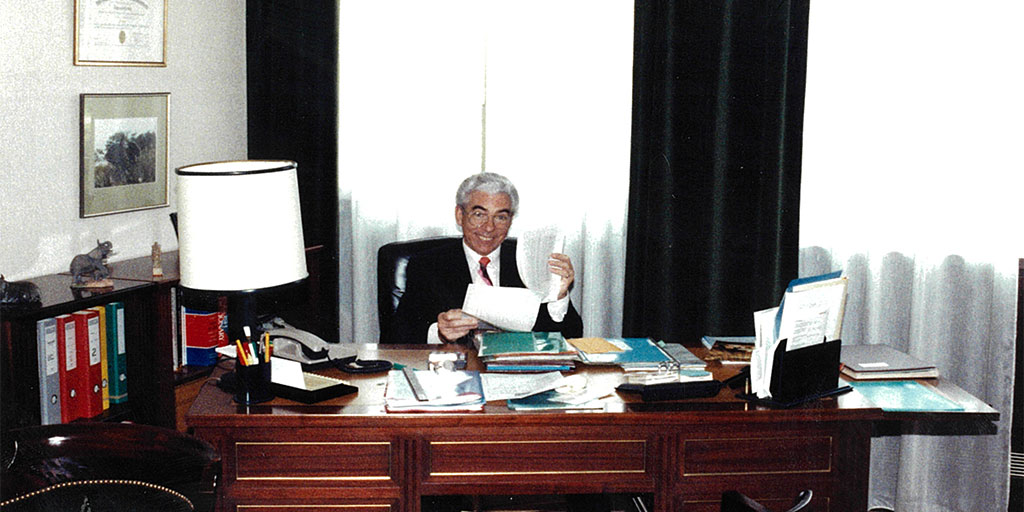
What began in cramped rooms at Rue du Rhône eventually grew into a separate operation first at La Jonction and later at Plan-les-Ouates. The principles Banbery and Haberstitch established — meticulous records, clear communication, and a long-term commitment to every watch the company made — would become one of Patek Philippe’s strongest selling points and a cornerstone of its historical memory.
Alan’s first ‘title’ was given around 1975 when he was made fondé de pouvoir or Fondé (proxy holder): a technical term referring to a corporate executive who is legally able to sign binding contracts. He was made a director around 1976.
A Global Perspective: America and Asia
Alan insists he never “ran” the U.S. market. The American operation, HSWA, under figures such as Einer Buhl, Werner Sonn and Hank Edelman, was essentially autonomous. His role was to support — smoothing allocations, organizing exhibitions, and serving as the bridge when Geneva’s approval was needed.
The pattern repeated elsewhere. He travelled frequently to Hong Kong and Singapore, working with distributors like Fairfield and Jebsen & Jesson, and later helped orchestrate the transition to Geneva Master Time (GMT) in Singapore. Shortly before 1993, as Philippe Stern prepared to succeed his father, Alan took on responsibility for Japan and accompanied Philippe Stern who formally introduced him to their Japanese distributor, Isshin Watch Group in Tokyo.
China fascinated him but remained largely closed to Western luxury brands for most of his active career. It was not until 2005, when world politics allowed, that Patek Philippe opened a boutique in Shanghai with its distribution partner the Melchers Group. This was followed by a second boutique in Beijing in 2008. In 2012, the Shanghai boutique was relocated to the larger and more exclusive Maison Patek Philippe located in what was once the British Consulate in the Bund district.
Exhibitions and the Power of History

Exhibitions have always been an important factor in Patek Philippe’s marketing and communications strategy. From its beginnings in the mid 1800s, Patek Philippe would have a presence at international exhibitions to promote its status as a prestigious watch brand. The 1851 Great Exhibition held at Crystal Palace in London was a turning point for the company. It was attended by Queen Victoria, then the most powerful and influential person in the world, who purchased a Patek Philippe pendant watch for herself and a pocket watch for her beloved husband, Prince Albert. This was a critical endorsement that confirmed Patek Philippe’s status as the watchmaker for royalty.

From the mid-1960s, retailer exhibitions became one of Banbery’s favorite marketing tools. They were commercially useful, but they also allowed him to experiment with something he felt deeply: the power of history.

Postwar America had become a critical market for Patek Philippe and Alan spearheaded bringing exhibitions to retailers: the best way to educate clients about the breadth of the company’s products and history. It was his idea to tour exhibitions with pieces from what was then a modest internal “museum collection” — historic pocket watches, early complications, royal and aristocratic commissions. As the collection of historic pieces grew, they moved out of a supporting role providing historical context, and began to star in their own narrative. Alan recalls, “The museum pieces got me on TV in the USA.” Showing vintage pieces alongside current production reinforced a message that would prove critical during the Quartz Crisis of the 1970s: Patek Philippe was not merely selling devices to tell the time, but continuing a long, coherent tradition of mechanical excellence.

These shows sometimes involved hard negotiation. For a major exhibition at Tiffany & Co. in New York, legendary chairman Walter Hoving insisted that Tiffany’s own display cases were good enough for Patek Philippe. Banbery disagreed. He wanted Patek Philippe’s own displays and security arrangements. When Hoving refused, Alan calmly replied that in that case, the exhibition could not go ahead.
Staff at Tiffany were astonished that anyone would stand up to Hoving in this way. In the end, a compromise was reached, and the watches were shown as Patek Philippe wished. The principle was clear: the brand’s past and its objects deserved the highest standards of presentation.
Patek Philippe Watch Collections and the ‘Banbery Influence’
For the first three decades of Alan Banbery’s career at Patek Philippe, the company was significantly smaller and run differently to how it is today. Working closely with the Stern family, the small commercial team located at the Rue du Rhone headquarters had an immediate influence on all types of decisions. Although the watchmakers and technicians would develop and propose new types of movements and collections, the executives could give suggestions that helped drive sales. Alan Banbery’s natural creativity, knowledge of watchmaking and the end consumer proved extremely useful and his influence on some of the most iconic watch designs can still be seen today. Below are some notable examples of the ‘Banbery Influence’.
The Golden Ellipse and a Blue Dial
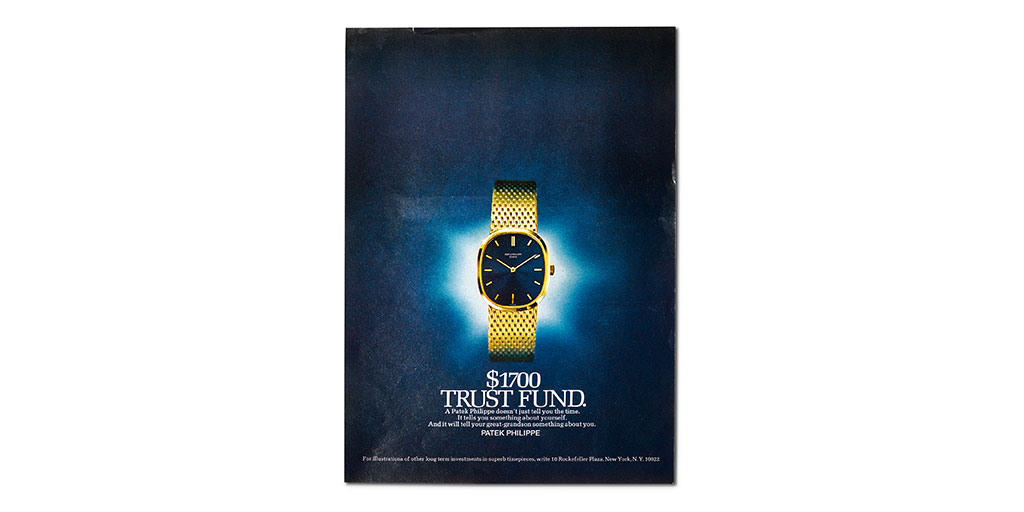
When the Golden Ellipse was first presented internally in 1968 by design chief Jean-Daniel Rubeli, Alan admits he was unconvinced by the shape. “In the field of watchmaking,” Banbery recalls, “I’m traditional and I have never liked the Ellipse design – but I freely admit that I was totally wrong! One can’t like everything.” Like some people at the time, he felt that the elliptical shape was not a classic design for a Patek Philippe watch.
The prototype had a white dial, which he felt made the watch look rather ordinary. While he never warmed personally to the Ellipse, he instantly saw how to make it more distinctive:
“Why not give it a blue dial?”
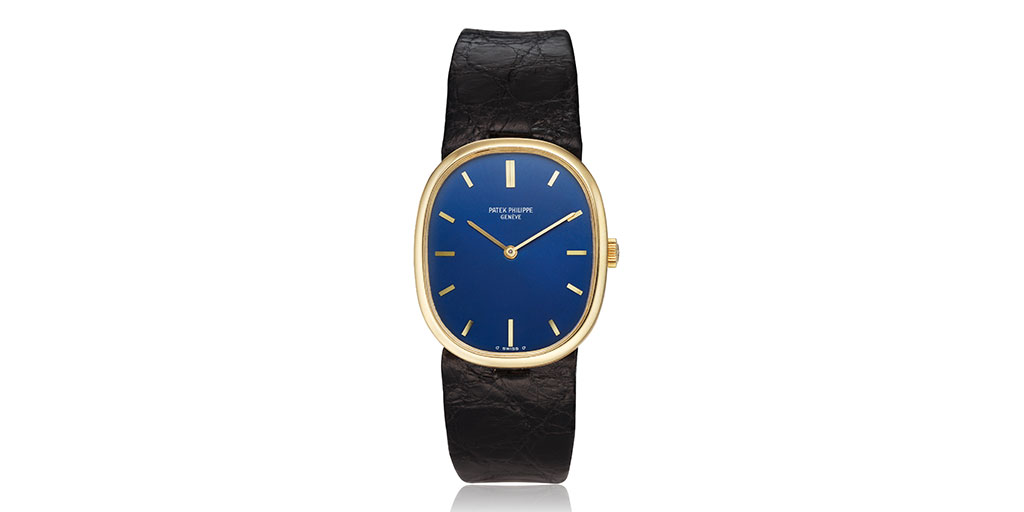
Rubeli and his team went further than anyone expected. They developed deeply colored, 18-carat blue gold dials using a patented process. Early examples were unstable and sometimes shifted towards a warm, autumnal hue which Alan nicknamed “Autumn Gold”, but once perfected, the blue dial became the defining look of the Golden Ellipse, and one of the visual signatures of Patek Philippe in the 1970s and beyond. To learn more about the history of the Golden Ellipse collection, see this Collectability article.
Naming the Nautilus

In 1976, Patek Philippe launched the Nautilus, designed, like the Royal Oak before it, by Gérald Genta. For a conservative Maison, a large, steel, water-resistant sports watch was a bold step. But lifestyles were changing, people were becoming more active and Patek Philippe clients were looking for a rugged watch that could be worn both on the ski slopes and in the board room.
Alan recalls attending a meeting with Henri and Philippe Stern and Genta to look at the design. His first reaction — that it looked rather like the Royal Oak — was not particularly diplomatic. But he offered practical suggestions.
He urged the team to design a bracelet that would be genuinely difficult to manufacture, making it harder for counterfeiters and copyists. The Nautilus bracelet did indeed prove extremely complex to produce and finish and remains one of the most technically demanding bracelets in the industry to manufacture and polish.
When it came to the name, the discussion circled around nautical themes. After a string of suggestions, Alan proposed simply:
“Why don’t we call it Nautilus?”

The name worked on several levels: it echoed the porthole inspiration of the case, and it resonated with then widely known American nuclear submarine USS Nautilus (SSN-571). Early advertisements played on the maritime imagery.
Technically, the Nautilus had some teething problems. Its initial three-part case and high water-resistance meant that production had to climb a steep learning curve. For a time, Alan and the markets bore the brunt of leaks and warranty issues. Once those were solved, however, the watch slowly grew into the icon — and auction phenomenon — we know today.
Anniversary and Millennium Watches
Alan Banbery worked at Patek Philippe during some pivotal moments in the company’s history. His influence can be seen directly in the production of several limited edition watches highlighted below, but also in the background of important technical decisions. Because Banbery studied to be a watchmaker, his knowledge was an advantage in terms of solving a technical issue or knowing what the marketplace would like to see in terms of a new watch movement and design. Normally, the watchmakers and the commercial team are church and state, each specializing in their own skills. However, on the rare occasion when there was a crossover, magic would happen.
Caliber 89

In 1980, work started secretly on building the world’s most complicated watch, the Caliber 89 and although Alan Banbery was “not privy to the making of the Caliber 89”, the ‘Banbery Influence’ can be seen in two areas of the masterpiece’s evolution. During the initial design of the movement, Banbery was asked for his advice by Jean Pierre Musy, the technical director responsible for the development of the Caliber 89. Musy showed Alan an early drawing of the timekeeping mechanism and asked for his opinion regarding the mechanism of the minute repeater. Alan felt very honored that his opinion mattered both from a watchmaker’s perspective, and from a commercial point of view.
Officer’s Watch Ref. 3960 and the 150th Anniversary Limited Editions
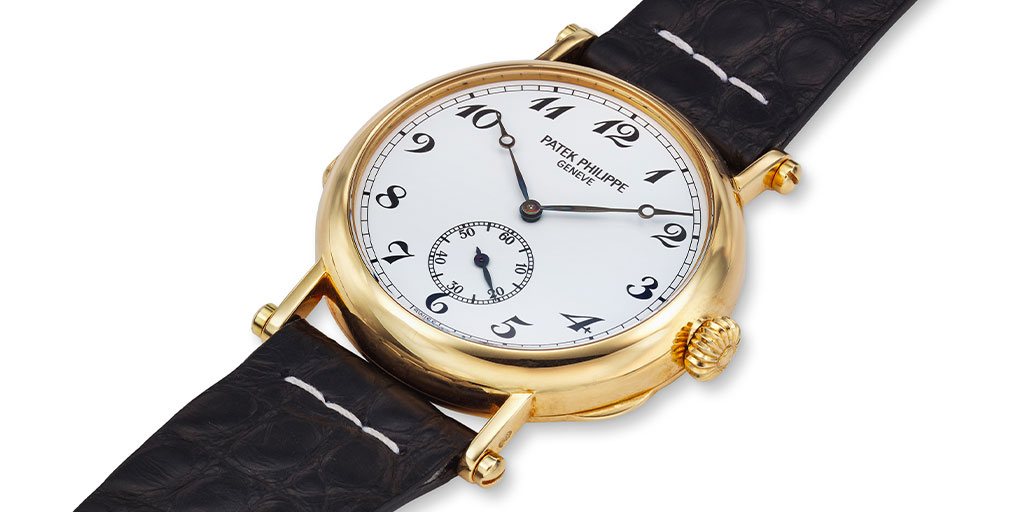
When Philippe Stern was deciding what type of limited edition watches he should make to celebrate his company’s 150th Anniversary, he asked for Alan Banbery’s help and gave him carte blanche. Having spent over a decade carefully collecting timepieces from Patek Philippe’s past, Banbery was in the perfect position to suggest designs inspired by the past. This 150th Anniversary collection was marketed worldwide by famed ad man Rene Bittel, see this Collectability video to learn more.

The Officer’s Watch ref. 3960 exemplifies the ‘Banbery Influence’. The origin of the wristwatch began during the First World War when officers would strap a hunter pocket watch to their wrist. Banbery had collected some early wristwatches that had started their life as a hunter pocket watch and these inspired his suggestion for the design.

Banbery felt it was important to replicate past details in a modern interpretation such as the way in which lugs had been soldered to the cases to hold a strap, the turban crown which would have been used on pocket watches, not wristwatches. The design of the porcelain-white dial marked with Breguet numerals, and a railway track minute-scale was inspired by the early calendar watches admired by Banbery. To learn more about the Caliber 89 and the 150th Limited Edition timepieces, see this Collectability article.
Star Caliber 2000

Later, in the 1990s, for the Star Caliber 2000, he suggested piercing the hunter case cover to allow the repeater’s chimes to be heard more clearly. Case-maker Jean-Pierre Hagmann and engraver Christian Thibert transformed the practical decision into an aesthetic one, integrating the sound apertures into sculptural decoration. Alan also proposed the name “Star Caliber 2000”.
10-Day Ref. 5100

“One of the watches that I am most proud of having an involvement with is the Manta Ray,” recalls Alan. For the ref. 5100 10-Day limited edition, created for the millennium, he advocated a rectangular movement (the first new rectangular movement since the caliber 9-90) with an exceptionally long power reserve and a case inspired by the 1950s ref. 2554, whose dramatic lugs had earned among collectors the nickname “Manta Ray”. His suggestions linked the watch firmly to the brand’s mid-century design language while celebrating a new mechanical achievement.

Alan did have a minimal technical input on the development of the movement. “I went down to see the chap who was designing the watch, and he had some issue with the winding stem,” recalls Banbery. Alan suggested a solution which the technician adopted via computer:” Yes that works!” pronounced the technician. Alan Banbery noted that shortly after, Philippe Stern asked him very politely not to give his advice to watchmakers again!
These interventions were almost always small and discreet, but together they exemplify the Banbery ‘touch”: linking new creations to the archive and thinking constantly about how future collectors and historians would perceive them. To learn more about the Star Caliber and the ref. 5100, see this Collectability article about timepieces to mark the Millennium.
Personal Watches and “The Banbery 3448”
Over his three-and-a-half decades at Patek Philippe, Alan owned, sold and sometimes modified a few of the company’s watches. Because of his position and technical skill, those watches have become part of the firm’s lore.
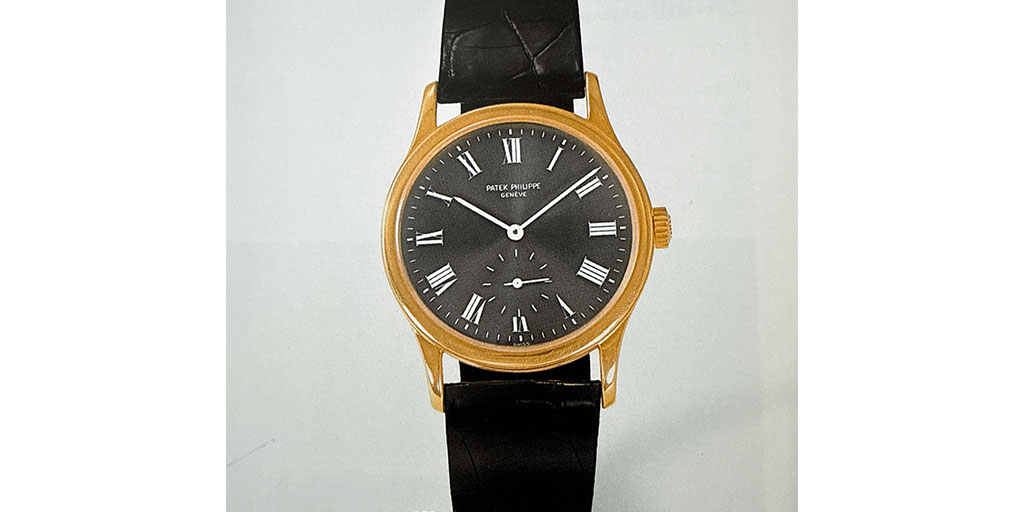
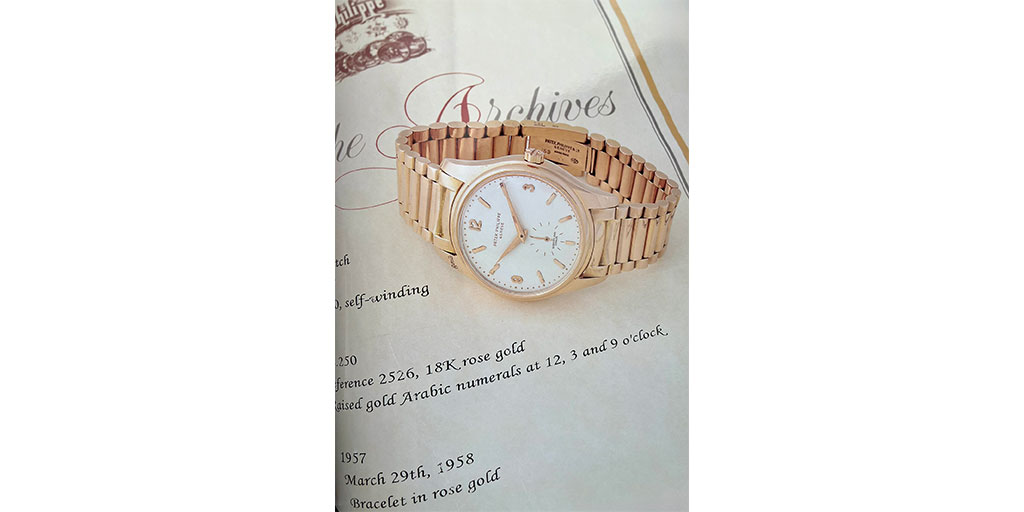
His first Patek Philippe wristwatch, acquired around 1967, was a Calatrava ref. 3439/1J. He disliked the standard plain white baton dial, and in a dial meeting with Tommy Graf and the Stern Frères brothers, he suggested a slate-grey dial with white Roman numerals. The special dial was made. Once he purchased the watch, Banbery also had the foresight to ask the watchmaking department to make him a sapphire crystal back so that that the automatic caliber 27-460 movement could be seen. This was decades before a sapphire crystal on a watch back became the norm. Alan was fortunate that during the 1960s and 1970s, he could go down to the workshops and ask for a modification to a personal watch.
He did the same for his ref. 2499 perpetual calendar chronograph, displaying the movement through a bespoke sapphire back. “Like an idiot I sold it!” Banbery admitted. Today, some fortunate person, somewhere in the world, owns this ref. 2499 with two backs.
The ’Banbery watch’ ref. 3448

The Patek Philippe ref. 3448 modified for Alan Banbery. Image credit: Sotheby’s
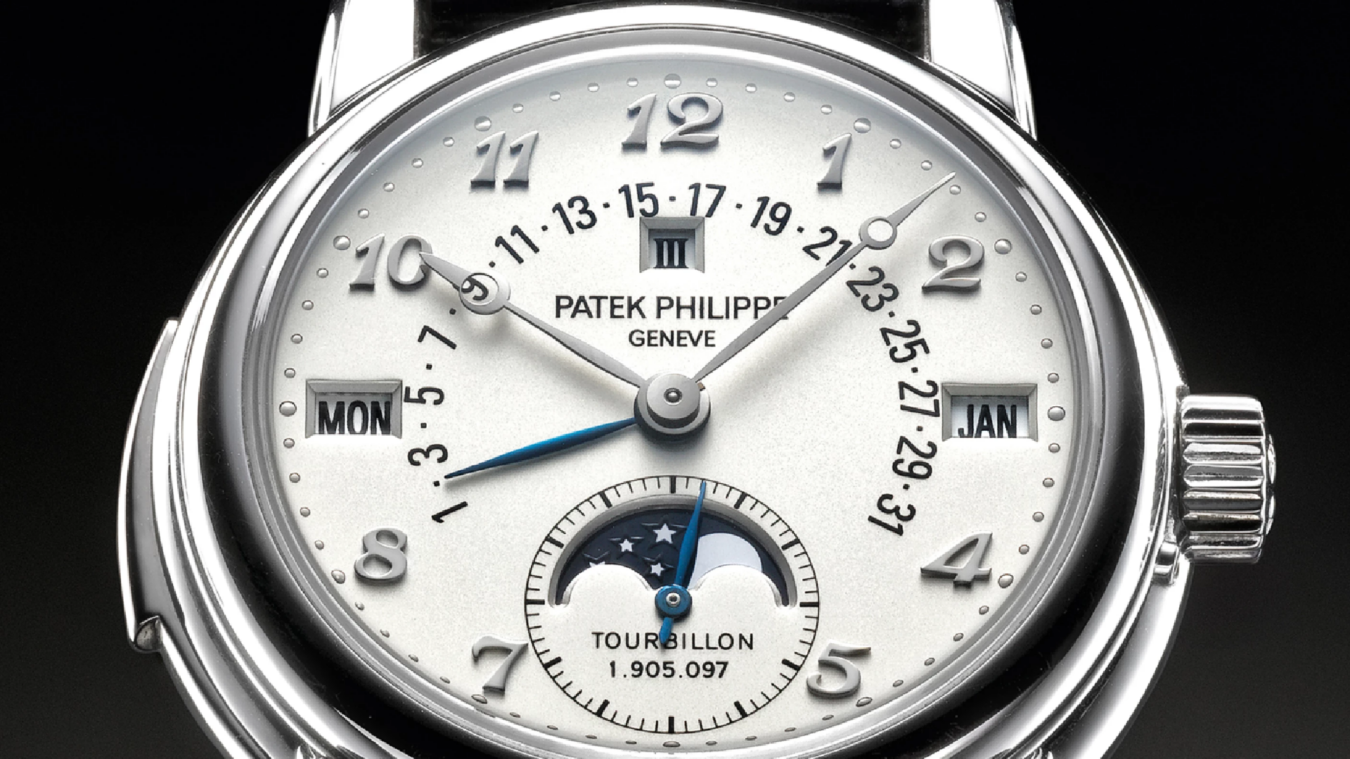
Most famous of all his watches is the ref. 3448 perpetual calendar that now carries his name in auction catalogues. Alan purchased the watch on 22 September 1970, it began life as a standard ref. 3448 with moon-phase display. The ref. 3448 was launched in 1962 and remained in production until 1980. It was the first, self-winding perpetual calendar wristwatch to be produced in series by any manufacturer. “To me, the ref. 3448 is the perfect watch”, recalls Banbery and as soon as he could, he purchased one for himself. As a skilled watchmaker himself, Banbery greatly admired the complicated caliber 27-460 Q, as well as the innovative case design.

After a few years of wearing his watch, Banbery decided that he would like to modify the movement so that the leap year would appear on the dial. Fortunately, he had a good relationship with the watchmaking department. “I would frequently go to the watchmaking department and was on good terms with the head of the watch department, Charles Beausire” remembers Banbery. He particularly enjoyed speaking with one watchmaker: “I admired Max Berney tremendously. He was a great watchmaker.” Max Berney worked for Patek Philippe for more than 50 years and was renowned as being one of the most skillful watchmakers in the industry. It was Max Berney who modified the movement of his ref. 3448. By removing the moon phase to display the leap year indication, a new dial was required. Fortunately, Banbery was also on good terms with Stern Frères who made a new dial with a striking, red-printed subsidiary dial indicating the four-year cycle.

Contrary to a popular myth, the watch was not a gift from the Stern family for ten years of service; Patek Philippe Geneva traditionally gave a watch only after twenty-five years. “The Banbery 3448” was a personal project, albeit one that the Maison facilitated.

When it later appeared at auction, first at Sotheby’s in 2008 and again at Christie’s Hong Kong in 2021, it commanded multi-million-franc prices. Christie’s catalog description was not shy in stating: “Alan Banbery’s yellow gold 3448 perpetual calendar wristwatch can be described, without exaggeration, as one of the most famous wristwatches in the world. So famous in fact, that it is now unquestionably within the pantheon of Patek Philippe’s greatest historic timepieces. To the true connoisseur of important vintage wristwatches, the mere mention of the name ‘Banbery’ brings the unmistakable and instantly recognizable minimalist aesthetic of this unique reference 3448 immediately to mind.“ Perhaps not surprisingly, “The one watch I regret selling is the ref. 3448,” reminisces Banbery.
Writing the “Old and New Testament” of Patek Philippe

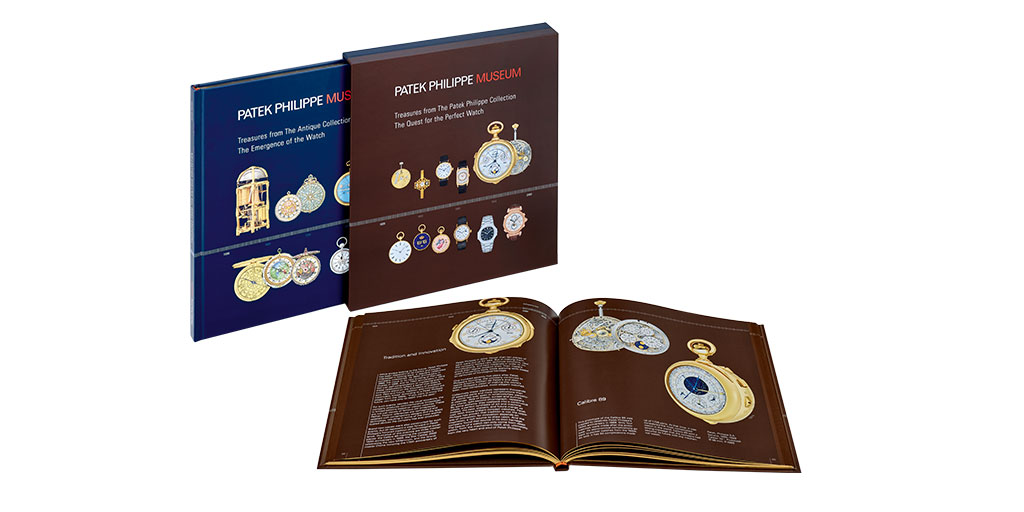
If Alan’s influence on design and product was discreet, his impact on scholarship was monumental. Together with Dr. Martin Huber, he co-authored two books that became the standard reference works on the brand:
- Patek Philippe Genève: Pocket Watches (1982)
- Patek Philippe Genève: Wristwatches (1988, later expanded)
Huber, who had already written on A. Lange & Söhne, approached Philippe Stern in 1979 with the idea of a book on Patek Philippe pocket watches. Stern agreed on one condition: that Banbery, with his intimate knowledge of the archives and growing “museum collection”, should collaborate fully.
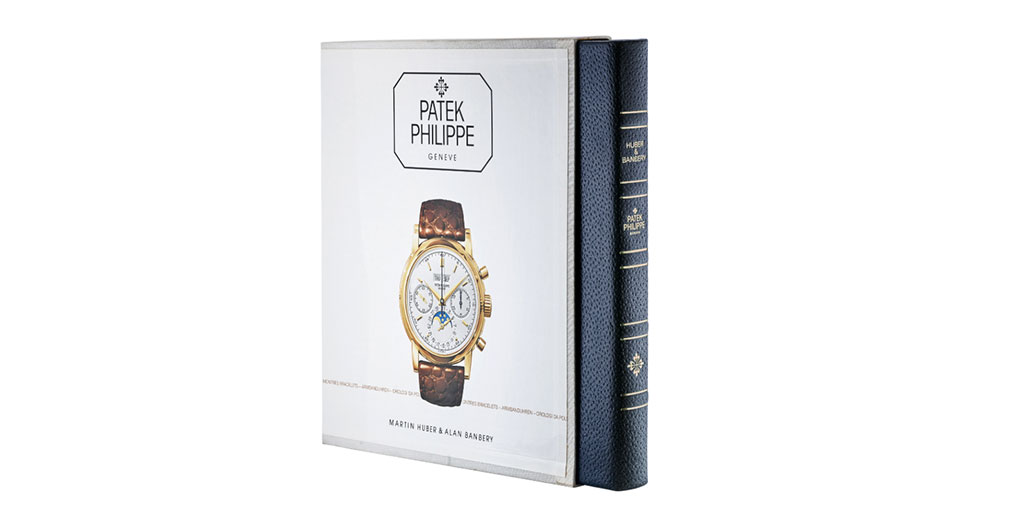
The result was a systematic, illustrated catalogue of the company’s production, complete with movement numbers, case styles and historical context. The books, described in the Authorized Biography of Patek Philippe by Nicholas Foulkes, as “having achieved the status of the Old- and New Testament,” still provide a common language and framework for dealers, auction houses and collectors around the world.

One detail shows how seriously Banbery took his role. For the pocket watch volume, he wanted the cover to feature the Graves Supercomplication, then owned by the Time Museum in Rockford, Illinois. He personally flew to Chicago to persuade museum owner Seth Atwood to lend him the watch. Strict conditions were imposed: a direct flight to and from Switzerland, hand carriage, full inspection and servicing of the watch by Patek Philippe’s own watchmakers.
Photographing the polished gold surfaces in a pre-digital era was a technical challenge. Six color separations were necessary to match the gold color of the watch case. But the images were made, and the watch took pride of place on the cover.
“My pocket watch book is a witness to the absolutely fantastic pieces which were produced at that time, mainly by the Piguet family up in the Vallée de Joux” says Alan Banbery, “Can you imagine their skill –there were no computers in those days!”
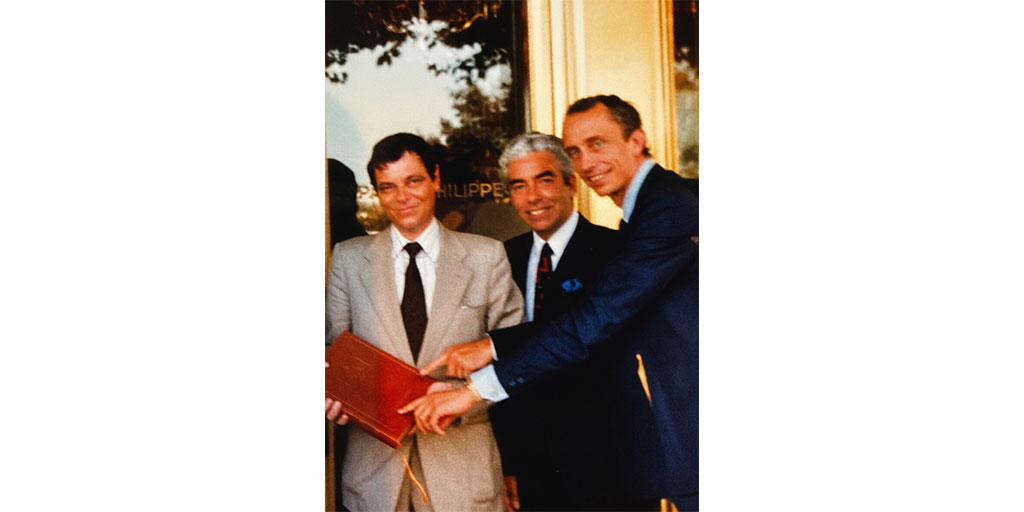
Following the publication of the pocket watch book, Patek Philippe was flooded with requests to publish a book about its wristwatches. Auction houses had started to witness the steady increase in prices for Patek Philippe timepieces and collectors were moving their interest from buying pocket watches to wristwatches. Patek Philippe’s interest in buying back its own watches had not gone unnoticed and watch enthusiasts around the world wanted to learn more about the brand. In 1988, Patek Philippe Genève Wristwatches was published, with a revised and expanded edition in 1998. A second edition of the Patek Philippe Genève Pocket Watches was published in 1993.
###
In the next and final installment of The Banbery Chronicles, we will learn how Alan Banbery turned a two-case display of vintage Patek Philippe watches in a windowless waiting room into a world class museum. In doing so, Alan Banbery secured the company’s memory and a lasting legacy for Patek Philippe.