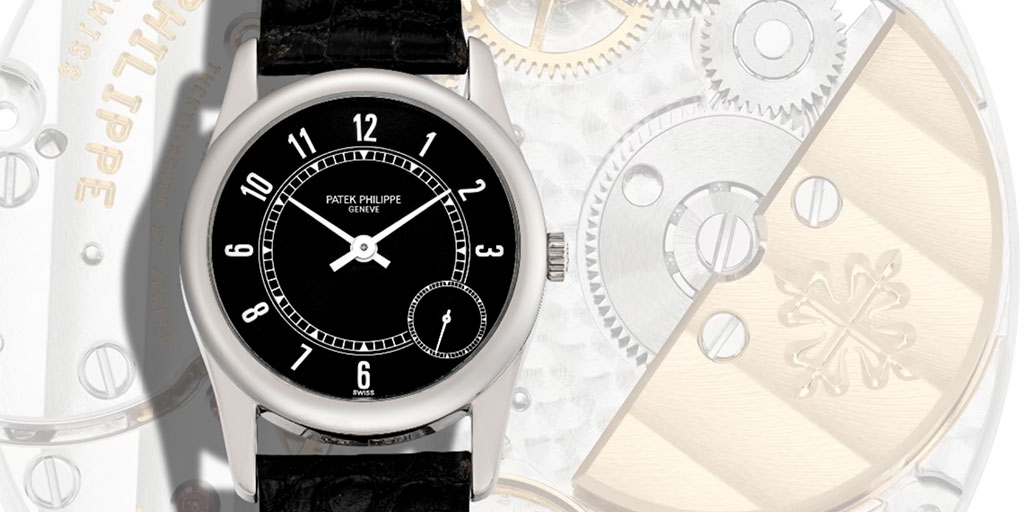
Vintage watch collectors widely believe that the Golden Age of watchmaking was between the late 1940s and the end of the 1960s. These were the decades when the wristwatch was no longer the privilege of a few, or simply a tool (needed during the war years), but an object that could be enjoyed by many, in many different designs and complications. The decades that followed the Second World War represent some of the most fertile and fascinating periods in the history of wristwatch design, both technically and aesthetically. No house illustrates the journey from the experimental 1920s, 30s and early 40s more richly than Patek Philippe, whose output during the Golden Age ranged from the perfection of the classic round Calatrava, the iconic Golden Ellipse, to the wildly asymmetric creations of one of watchmaking’s greatest design geniuses, Gilbert Albert.
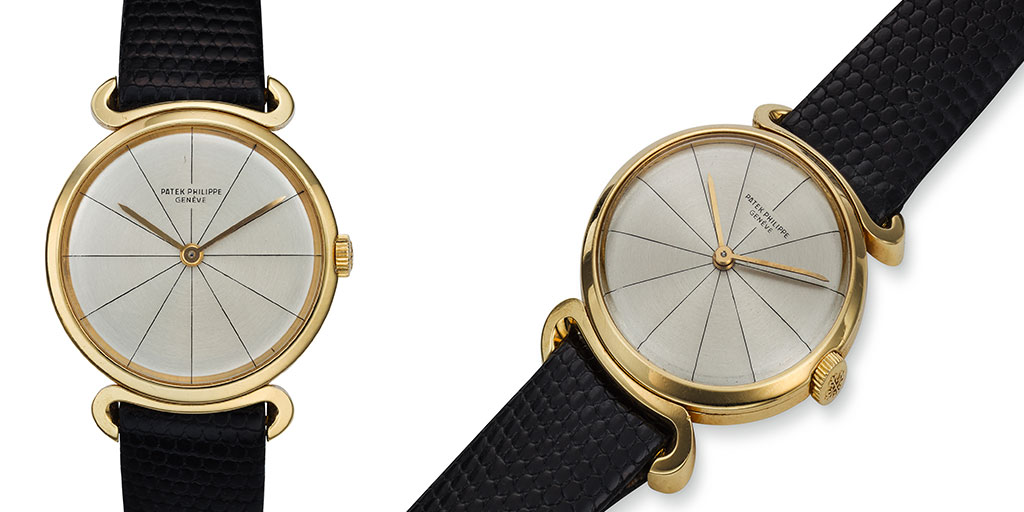
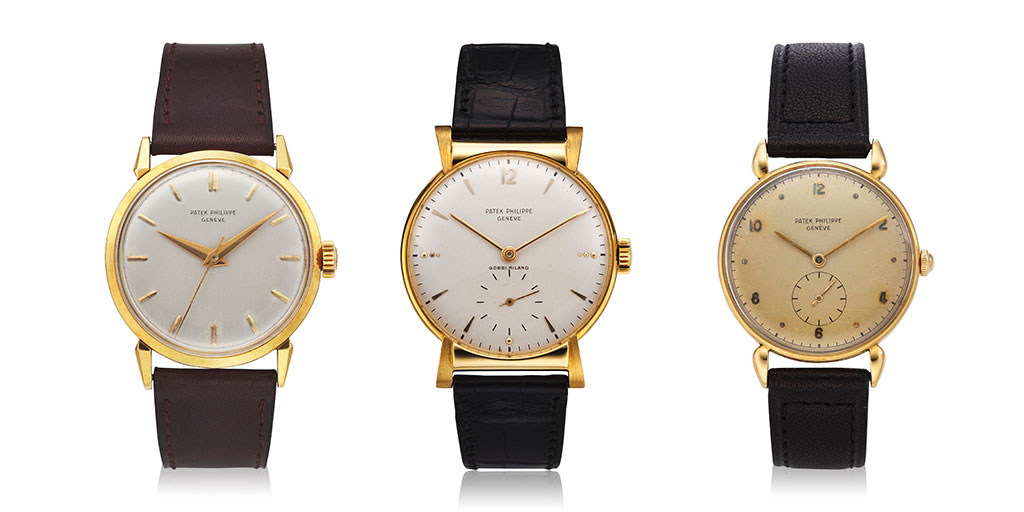
When the Second World War ended in 1945, watchmakers were not starting from a blank canvas. The design vocabulary had been set in the 1920s and 1930s and had already introduced new shapes for the wristwatch such as rectangular, square, tonneau and cushion-shaped cases. This meant that watchmakers like Patek Philippe could now focus on perfecting the different wristwatch shapes. Even the humble round case was elevated with a wide range of distinctive, often eccentric lugs and some of the most beautiful Calatrava watches ever made where produced from the late 1940s to the end of the 1960s.
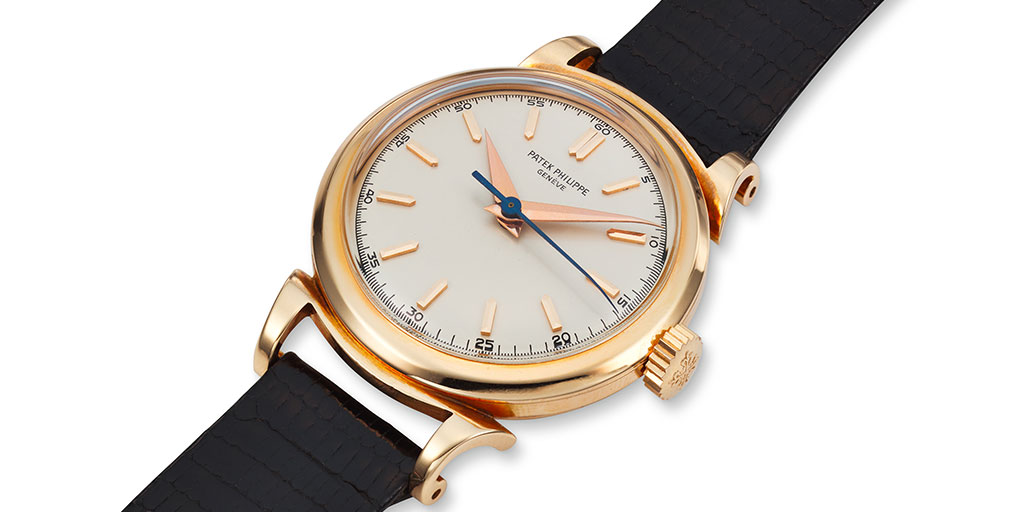
Lugs had largely served as a functional afterthought, but towards the end of the 1940s, they became a canvas. This was the time that case makers became as much the star as the brands themselves. Case makers such as Markowski, Wengen, Baumgartner and Gerlach helped to make Patek Philippe’s design dreams real, and today we see collectors seeking out watches by these and other case makers of the era. Looking at the catalog of Calatrava watches from the 1940s to 60s, there are countless examples of watches with “fancy lugs”, many that today seem contemporary and cutting edge. Over the years, collectors have given some of these lugs names such as “Teardrop, “Sea Turtle”, “Giraffa” and “Spider” due to their organic resemblance to nature and animals. Each lug design elevates the simple Calatrava to another level.
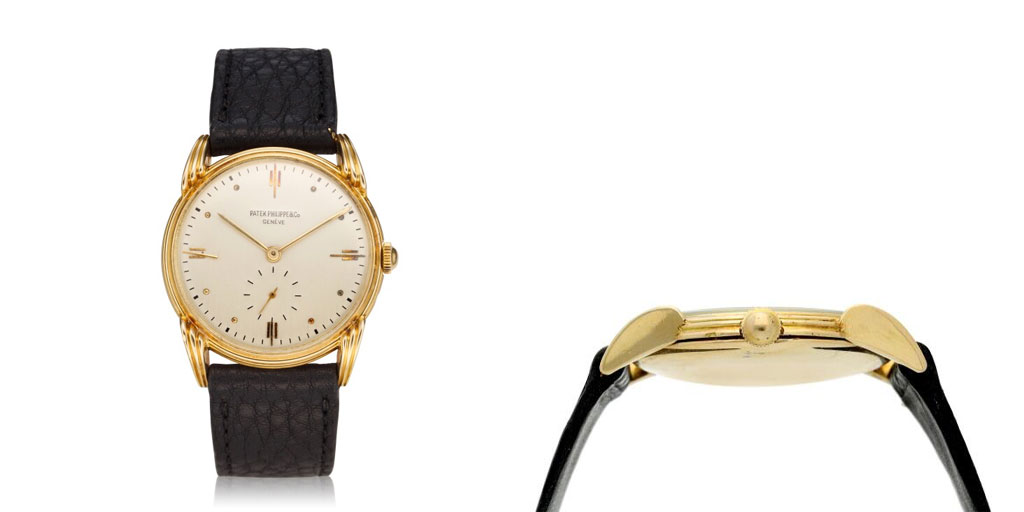
If the 1940s were about decorative refinement within established forms, the 1950s introduced two new forces that would reshape the wristwatch from the inside out: the demand for waterproof cases and the first systematic challenge to the round case altogether.
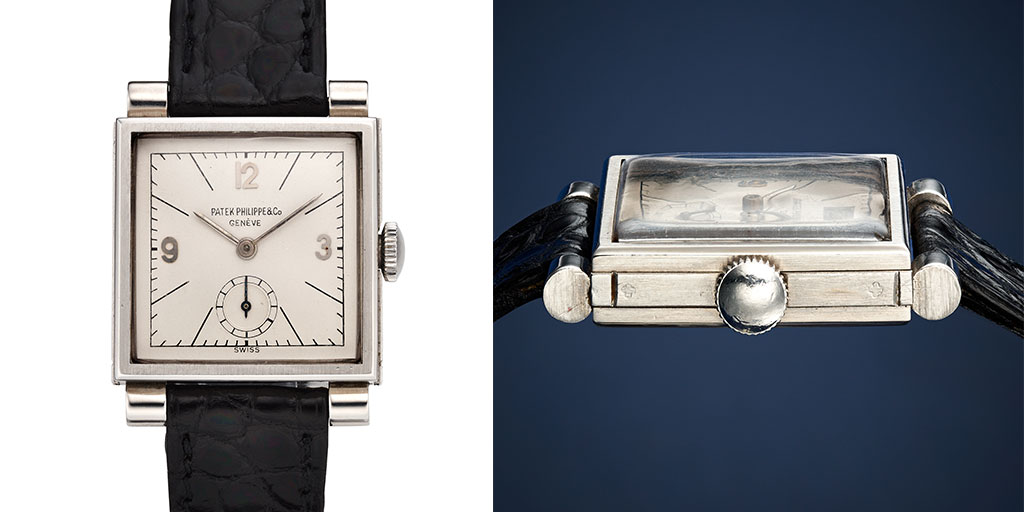
The push for a water resistant watch case had begun in earnest before the war. Taubert, one of Patek Philippe’s key case suppliers, patented a rectangular waterproof case for the refs. 1485 (see above) and 1486, made between 1940 and 1953, but it accelerated dramatically in the post-war consumer boom. Originally released in 1940, the ref. 1485 is one of the most unusual steel Patek Philippe watches from the company’s 1940s production. Made only in stainless steel, these watches use a novel system that was patented in Switzerland. The two-part case is secured by three sliding strips that connect the main case components together in a near lock tight manner. The Swiss patent mark ‘Brevet +’ can be seen on the inside of the case, as well as a ‘+’ on each of the three steel securing strips.
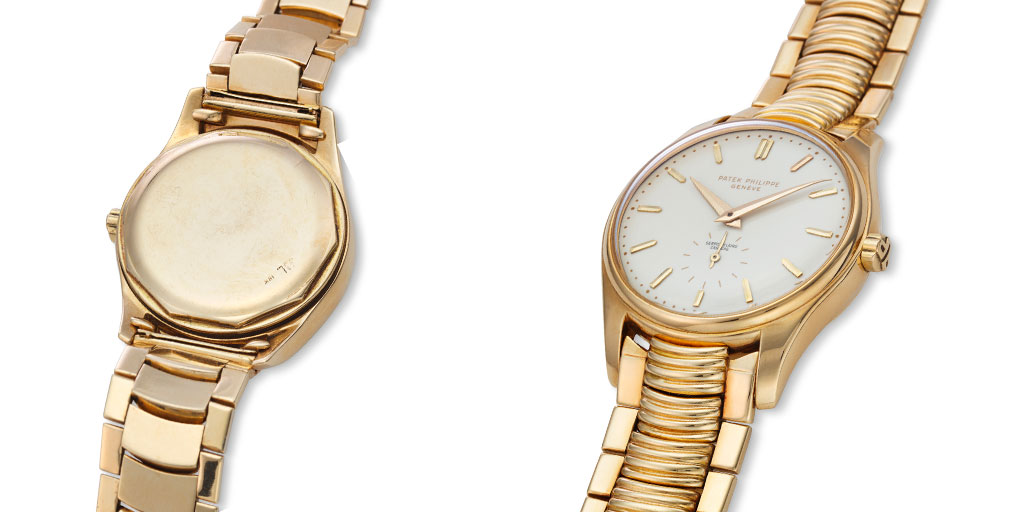
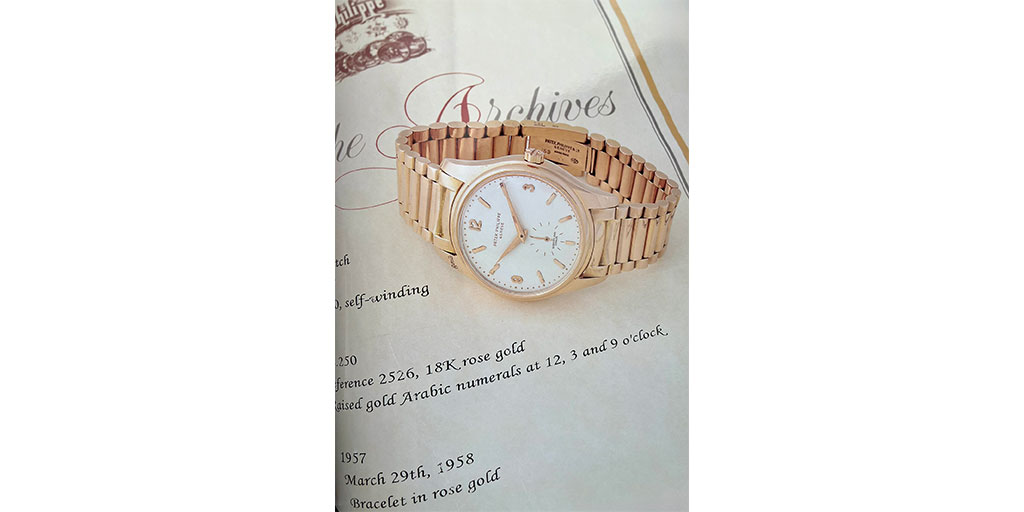
The solution to waterproofing was often a two-piece case with a screwed or snap-on back, which changed the visual profile of many watches. The ref. 2526, Patek Philippe’s first serially-produced automatic wristwatch, introduced in 1953, used just such a construction (see above) and became one of the definitive timepieces of the decade. Cased in gold with its distinctive double-P crown motif, the ref. 2526 was both technically advanced and elegantly conservative in form. The bracelet, too, was changing shape around the watch. Men had previously resisted gold bracelets, by the 1950s they were beginning to embrace them. Ponti Gennari — one of Patek’s most celebrated bracelet-making partners — created some of the decade’s most extraordinary integrated bracelet watches, including the famous “clamshell” or “lobster tail” design for a ref. 2526J (see above). A Ponti Gennari bracelet was so valued that it could add CHF 1,500 to the price of a watch, a testament to how the bracelet had become inseparable from the case as a unit of design.
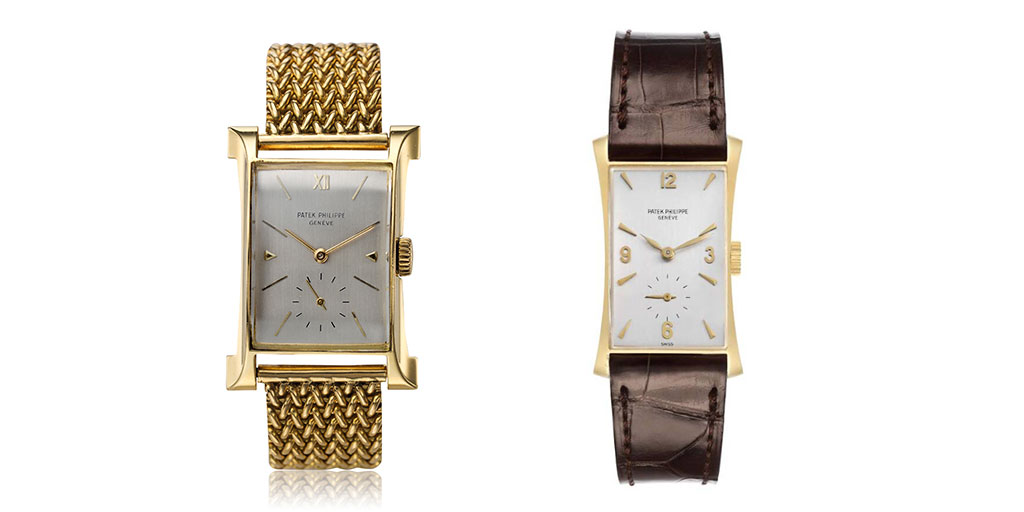
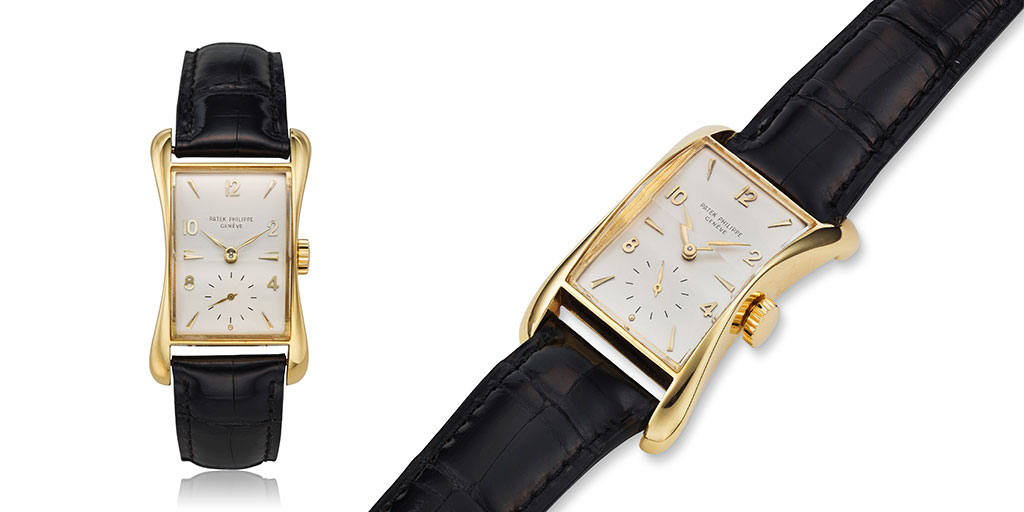
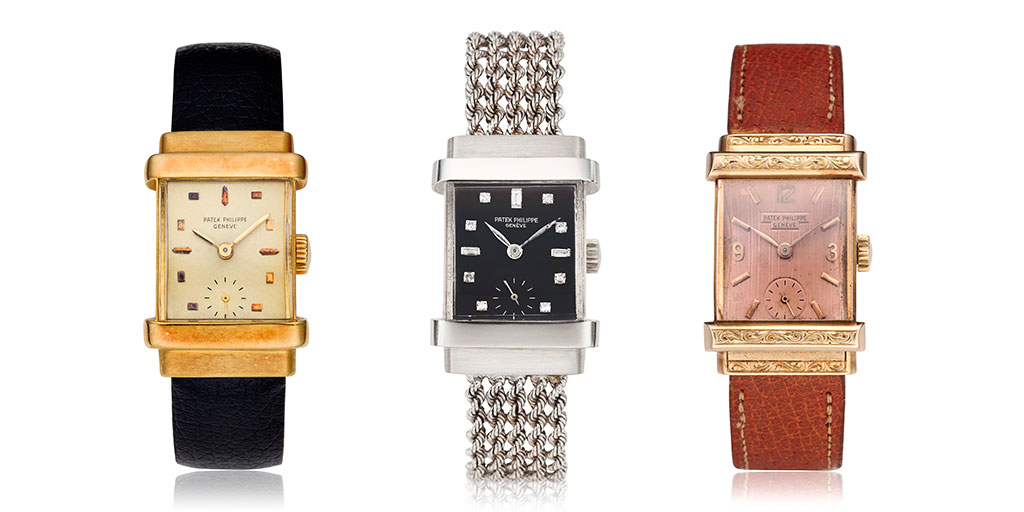
In addition to practical design initiatives such as the water-resistant case, the 1950s produced a wide array of innovative, rectangular watches, each design pushing creative boundaries within a few millimeters to grace the wrist. Most of the ingenious cases were created by master case maker Markowski. It was during this decade that iconic designs such as the “Hour Glass” and “Eiffel Tower” series — rectangular watches with cases that narrowed at the centre, their waisted profile evoking precisely the name they were given, became popular and remain a must-have for vintage watch collectors. The “Marilyn Monroe” the most sensuous of the “Hour Glass” series with curves to match the iconic movie star, is one of the more elusive of the rectangular pieces from this decade, and as consequent, one of the most sort after.
Another rectangular favorite from the 1940s and ’50s is the “Top Hat” ref. 1450, its name derived from its distinctive case shape (Italian collectors nick-named it “cinesino” (small Chinese) because from the side it looks similar to a pagoda.) Over its twenty years of production, the ref. 1450 came in many dial variations (made by Stern Frères). The cases were made by Markowski in all four metals and occasionally, the bezel was decorated with diamonds for the ultimate evening watch.
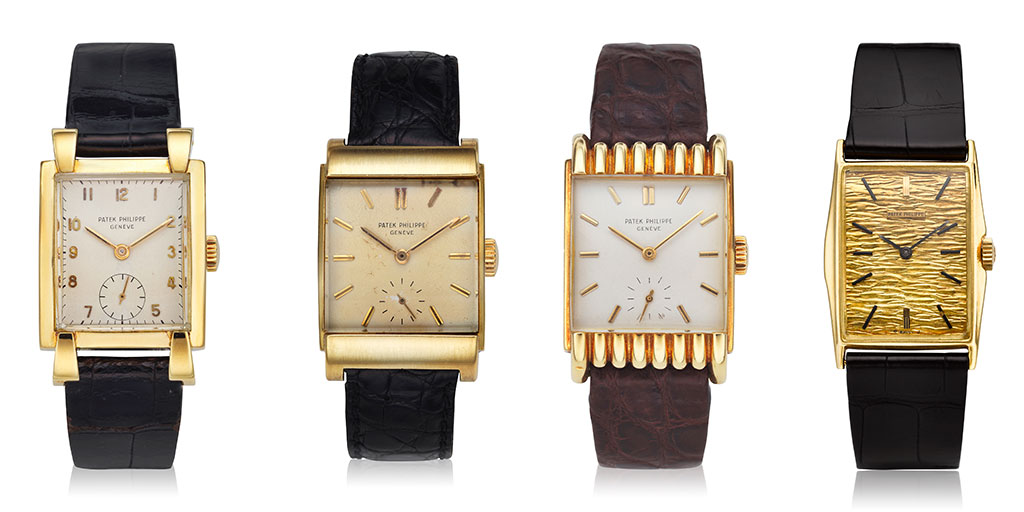
To give a taste of the range of designs the simple rectangle inspired, below are four very different interpretations, all from the 1950s. These time-only treasures are getting the attention they deserve as collectors seek something different. Several of the rectangular pieces of this era were larger in size such as ref, 2427 and 2517 with cases measuring 26 mm x 39 mm, an easy-to-wear size for the modern wrist. Bold form lugs and extended bezels reflected the postwar “Golden Age” and the boom in consumerism and technology. This was the birth of rock and roll, television, low unemployment, new cars and homes in the suburbs. The shape of watches reflected this new found optimism, and one designer in particular would change the way we looked at watches forever: Gilbert Albert.
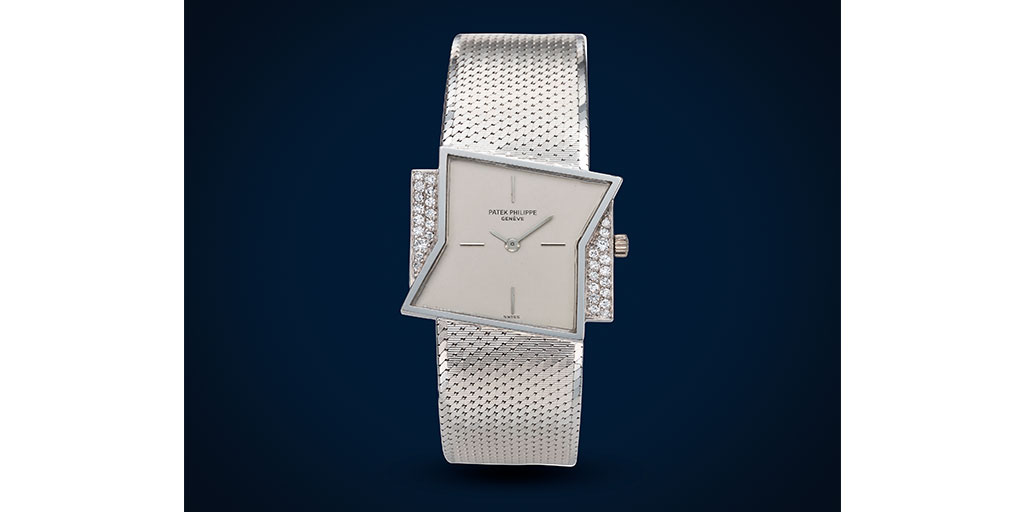
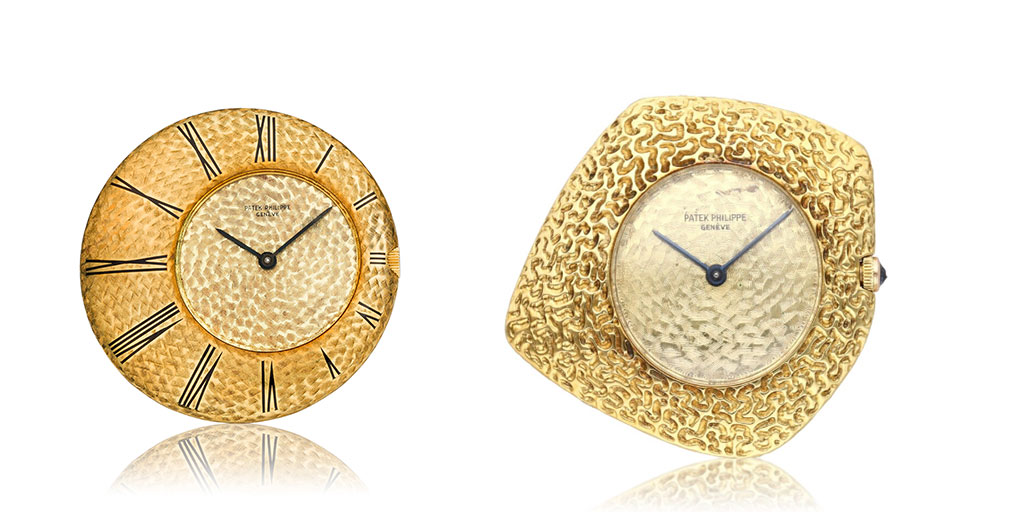
Gilbert Albert completely re-invented the way that Patek Philippe and other companies looked at watch design. A watch case was no longer round or rectangle, but asymmetrical and triangle. Not even the pocket watch remained unchanged and designs such as ‘Ricochet’ brought this elderly statesman firmly into the Swinging Sixties.
In 1955, Patek Philippe began collaborating with a young Geneva-born designer named Gilbert Albert. His arrival marked the beginning of watchmaking’s most daring mid-century design experiment. At this time, Patek Philippe was under the adventurous guidance of Henri Stern, himself a talented artist who took something of a gamble nurturing the avant-garde design sensibility of the young jewelry designer Albert.
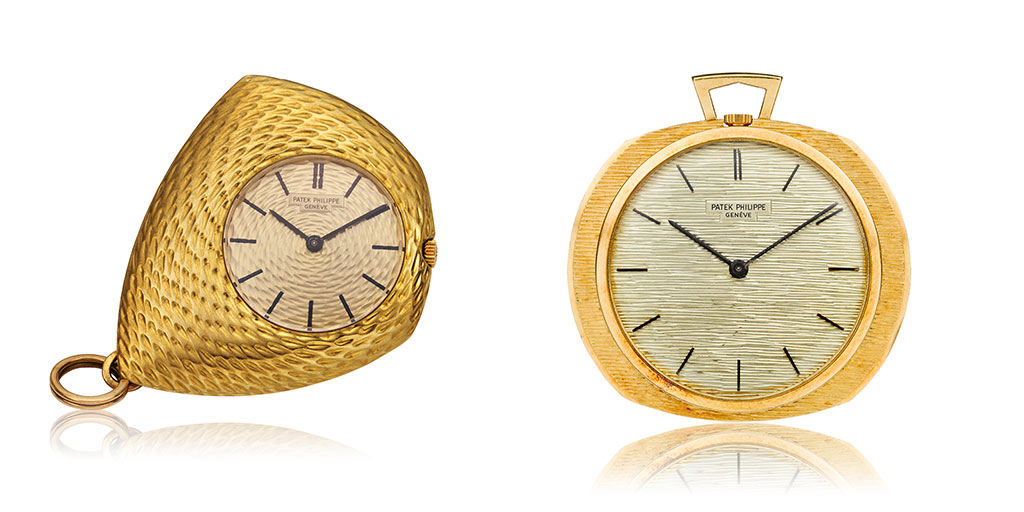
During the late 1950s and early 60s, Gilbert Albert introduced three main collections of pocket and pendant watches: the “Golf”, “Ricochet” and “Futuriste”. Within each of these series were numerous versions with variations on dials, finishes and shapes. The “Futuriste” series with nicknames such as “Flying saucer” and “Television”, plus pieces with shapes such as “Meteorite” and “Fossilised Leaf” remain some of the rarest. His eye for detail and unusual materials reinvented how people looked at watch design, and in some ways, how people wore watches.
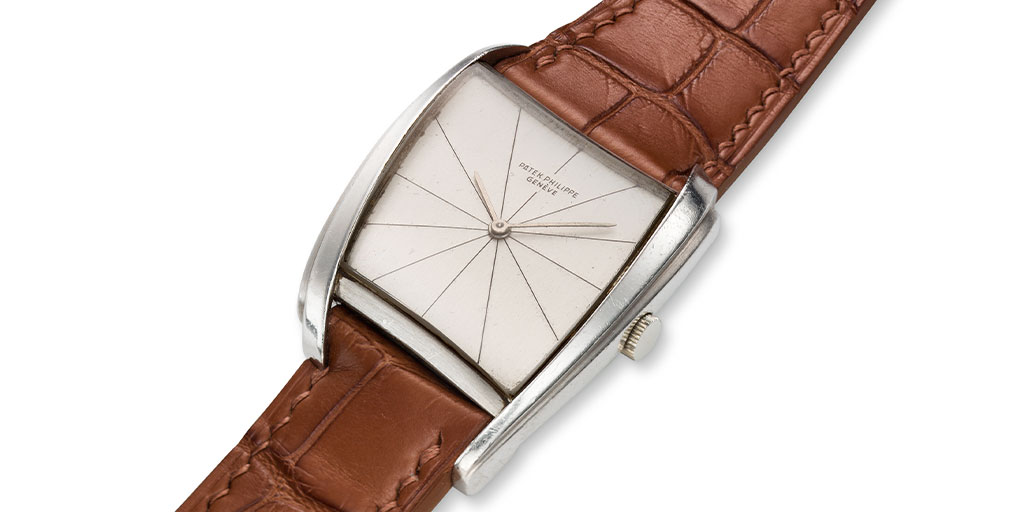
The iconic “Asymétrie” wristwatch collection launched in 1959 and produced through to the late 60s, included models for both men and women. The fact that these pieces were manufactured at all is because Henri Stern was seduced by their design — never had such a strange case housed a Patek wristwatch. The various triangular and rhomboid designs look as modern today as they did over 60 years ago, and they represent an important place in any watch collection.
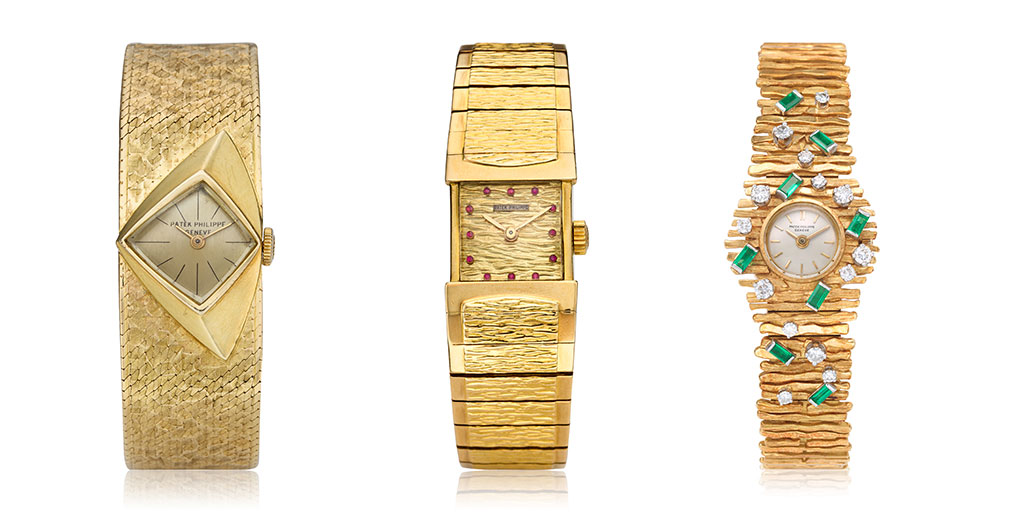
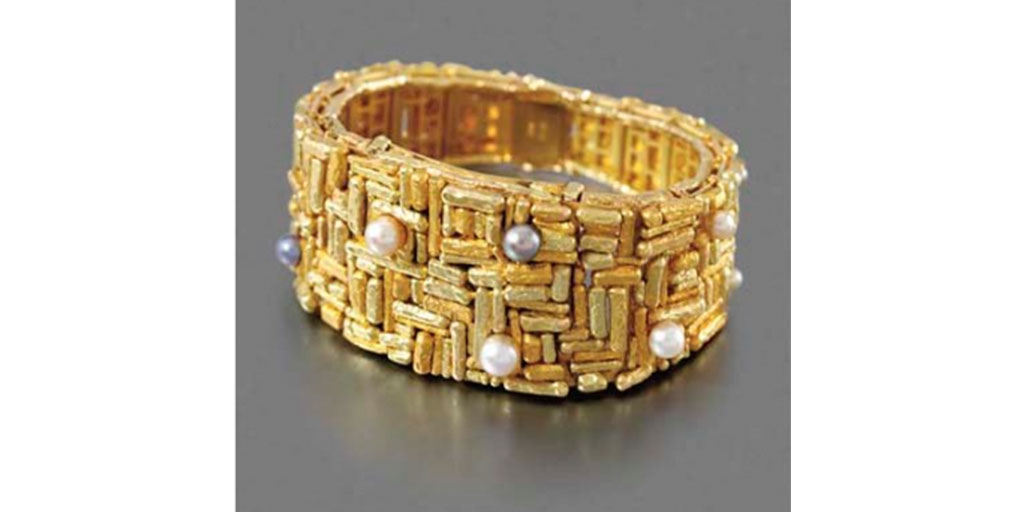
By the turn of the 1960s, Gilbert Albert was focusing on his true love, jewelry. Here his creativity knew no bounds, he would see beauty where no one else would. He reveled in using unusual materials such as meteorites and fossils, contrasting these rough materials with highly polished or textured gold, with a sprinkling of more traditional gemstones such as rubies, emeralds and diamonds. As always, he drew inspiration from nature: he would see a shell and see something precious to be replicated in a watch. He would see textures and lines in a meteorite and treat them in the same way as a precious stone. He even used fur to create straps. Such inspiration fueled an extraordinary array of jeweled watches and pendants, and traditional pieces of jewelry such as necklaces, bracelets and rings. To learn more about Gilbert Albert’s extraordinary catalog of shaped timepieces for Patek Philippe, read this Collectability article.
Making these shaped watches was itself a challenge. As Collectability’s research into Patek Philippe’s case makers reveals, during the 1950s and 1960s, when Albert was designing shaped cases that had never existed before, case manufacturers were forced to learn entirely new techniques. Because of this, several of Patek Philippe’s most most technically accomplished case makers were employed to take on the production of the challenging shapes. These included, F. Baumgartner, Gerlach, Wenger and of course, Markowski.
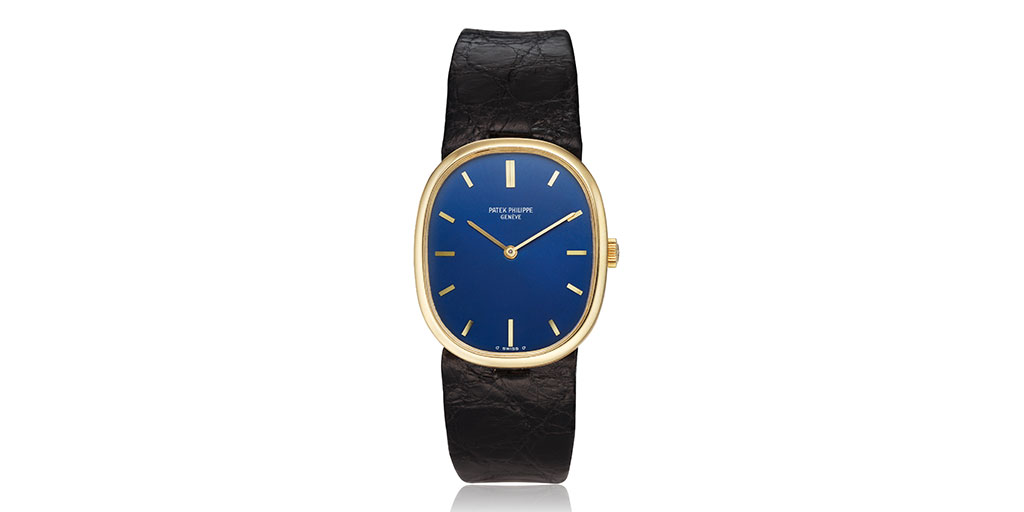
However, the most enduring shape revolution of this era came not from Gilbert Albert but from a geometric insight that would define the final years of the 1960s: the golden ratio. In 1968, Patek Philippe introduced the Golden Ellipse collection — cases shaped not according to a stylistic whim but according to the mathematical proportions of the golden section, 1 to 1.6181 which is considered aesthetically pleasing in art (Mona Lisa’s face), design (an arch on a building) and nature (the distance between each bud on a branch).
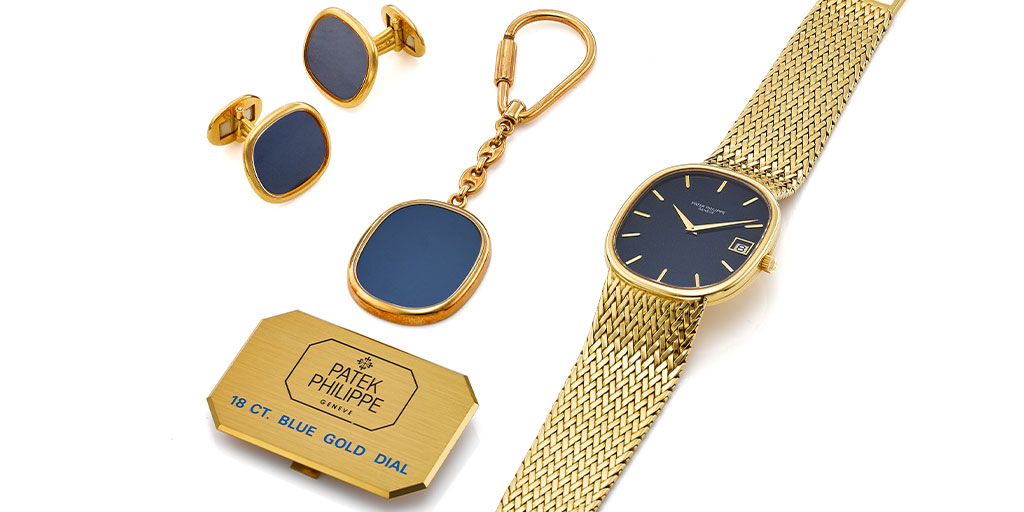
It is no secret that the Patek Philippe Ellipse is Collectability’s favorite design. For us, it represents everything that is Patek — a modern, yet eternal canvas upon which all aspects of the artisan’s touch can flourish: the case maker, the chain maker, the goldsmith and dial maker, the jeweler, and of course, the watchmaker. As Thierry Stern said when celebrating the Ellipse’s 50th anniversary in 2018, “It’s one of those watches that shows you how to make a Patek Philippe. No gimmicks, just purity and beauty expressed through simple design.”
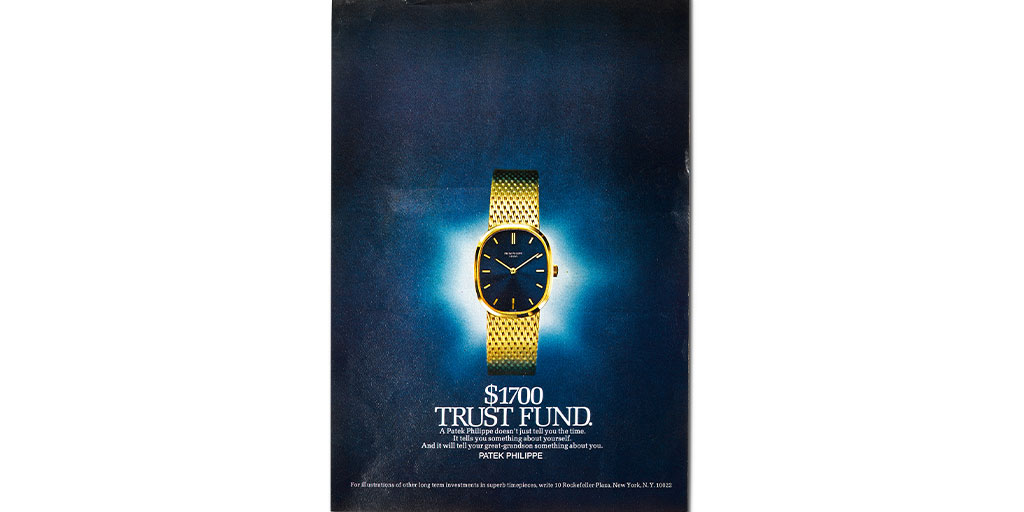
The Ellipse would become one of Patek Philippe’s signature designs, still in production today, and as we will see in Part 3 of the history of shaped watches, an important design statement in the 1970s.
Looking across these three decades, what emerges is a watchmaking culture in constant, creative motion. The round case never disappeared: the ref. 96 and its Calatrava successors maintained an unbroken line of classical elegance throughout. But around that steady center, the wristwatch explored every available dimension of form: the lug as sculpture, the rectangle as Art Deco inheritance, the asymmetric case as avant-garde creativity, the cushion as tactile warmth, and the ellipse as a mathematical ideal. Patek Philippe’s genius across these decades was to pursue all of these directions simultaneously — never abandoning its classical heritage, but never allowing it to become a constraint. For the collector today, watches from this period represent the full richness of that exploration, each reference a testament to a particular moment in watchmaking’s “golden era.”