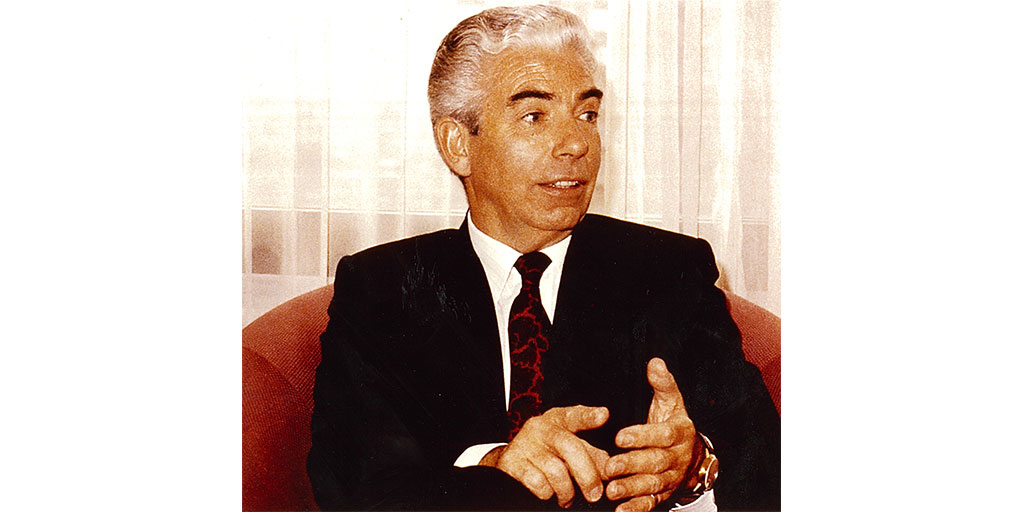
The Patek Philippe Museum is regarded as one of the most important horological museums in the world. No where else can the 500+-years history of horology be viewed quite so elegantly. Yet how its priceless collection of timepieces from the past five centuries grew from a few pieces on display in a windowless waiting room at the Patek Philippe building on Rue du Rhone is a rarely told story. Alan Banbery is in the unique position to share this story as he made an essential contribution to the museum’s creation.
Banbery did not start at Patek Philippe with an interest in collecting watches, but his natural curiosity and knowledge of watchmaking led him to slowly start on a journey that would have a huge influence on the vintage collecting market and auctions.
Once again, the story that follows is told from his perspective. It is about the creation of the Patek Philippe Museum, the company’s collecting strategy, and the way his personal taste and judgement helped shape the brand’s documented history.
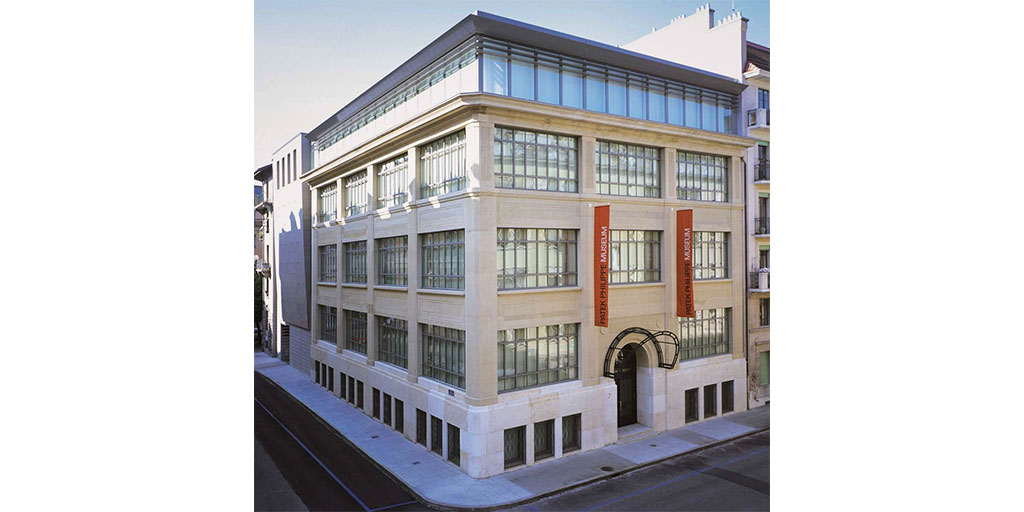
From a Windowless Waiting Room to a World Class Museum
When Banbery joined Patek Philippe in the mid-1960s, the company’s “museum” was little more than two display cases in a windowless waiting room next to the telephone operator at Rue du Rhône. Security was rudimentary and the pieces were displayed in cabinets “that could have been opened with a kitchen knife!”, as Banbery recalls.
Among the watches casually sitting in this under-lit corner was Queen Victoria’s pendant Patek Philippe, an object that would now be unthinkable to display without serious protection.
Henri Stern asked Alan to “tidy them up a bit”, assuming the job was simply aesthetic. But the watchmaker from Garrard, with his eye trained on presentation and objects of state, quickly realized the deeper issue. Labels were crude, the selection was haphazard, and there was no coherent narrative.
As he rearranged the watches, he began to see the outlines of a much more significant collection and a much larger responsibility. Almost by accident, he became the de facto curator.
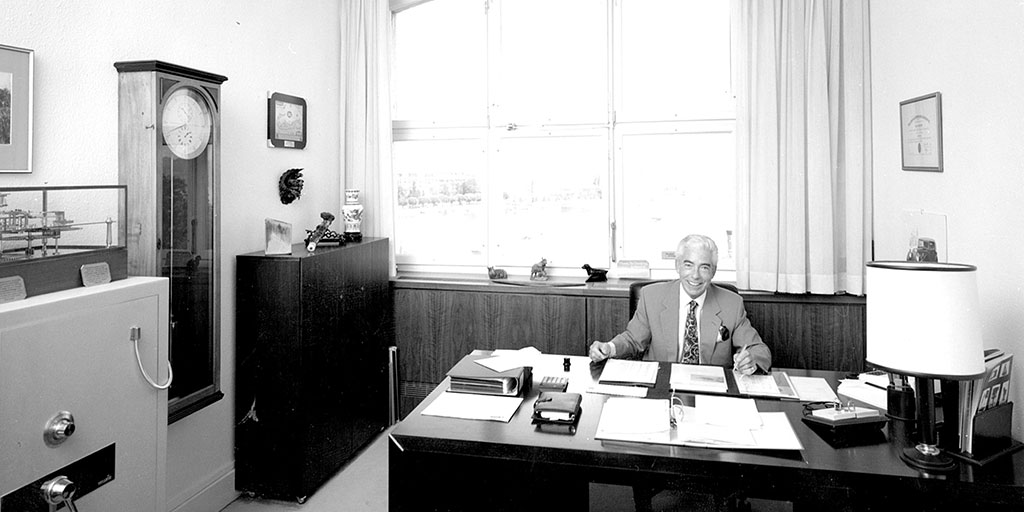
Alan Banbery’s passion for vintage Patek Philippe watches was in part due to his appreciation of the way that timepieces were made before computer technology. “The sophistication of the designs and technical accomplishments are astounding.”
“To begin with” recalls Banbery, “I was collecting on my own for Patek Philippe for about 18 years (until 1988 and the 150th Anniversary, a pivotal change discussed later). The bills would be sent to me from the auction houses, and I would have the accounting department pay for them.”
Prior to Alan Banbery’s arrival at Patek Philippe, Henri Stern would occasionally buy vintage pieces when he saw something that caught his eye, usually early 17th century enamel pieces that appealed to his interest in fine art and craftsmanship. Henri Stern’s hobby was further fueled by his friendship with Carlo Poluzzi (1899-1978), one of the greatest, modern-day enamelers, who would recommend the acquisition of a piece if he considered it important.
Inspired by his father’s small but exquisite enamel collection, Philippe Stern would also develop a passion for early enamel automatons and timepieces that would lead to the exceptional collection now on view at the Patek Philippe Museum. Even as a young child, Philippe’s son, Thierry Stern, was also inspired by the collection of enameled pieces kept in a safe in his father’s office before the museum opened. “I still remember the color and smell of that tray [housed in the safe]. It was lined in red velour and there were maybe six 17th century pocket watches [decorated] with Blois enamel. I was impressed and decided that I would like to make watches.” Thierry Stern quoted in the ‘Authorized Patek Philippe Biography’.
Early Auctions and a New Attitude to the Past
During the 1960s and early 1970s, high-end watches did not have their own dedicated sales. They appeared in mixed auctions known as “objects of vertu”. That changed in 1975 with the arrival of two specialized auctioneers: Dr. Crott Auctioneers founded by Dr. Helmut Crott in Aachen, Germany, and Galerie d’Horlogerie Ancienne in Geneva, founded by Gabriel Tortella and Osvaldo Patrizzi.
Banbery began buying selectively, but just as important were the owners who came directly to Patek Philippe’s offices in Geneva or New York to offer pieces for sale.
One day at Rue du Rhône, a woman arrived with a dirty, ordinary-looking wall clock in a grocery bag. Under the tarnished, solid silver dial, Alan spotted a faint signature: Czapek — the name of François Czapek, Antoni Patek’s early partner from 1845-1850 before the founding of Patek Philippe & Cie.
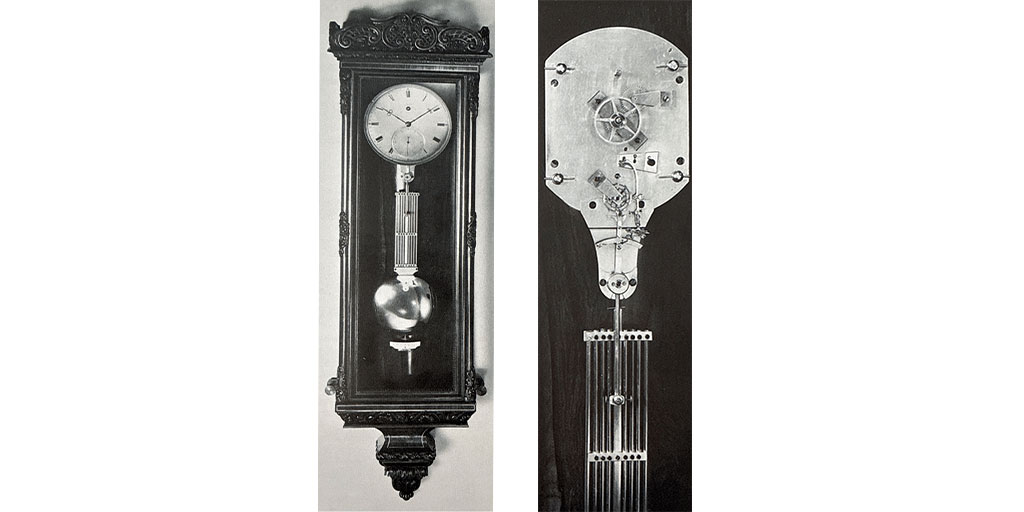
The owner wanted 800 Swiss francs, a considerable sum at the time. Banbery could smell the tell-tale tobacco smoke from Henri Stern’s pipe, and he knew he was nearby in his office, so he brought him the clock for his opinion. Between the purchase price and what it would cost to restore, Stern declined to buy it for Patek Philippe. When Alan offered to buy it himself, Stern puffed thoughtfully on his pipe, reconsidered and authorized the purchase for the company. Restored, it hung in Alan Banbery’s office for years. It now hangs in the Patek Philippe Museum, an important witness to the firm’s early history.
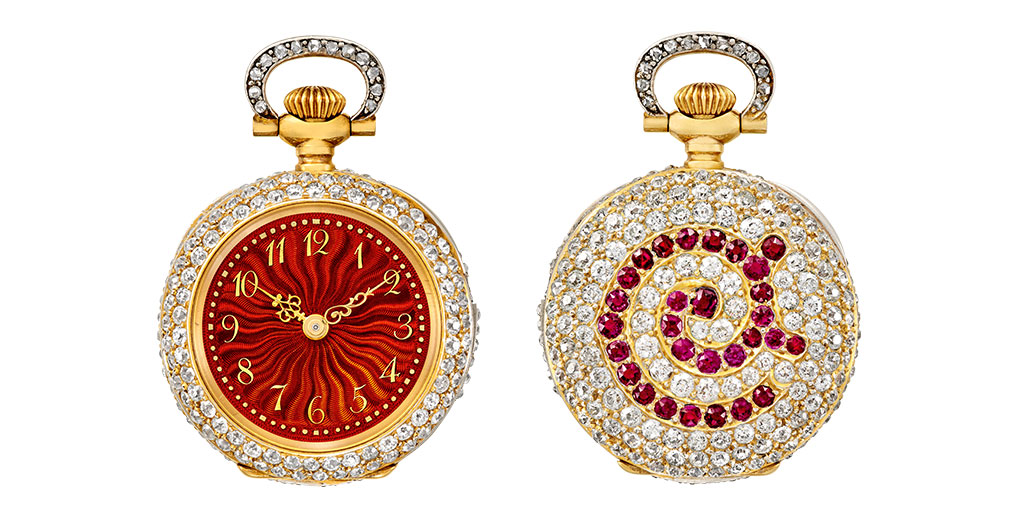
On another occasion, when on a business trip to the New York office of the Henri Stern Watch Agency, Banbery was asked to authenticate a watch for a woman waiting in the reception area. “I understood quite quickly that the lady was in a hurry as she was on her way to take delivery of a new Cadillac”, recalls Alan Banbery. “The pendant watch that she showed me [see below] was particularly beautiful, set with diamonds and rubies and with a wonderful minute repeater movement. I joked that a Cadillac was an expensive car, but perhaps we could help by acquiring the timepiece? Fortunately, we agreed on a price, and both left very happy!”
A key advantage for Alan Banbery in all his collecting was access to the Patek Philippe archives. From the mid-19th century onwards, the company had kept meticulous records of every watch that left its workshops. Serial numbers, case materials, complications, and original clients could all be checked. For a collector embedded inside the firm, this was a unique tool.
The Michel Simon Sale and the Enamels
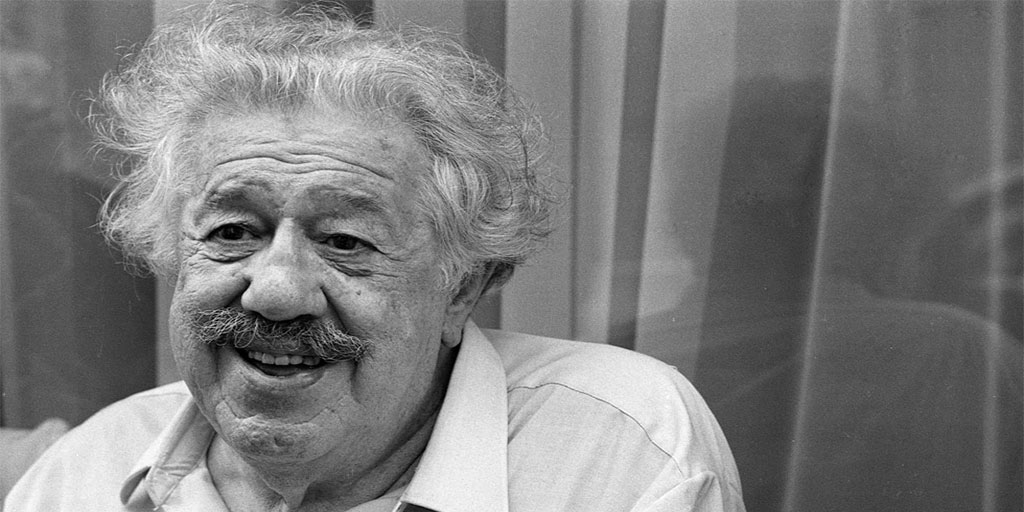
A watershed moment came with the sale of the collection of Michel Simon on 30 January, 1977 at Galerie d’Horlogerie Ancienne. Simon, a celebrated Swiss actor, had amassed over 400 watches. After his death, his estate asked Banbery to independently appraise his collection.
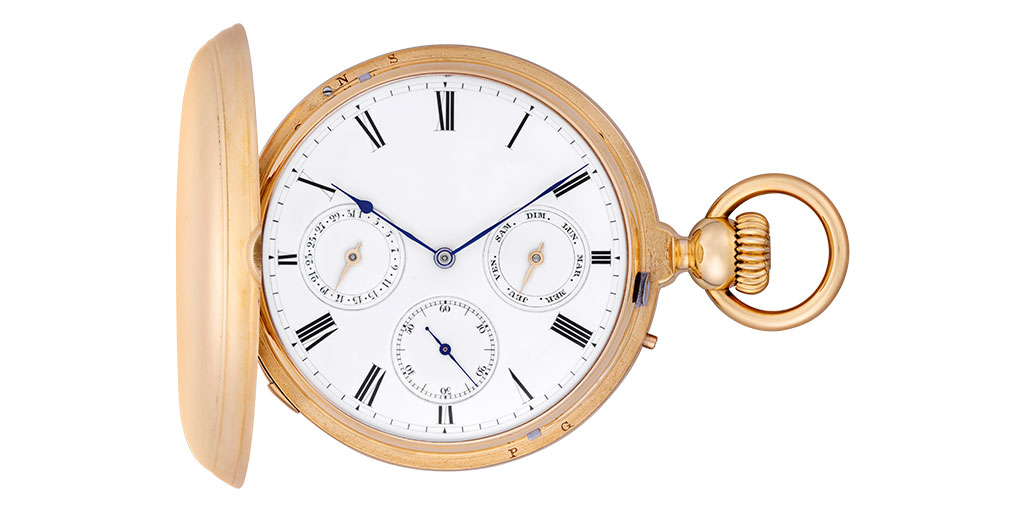
“I remember the majority of the watches were of no particular interest, but there were some important pieces including several enameled pieces from the 17th century by Huaud Freres, and four absolutely magnificent Patek Philippe pocket watches.” Alan Banbery ultimately suggested to the trustees of the Michel Simon estate that they sell the collection at the Galerie D’Horlogerie Ancienne. “After appraising the collection, I realized that the four Patek Philippe pieces would be purchased by someone, but we really should have them. They were all mechanically interesting. So, I went to the auction and bought them in the name of Patek Philippe and had them delivered to my office at Rue Du Rhone.” When the watches arrived, Banbery had to tell Henri Stern that they had been acquired – and for how much. Once again, he could smell the distinctive tobacco smoke from Henri Stern’s pipe and went into his office to explain his purchase on behalf of the company. “When I told him how much I had paid, he replied, “Un peu cher”– a bit expensive. But that was it, and now those watches can be seen at the Patek Philippe Museum where they’re worth many times the price I paid!”
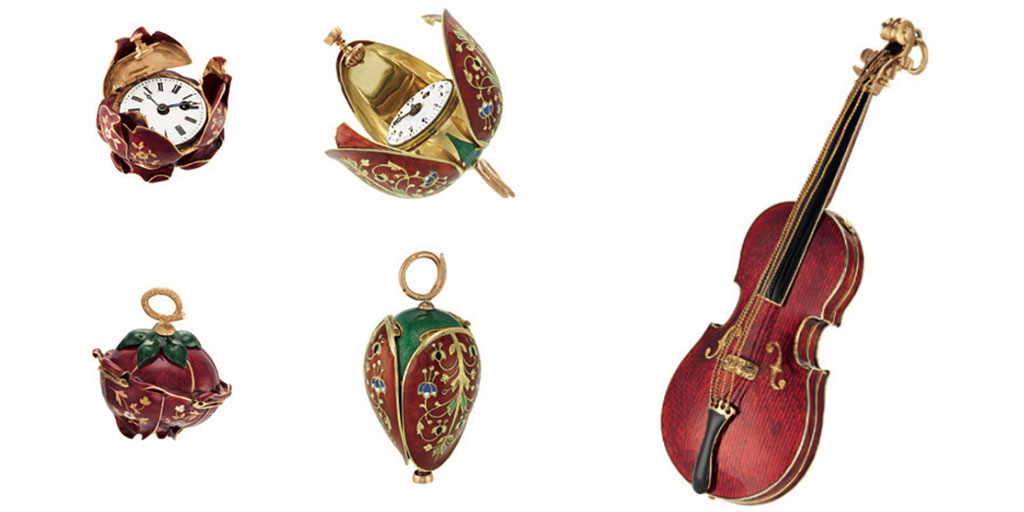
A second crucial auction followed in 1978, again at Galerie d’Horlogerie Ancienne, this time focused on early enamel work. Banbery showed the catalog to Philippe Stern, who recognized the opportunity. They agreed that, where possible, they should keep important groups together rather than see them scattered around the world.
“I didn’t get all the pieces I wanted – I was outbid by a collector on one piece who a week later phoned me at the office asking if I was interested in buying it – I declined, but it was a start for both Philippe Stern and me to begin collecting early enameled watches.” Little did they know that the combination of Banbery’s collecting of important Patek Philippe pieces and the Stern’s love of enamels would one day result in a museum.
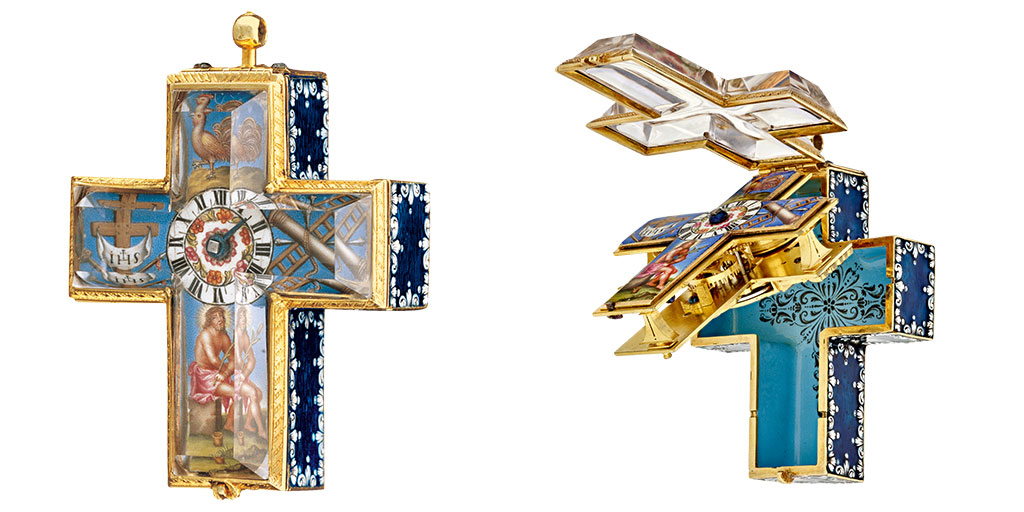
The Patek Philippe Museum has over 1,100 pieces that were not made by Patek Philippe and which document the history of the portable watch. Many are fabulous, enameled pieces collected mostly by Philippe Stern, who, with the aid of experts such as Hans Boech, became himself a leading expert. As Philippe Stern recalls in the introduction to the Patek Philippe Museum Volume III, ‘The Emergence of the Portable Watch’, “For my part, I have always taken a keen interest in the rare handcrafts, particularly enameling. And so, I began to hunt out very fine pieces produced in Blois and Geneva, with the work of the Huguenot craftsmen providing the common thread.” Over the years, the acquisition of these treasures that illustrated the “extraordinary skill and creativity of the Genevan watchmakers, goldsmiths, and artists” led to the world’s foremost private collection and the idea started to emerge to make it accessible to the public.
Packard’s Astronomical Watch and the 150th Anniversary
By the mid-1980s, Patek Philippe’s acquisition policy was more deliberate. A particularly important opportunity arrived through the American Watchmakers Institute (AWI). Facing financial difficulties, AWI decided to sell one of its treasures: James Ward Packard’s astronomical pocket watch, Patek Philippe No. 198 023.
Packard, the American car magnate, had been one of Patek Philippe’s important early 20th-century clients, commissioning several highly complicated watches. No. 198 023, completed in the 1927 and sold for the princely sum of $16,000, featured a revolving celestial map of the night sky above Packard’s home in Warren, Ohio.
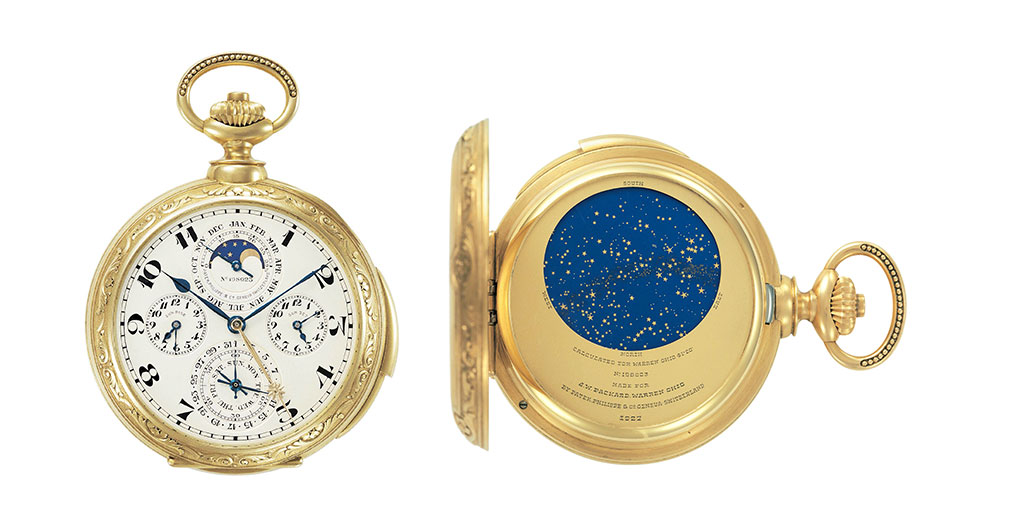
AWI set a non-negotiable price of US$1.3 million — an enormous sum at the time. Banbery relayed the offer to Philippe Stern, who agreed to the purchase. Seen today, the purchase looks prescient. Packard’s watch is now one of the keystones of the museum collection and an essential link in the story that leads from private commissions to the Graves Supercomplication and onward to the Calibre 89.
The following year, 1989, marked Patek Philippe’s 150th Anniversary, a celebration that would propel both the Manufacture and its past into the global spotlight.
“The Art of Patek Philippe” and the Calibre 89
In a routine meeting around 1986–87, Osvaldo Patrizzi proposed to Banbery that his auction house, then Habsburg, Feldman, should organize a single-brand thematic sale to mark the anniversary: an auction composed entirely of Patek Philippe watches. Alan took the idea to Philippe Stern, who agreed.
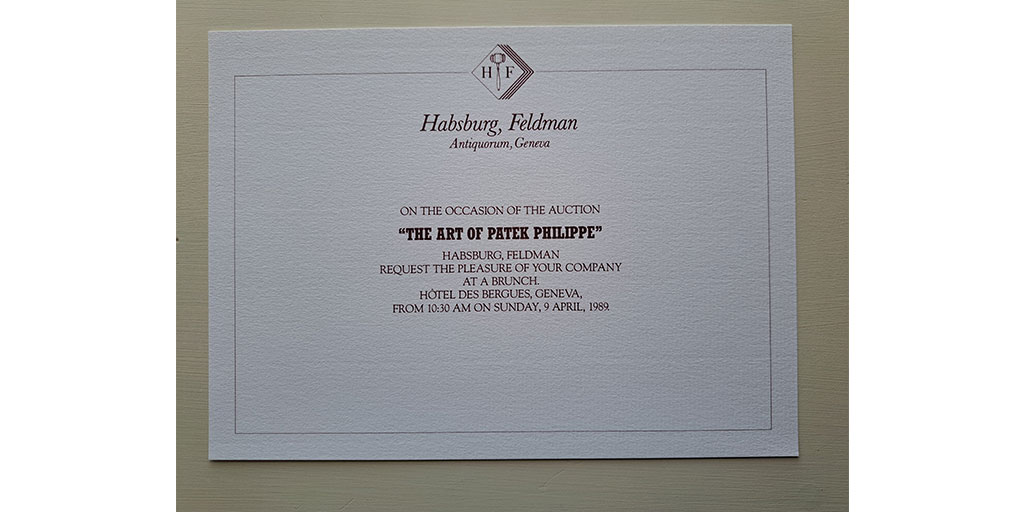
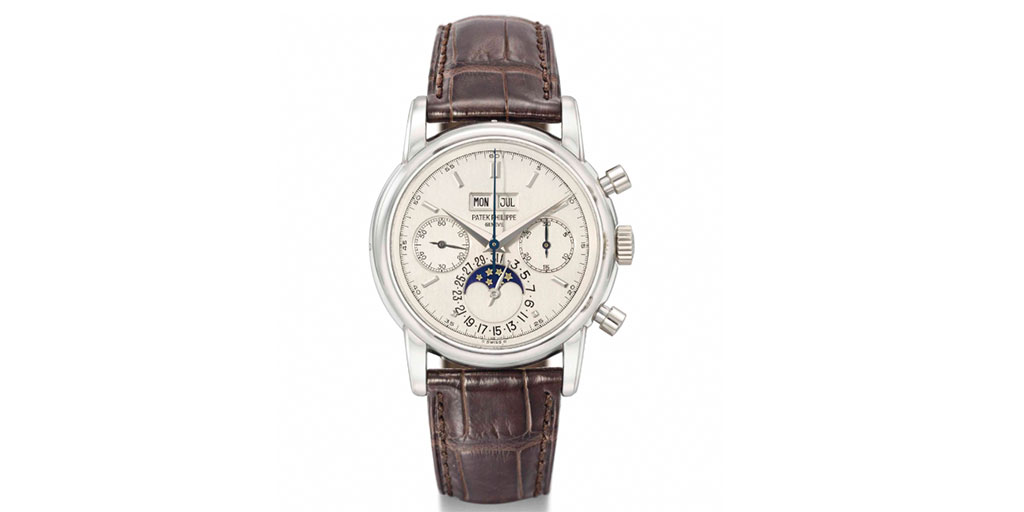
The result was the landmark sale “The Art of Patek Philippe – Legendary Watches”, held in Geneva on 9 April, 1989. Around 300 watches were gathered (62 pocket watches and 238 wristwatches). “As far as I recall,” states Banbery, “Patek Philippe consigned at least two important watches for the auction: Lot 34 a ref. 2499/100 platinum of which only two were made. Also, Lot 299 a ref. 3834 wrist chronometer with tourbillon (only five movements made for Observatory timing competitions, circa 1960), for which in 1981, I subsequently had 18K gold cases made.” The ref. 2499/100P was later owned by Eric Clapton, the second piece is in the Patek Philippe Museum.
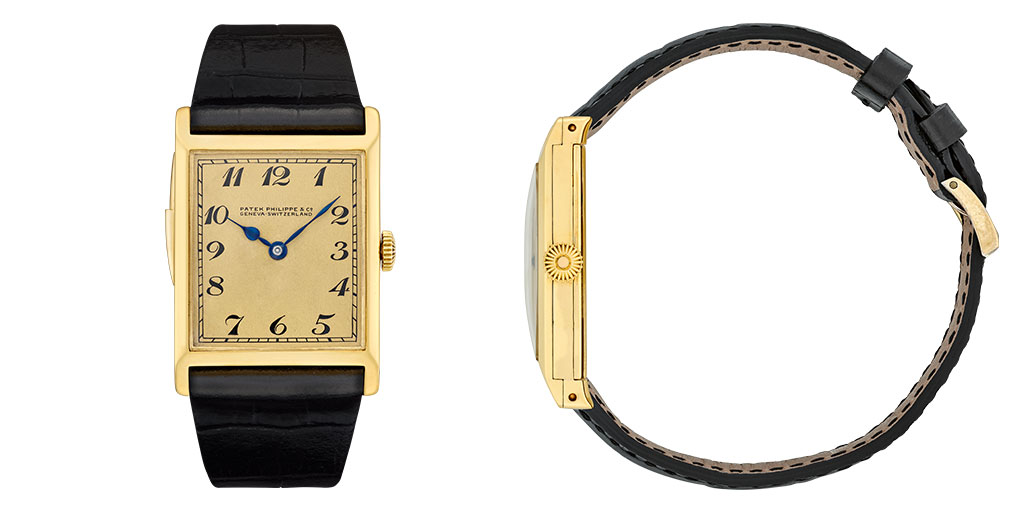
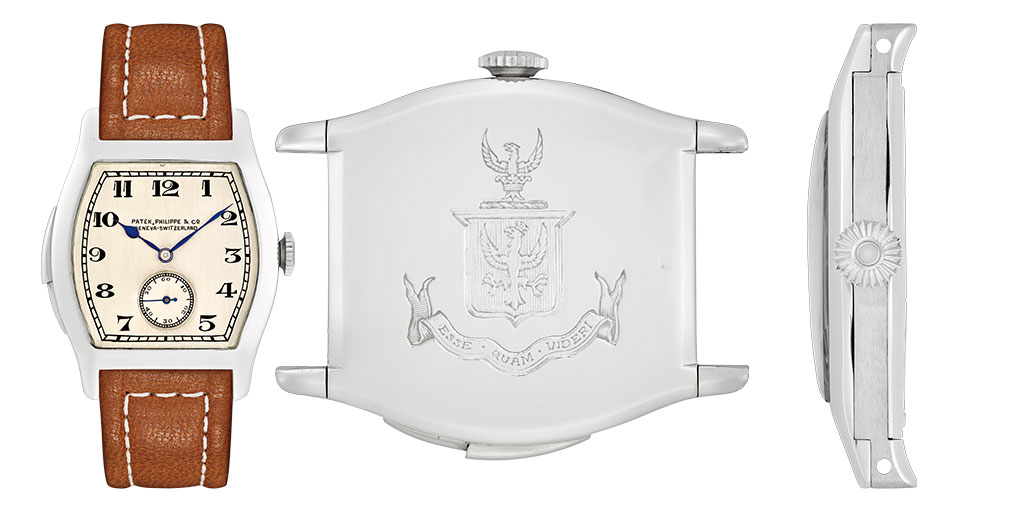
The ‘Art of Patek Philippe Legendary Watches’ auction took place on Sunday, April 9, 1989, at the Hotel des Bergues, Geneva. Alan Banbery was among the bidders. “Patek also brought several pieces, but I only recall one, namely: Lot 297 a rectangular wrist minute repeater [made for Eugene D. Hirsch in 1927 and consigned to the auction from the Mel Blanc Collection] But, also, most probably Lots 9; 35; 37; 38; 290; 295 … and perhaps some others.”
The star, however, was Lot 301: the Calibre 89, which, at that point, became the most complicated timepiece ever made, with 33 complications and nine years of development behind it. The watch toured internationally before the sale, accompanied by exhibitions that included many of the enamel masterpieces acquired in the previous decade.
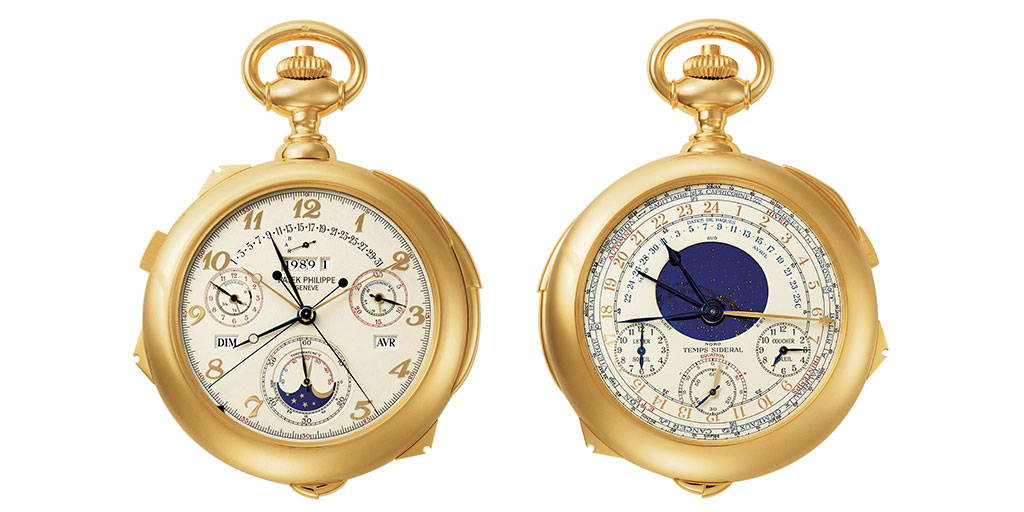
When the hammer fell at US$3.2 million, it signaled more than a record price. It announced to the broader collecting world that Patek Philippe’s history — not just its current production — was a stage on which serious money, scholarship, and emotion would play.
As part of the anniversary, the Musée d’horlogerie et d’émaillerie in Geneva staged a special exhibition of Patek Philippe watches curated by Banbery. At the opening, Henri Stern, pipe in hand, looked around and remarked, half amused, half astonished:
“I had no idea we have so many of our vintage watches.”
The comment was only half a joke. What had started as a two dusty cases in a waiting room had quietly grown into a collection of timepieces that deserved a proper home.
A Systematic Buying Policy and the Graves Supercomplication
After 1989, the watch auction market entered a new phase. Patek Philippe watches, in particular, began to achieve headline prices. Banbery and Stern responded with a more systematic approach.
For each major auction season, both men received catalogs from the leading auction houses. Before the sales, they sat together in Philippe’s office and went through the catalogs page by page, marking pieces they felt the company should try to buy and noting target prices.
Philippe Stern focused especially on enamels and decorative arts; Alan Banbery concentrated on historically or technically important Patek Philippe watches. At the auction, Banbery usually sat in the front row, bidding discreetly with a slight movement of his finger. Auctioneers quickly learned to take note of the discreet style of the elegant Englishman sitting in the front row.
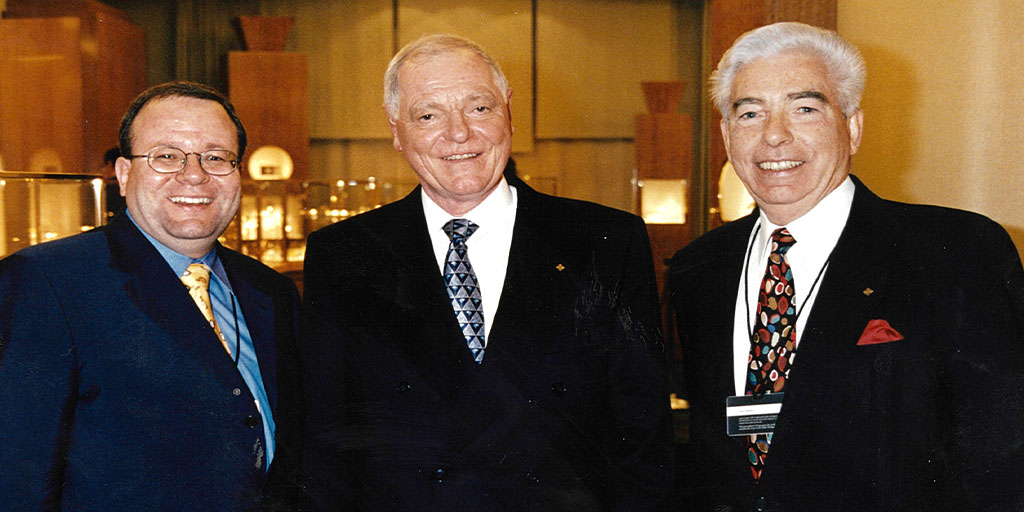
There is a persistent story that Philippe Stern and Teddy Beyer of Zurich’s Beyer Chronometrie, who was also building an important watch and clock collection, would agree in advance of an auction who would bid on which piece. Banbery remembers only three occasions when they explicitly decided not to compete, on a Breguet Sympathique clock, a Patek Philippe world-time clock in cloisonné enamel and a ship’s strike pocket watch.
“Philippe Stern was fantastic to work with, he was very flexible”, recalls Banbery. “He gave me free reign to buy whatever I felt was important to preserve the history of Patek Philippe.” Bidding for certain pieces could get higher than expected, but Philippe Stern trusted Alan Banbery implicitly. “I remember one time, during the Basel Fair, I needed to leave to attend an auction in Geneva where I was bidding for an important wristwatch owned by Henry Graves.” There was quite a bit of competitive bidding, but Banbery was determined to have the piece for Patek Philippe and eventually, the hammer came down at a much higher price than expected. Banbery remembers returning to Basel and informing Philippe Stern of the purchase price while he was hosting a VIP retailer dinner. He whispered in Stern’s ear and expected a shocked response but “he didn’t bat an eyelid!”
However, the memory of one sale still stings. On December 2, 1999, Alan Banbery had flown to New York to bid on the Graves Supercomplication No. 198 385. Banbery bid from a private box at Sotheby’s, speaking by telephone with Philippe Stern in Geneva. The price climbed through record territory. At US$10 million, Stern decided enough was enough and told Alan to stop. The watch sold to another bidder.
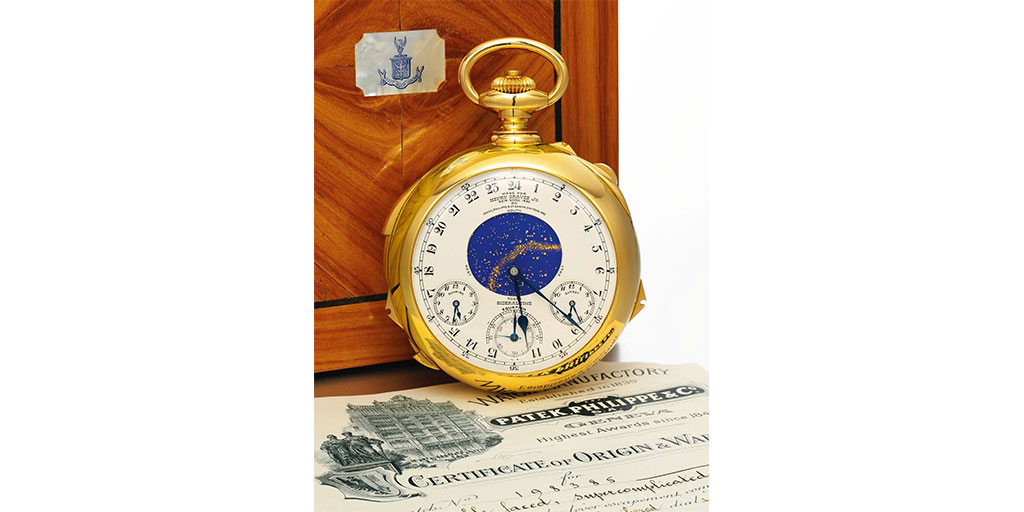
The Graves Supercomplication would have been the crowning piece in the Patek Philippe Museum which was nearing completion in 1999. The decision to build a museum to house the astonishing number of watches and clocks that Banbery and Philippe Stern had collected took fruition in the early 1990s when Philippe Stern decided to put all the Patek Philippe workshops under one roof at Plan-les-Ouates.
Choosing a Home and Opening the Museum
By the late 1990s, Patek Philippe had centralized its production at Plan-les-Ouates, and several buildings in Geneva were either empty or under-used. Among them was a large Art Deco industrial building on Rue des Vieux-Grenadiers, home since 1975 to Les Ateliers Réunis, the company’s case and bracelet workshops.

At first, the idea of turning the prestigious Rue du Rhône headquarters into a museum was considered, but practical issues — small lifts, limited access, structural constraints — made it impractical. Vieux-Grenadiers, with its generous floor areas and industrial character, offered more possibilities and easier public access.
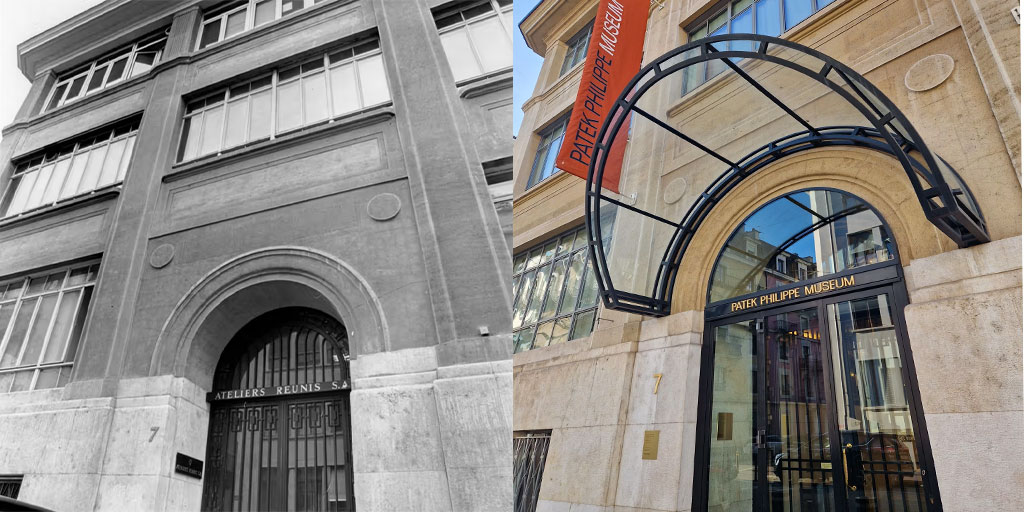
Once the workshops moved out in 1996, architect and interior teams began transforming the building. Gerdi Stern, Philippe’s wife, took a close interest in the interior design. The goal was clear: to create a museum that would not only house Patek Philippe’s own history but also stand as one of the world’s leading horological institutions.
Meanwhile, Banbery worked behind the scenes. A new, large walk-in vault was created at Plan-les-Ouates with custom trays for each watch so no two pieces could touch. The collection was photographed, documented and organized. When the Patek Philippe Museum finally opened in 2001, it contained more than 1,100 watches and clocks made by other makers and over 1000 Patek Philippe pieces spanning the firm’s entire history.
For a man who had once “tidied” a few cases in a dark waiting room, it was a satisfying moment.
Making Mechanics Visible: The Films of John Redfern
Alan was determined that the museum should be educational as well as beautiful. Visitors should be able to understand, at least in outline, how a mechanical watch works and how complex automata perform their tricks.
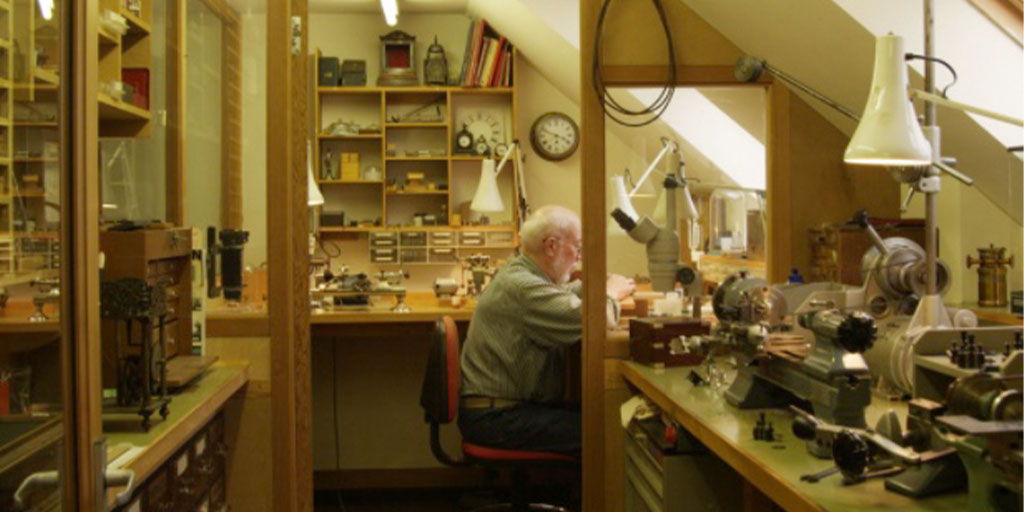
Fortunately, Alan was introduced to the brilliant work of John Redfern, a watchmaker who was the first to animate the inner workings of a timepiece. As Banbery recalled in an interview with Collectability in 2021, “It was Will Andrewes who first brought my attention to John Redfern’s exceptional talent which, at the time, was unique. Will said that I should view a video made of an ‘animation’ presentation which John had made for the Longitude Symposium at Harvard University in November 1993. Having duly viewed the video in question, I formulated the idea that a few, very complex pieces in the Patek Philippe Museum collection could, possibly, be highlighted with such brilliant animations. I then approached Philippe Stern and, having also shown him John’s video presentation, outlined my idea in more detail. With Philippe Stern’s inherent flair and vision, he agreed we should invite John Redfern to Geneva and arrange an agreement for him to produce some of his animations for the Patek Philippe Museum.”
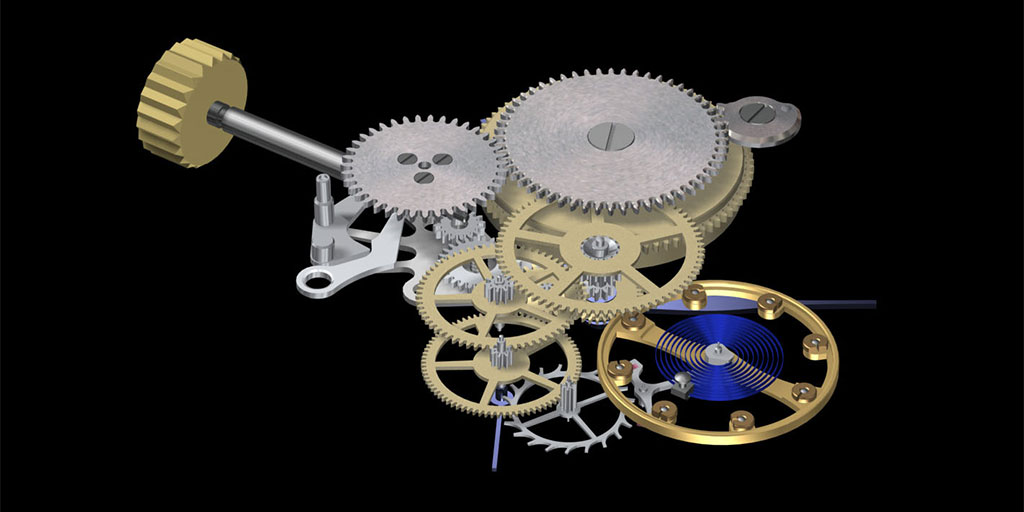
In 1997, Redfern was invited to Geneva to discuss projects for the new museum. Working closely with Patek Philippe’s watchmakers — especially Paul Buclin, who had assembled the Calibre 89 — he produced animations that brought otherwise invisible mechanisms to life, these included:
- the basic function of a mechanical movement (using the caliber 215 as a model)
- the operation of the famous “Moses” automaton watch, in which water appears to flow from a rock
- the extraordinarily complex singing bird pistol, whose animation required Redfern to dismantle, measure and digitally model hundreds of components
- and the special astronomical and calendar indications of the Calibre 89, including the calculation of Easter and sidereal time.
By the time the museum opened, visitors could not only see masterpieces behind glass but also watch their inner workings unfold on screen. To learn more about John Redfern, see this Collectability article.
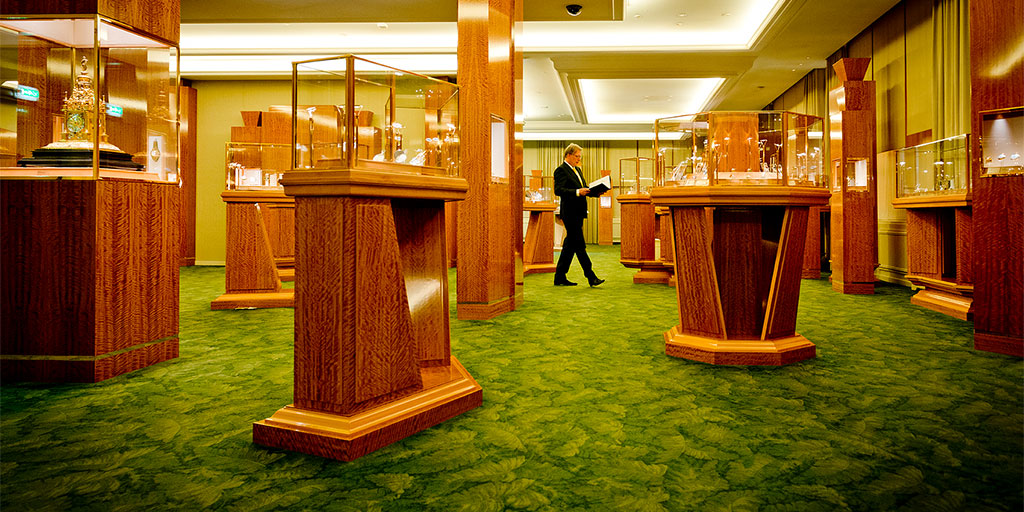
Later, under curator Peter Friess, the museum expanded its use of modern graphics and interactive screens such as individual iPads for visitors. Banbery, by then retired, praised these developments and the further acquisitions Friess made. “The improvements that Peter Friess has made are fantastic. The other pieces he has acquired, clocks and watches, not necessarily Patek Philippe, but other brands, are equally important.” The core approach, however — combining objects, archives, and explanation — was an extension of Alan’s original vision.
Building the Library
Alongside watches and clocks, Banbery built up the museum’s library, now one of the world’s most important collections of horological literature. It began with a few shelves and grew into a climate-controlled, catalogued resource of more than eight thousand volumes.
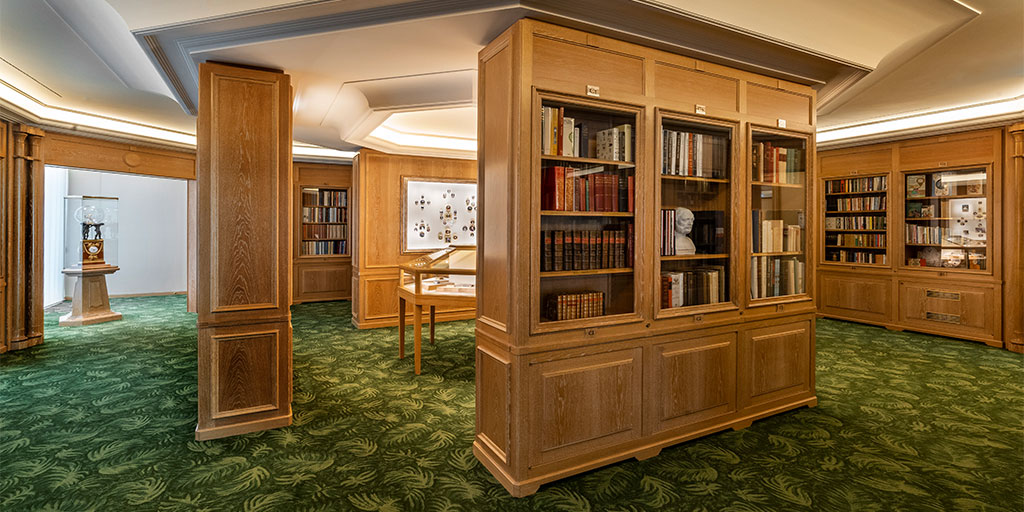
Key foundations were the libraries of Dr. Eugen Gschwind, a Basel dentist and serious collector, and Arthur V. Saint-Germain, an American rocket and jet-engine specialist who was also an exceptionally rigorous collector of horological books.
Alan visited Saint-Germain twice in Camarillo, California. The books, carefully arranged in a garage, impressed him as much for their condition as for the intelligence of their selection. As a condition of purchase, Alan insisted that the collection be properly catalogued. Saint-Germain had a professional prepare two volumes, one arranged by author and one by title, which now sit on the library shelves as a guide to the collection. To learn more about Arthur Saint-Germain see this Collectability article.
For Banbery, the library was not an ornament but the intellectual backbone of the museum. Without books and documents, watches cannot be fully understood, dated, or contextualized.
How a Collector Thinks
Asked about his criteria when buying for the museum, Alan is clear. First came rarity, then complication. Condition, while important, ranked behind those, because he knew that Patek Philippe’s workshops could restore a watch with sympathy and period-correct techniques.
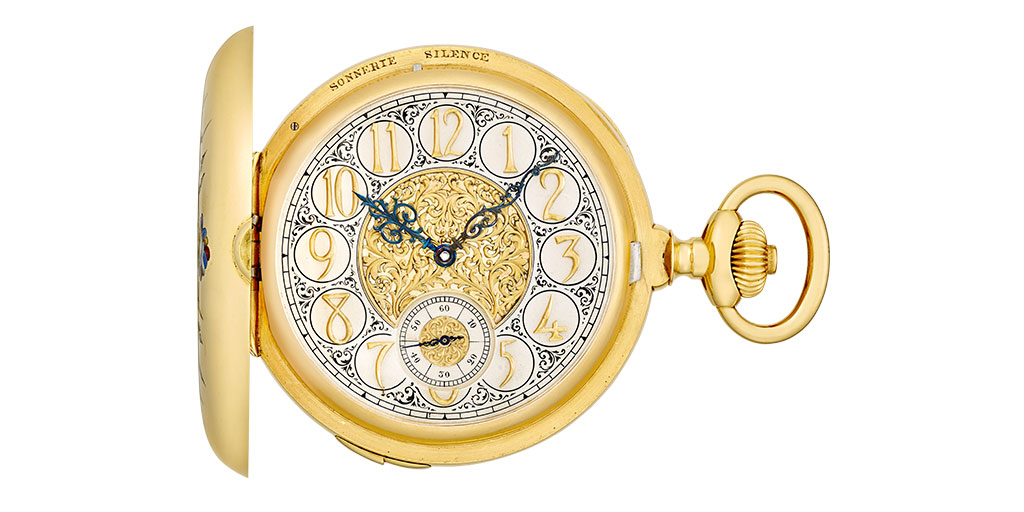
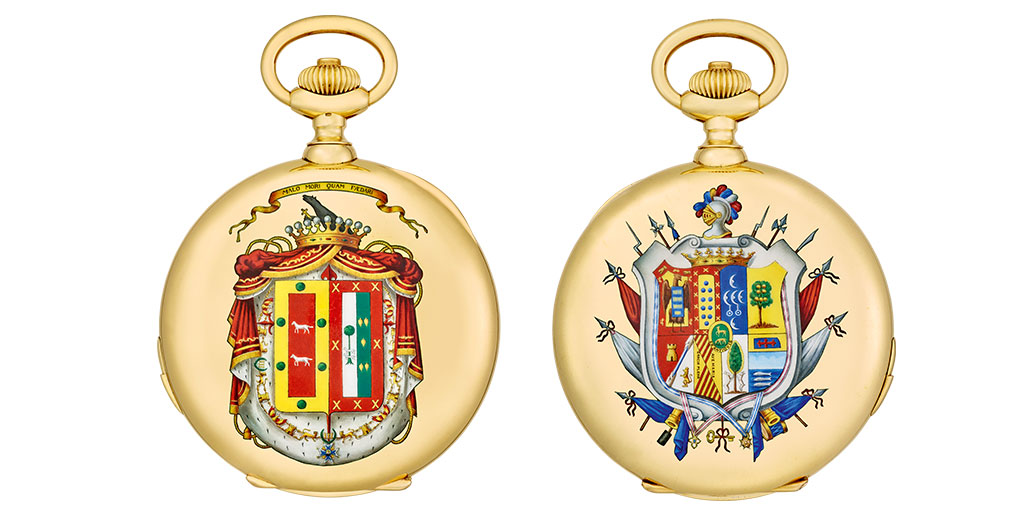
In some particularly challenging restorations, he enlisted outside specialists, such as Henri-Daniel Piguet (grandson of the famed maker Victorin Piguet), who restored the badly damaged Westminster chime and minute repeating mechanism of the 1910 pocket watch made for the Duke of Regla. Fortunately, the Piguet family still had the original drawings of the minute repeater and chime mechanisms which greatly assisted the restoration. Studying the construction of the chime later inspired solutions in the Calibre 89.
Today, Banbery continues to follow watch auctions, mostly out of curiosity — to see pieces he had known reappear, and occasionally to regret the sale of a watch or two from his own collection. He says that early Breguet would be the only brand besides Patek Philippe he would still seriously consider collecting.
Life Beyond the Bench and the Boardroom

Alan met his wife and companion of over 50 years, Valerie, through a cousin who owned a fashionable nightclub, called the Pink Pussycat, located in the former mansion of the Duke of Windsor in Nassau, Bahamas. His cousin needed to find a “girl Friday” to help manage the club. From two advertisements placed in London newspapers, and 194 applications, Valerie was selected and offered the job. Around this time in 1969, Alan was returning from a business trip to Scandinavia and decided to visit his mother at her house in London. Coincidently, on the same day, Alan’s cousin had invited Valerie to have tea with his aunt, Alan’s mother, to reassure Valerie of the authenticity of the job in the Bahamas. Alan was not too pleased at this unscheduled invitation — until he opened the front door: “It was love at first sight”. The outcome was that Valerie decided not to take the job in the Bahamas.
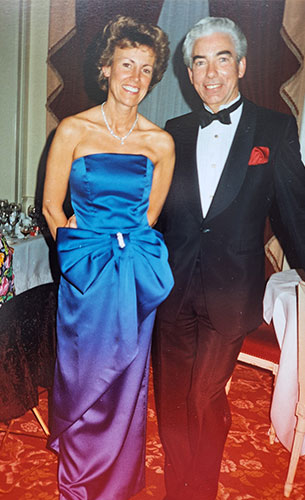
Valerie later found employment in Geneva with Investors Overseas Services (IOS), the controversial investment company founded by Bernie Cornfeld. IOS was famous in watch circles for rewarding top salesmen with special Patek Philippe watches — notably refs. 3565/1J and 4901/1J engraved with “Million Dollar Associate”. Eventually, Bernie Cornfeld and his Company crashed, and many people lost money. “It was a bubble that really burst”, recalls Banbery. Sir Eric Wyndham White, a British administrator and economist, was called in to wind up the company and chose Valerie as his assistant to help him. On completion of his mandate, he gave Valerie one of Bernie Cornfeld’s special Patek Philippe watches, ref. 4901/1J engraved with her name. To learn more about Bernie Cornfeld and the special watches he commissioned see this Collectability article.
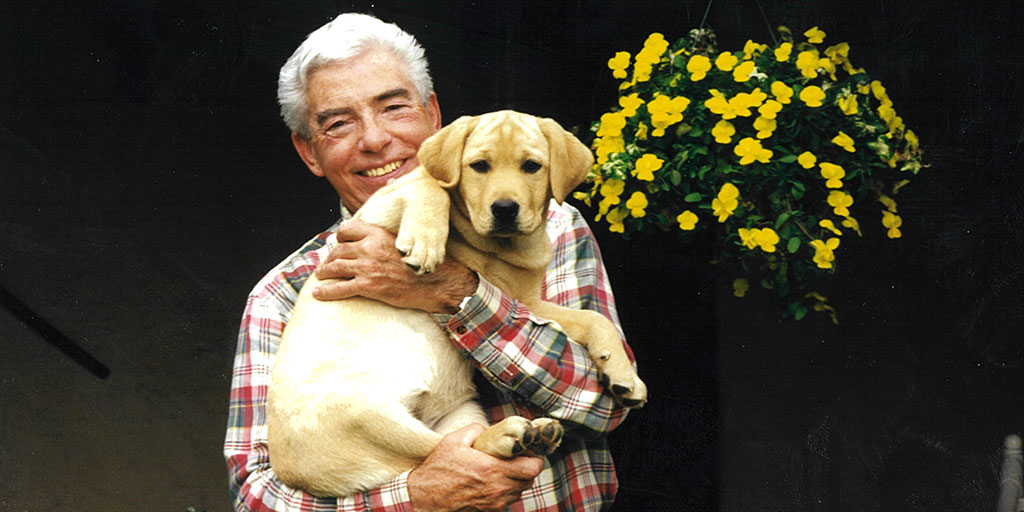
Away from watches, the couple shared a passion for Labrador dogs. They founded Fairfield Kennels, breeding, working and showing champions over many years, applying to dogs the same patience and eye for structure that Alan brought to watches.
Professionally, he became a Liveryman of the Worshipful Company of Clockmakers in London and a Fellow of the British Horological Institute, honors that recognized his standing among his peers.
Why the Banbery Chronicles Matter
If Alan Banbery had never set foot in Patek Philippe, the company would still have made the world’s finest watches. But it might not remember itself in quite the same way.
Through his work on After-Sales, he helped ensure that every Patek Philippe has a life story that can be followed and understood. Through his suggestions on design, he helped anchor new watches in the archive. Through his acquisitions and his role in founding the museum, he helped rescue hundreds of important pieces from obscurity and gave them a home. Through his books, he gave collectors and historians a common language.
When asked what Alan Banbery was most proud of in his career at Patek Philippe, his answer is simple, “The books are what I’m most proud of. Even though they are out-of-date, they are still used every day.”
Looking back on his career at Patek Philippe, he says: “I never had one low point in my 36-year career at Patek Philippe. I was as happy and content on the day of my retirement as I was on my first day.”
The Banbery Chronicles are, ultimately, not just the story of one man’s life. They are an account of how one person’s memory, taste, and judgement can shape the way a great Manufacture understands — and presents — its own past.
Tania Edwards and John Reardon sincerely thank Alan Banbery for generously sharing his memories with Collectability.