
Every modern-day Grand Exhibition that Patek Philippe has mounted can trace its DNA back to a single event: thirteen days in Fort Worth, Texas, in January 1995. Historical masterpieces crossing the Atlantic for the first time. Specially commissioned pieces celebrating the American West through rare handcraft techniques. Doors open to anyone, free of charge, in a museum rather than a store. None of it would exist in the form it does today without what two families built together.
The Sterns of Patek Philippe in Geneva and the Millers of Haltom’s Jewelers in Fort Worth shared something beyond a business relationship: a conviction that the full story of Patek Philippe deserved to be told properly, in person, and without compromise. What they created exceeded every expectation – and quietly set the template for how one of watchmaking’s great families would choose to meet the world for decades to come.
This is the story of how it came to be.
The Origin Story
Participating in exhibitions has been at the very heart of Patek Philippe’s history, so much so that exhibitions have been foundational to the company. In fact, it was at the 1844 French Industrial Exposition in Paris that Mr. Antoine Norbert de Patek discovered Mr. Jean Adrien Philippe’s invention of the keyless winding system. Mr. Patek quickly recognized how important this invention was and that it would revolutionize watchmaking entirely. It would then lead to Mr. Patek and Mr. Philippe joining forces in Geneva, and the company would officially be renamed Patek, Philippe & Cie. in 1851.
1851 was also the year of the first, large-scale international fair, the Great Exhibition at Crystal Palace in Hyde Park, London, where one of Patek Philippe’s most celebrated pieces on display was a pendant watch employing Philippe’s stem-winding system – one that would be presented to Queen Victoria.
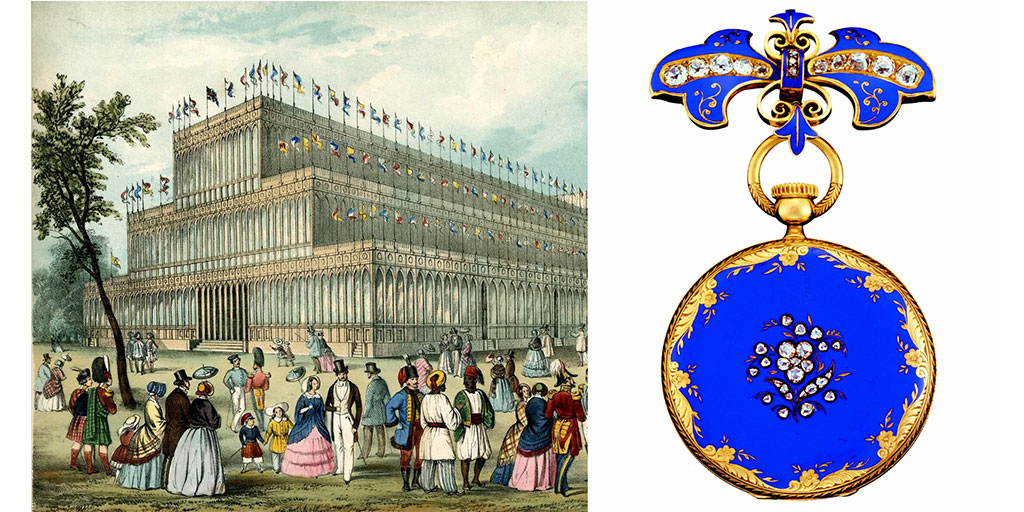
The 1851 Great Exhibition Crystal Palace Hall in London. Credit: Wikimedia Commons
Patek, Philippe & Cie. Queen Victoria’s Pendant Watch. No.4536 (1850-51). Image credit: Patek Philippe
From there, national and international exhibitions would be organized by several European countries – Paris and London constantly battling over which city would organize the grandest exhibition – as well as in the “New World,” that is America. The 1876 Centennial International Exhibition held in Philadelphia celebrated the 100th anniversary of the Declaration of Independence and was the first official World’s Fair held in the United States. The 1889 Universal Exposition held in Paris not only celebrated the centennial of the French Revolution; it also gave the world the Eiffel Tower.
Patek Philippe would regularly participate in these exhibitions and win dozens of medals, which were prizes recognizing the brand’s notable achievements in horology, precision timekeeping, and mechanical innovation. Moreover, Patek Philippe would also regularly be invited to be part of the juries awarding the prizes, an additional testament to the brand’s standing.
The fairs were arguably the single most important venue for showcasing modernity and bringing the wider world to the general public. It was only from the late 1930s that World’s Fairs would slowly shift from being indispensable cultural events to being one attraction among many as mass media – newsfeeds, radio, television – would become far more convenient, faster, and cheaper ways to communicate.
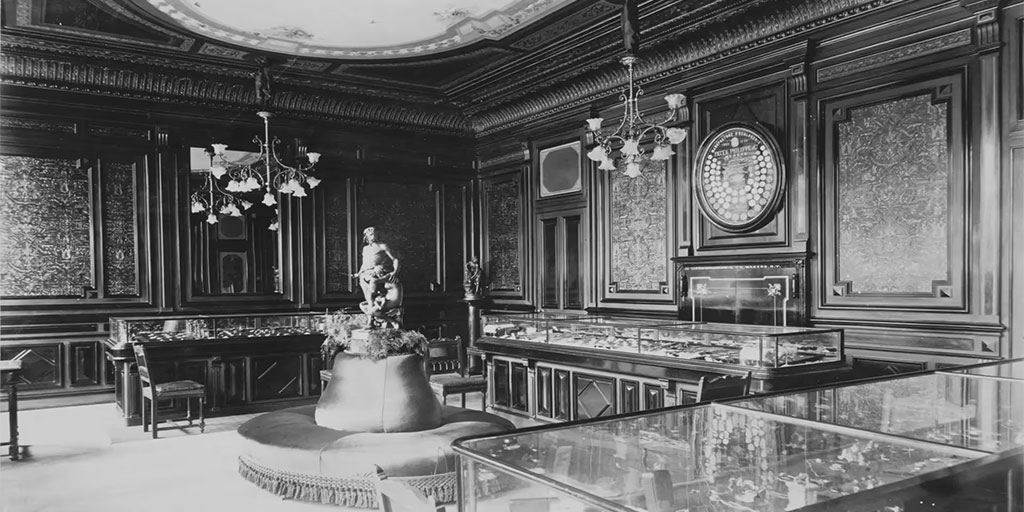
The historic Patek Philippe Salon in Geneva with the precious medals framed in an oval frame. Image credit: Patek Philippe
Subsequent exhibitions
Even so, the idea of mounting exhibitions continued at Patek Philippe. In the United States in particular, from the 1960s onward, exhibitions would be held on a smaller scale at retailers. For a few days, these events were an opportunity to display a wider selection of pieces. The retailers would advertise in their local areas and invite clients in store, often also hosting cocktail parties. As Hank Edelman – who joined HSWA (Henri Stern Watch Agency), which is Patek Philippe’s distributor for the Americas in 1961 and became President in 1991 – recalls, the first larger exhibitions in the United States started in 1967 in New York, Chicago, and Los Angeles.
Since the exhibitions were held in retail stores, the spaces were relatively small. All showcases were already filled – not with watches alone, but predominantly with jewelry, which was a key business driver. As a result, Patek Philippe had to bring its own showcases and stage the extra pieces in a way that would please the clients. At the Geneva Headquarters, Alan Banbery, who had been responsible for the American market since 1966, was instrumental in helping put these exhibitions together.
The 1969 exhibition at Linz Brothers in Dallas, Texas, was notable because it was essentially the first time Patek Philippe brought historical pieces from its private collection to America. This was years before the Patek Philippe Museum opened, and it was a first opportunity for Linz’s clients to grasp what prestigious pieces had been made in the past.
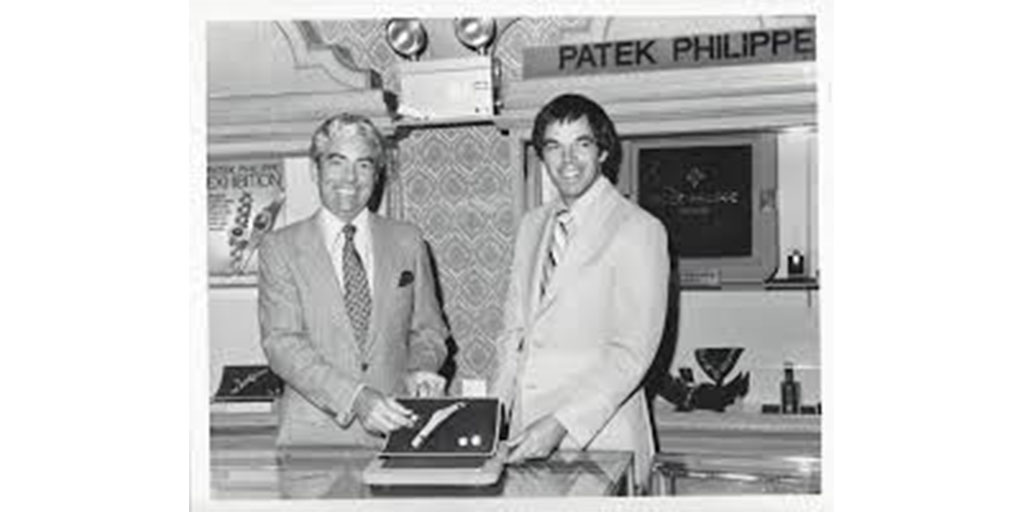
Hank Edelman and Alan Banbery at an exhibition in Florida in 1975. Image credit: Patek Philippe
These exhibitions continued over the years and followed a similar theme. One worth mentioning happened in 1992 at Borsheim’s in Omaha, Nebraska, when Patek Philippe made it into the legendary Berkshire Hathaway Shareholder letter, inviting shareholders and their guests to discover the special exhibition. It was there that Warren Buffett was introduced to the Caliber 89, the most complicated watch in the world at the time, and local newspapers featured a picture of him holding the watch, headlined “The billion-dollar man with the six-million-dollar watch” – a tongue-in-cheek nod to his reputation not only as then one of the richest men in the USA, but as someone notoriously down-to-earth who would never spend such a sum on a luxury item.
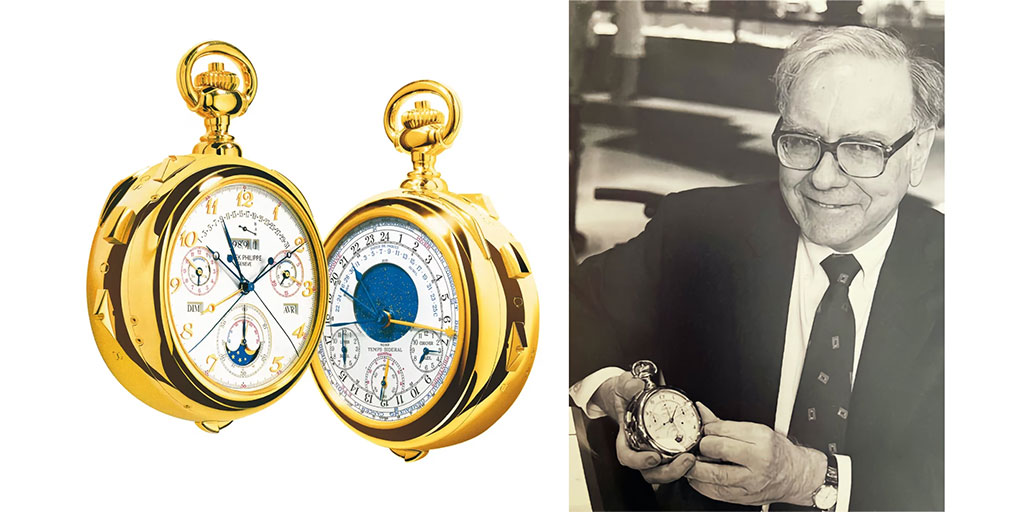
Warren Buffet holding the Caliber 89 at Borsheim’s in Omaha, Nebraska, in 1992. Image credit: Patek Philippe, Collectability Archives
Participating in these exhibitions allowed Patek Philippe to gain visibility, increase brand awareness, and educate clients at a time when the brand was far from having today’s recognition. Patek Philippe could speak directly to the end clients, without having their message filtered first through the press or the retailer. This was a way to educate, explain, and share what Patek Philippe was about and what made the brand so special. That said, clients were not waiting in line outside the store to see the watches – it was a slow word-of-mouth education, and while reasonably successful, Patek Philippe still had a long way to go in reaching a wider audience.
Two worlds and two families
That would change in the early 1990s, when Patek Philippe decided the next exhibition would be unlike anything it had attempted before. The city that would make it happen was not New York, Los Angeles, Paris or Tokyo – it was Fort Worth, Texas. Lovingly nicknamed “Cowtown” for its role as a major hub of the cattle industry, this was arguably not the most intuitive place, and yet, this is where history was made.
Fort Worth and Geneva make an unlikely pairing – until you look more carefully. Both are cities where identity runs deep, where pride is understated rather than performed. Both were once independent Republics and have never entirely shed that self-reliance. If one is the Wild West and the other the Swiss vault, both guard what they value with the same quiet intensity. And crucially, both understand that the most important relationships – between families, between businesses, between cities – are built across generations.
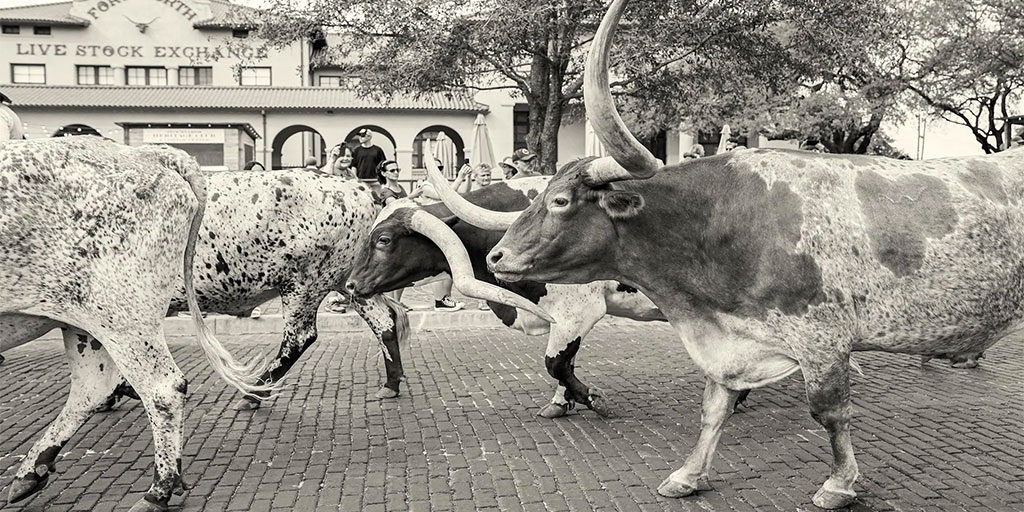
Cowboys driving a herd of Texas Longhorns through Fort Worth in 2023. Image credit: Timothy Clary
Haltom’s Jewelers had been a Fort Worth institution since 1893, and had been retailing Patek Philippe for years when Jack Miller, who had owned the business since 1983, began pushing for something more ambitious. Miller believed that Fort Worth’s clients deserved to experience Patek Philippe in full — not a selection of current pieces arranged in a display case, but the whole story, told properly, in a space worthy of it. It was his conviction and persistence that first put the idea on the table in Geneva.
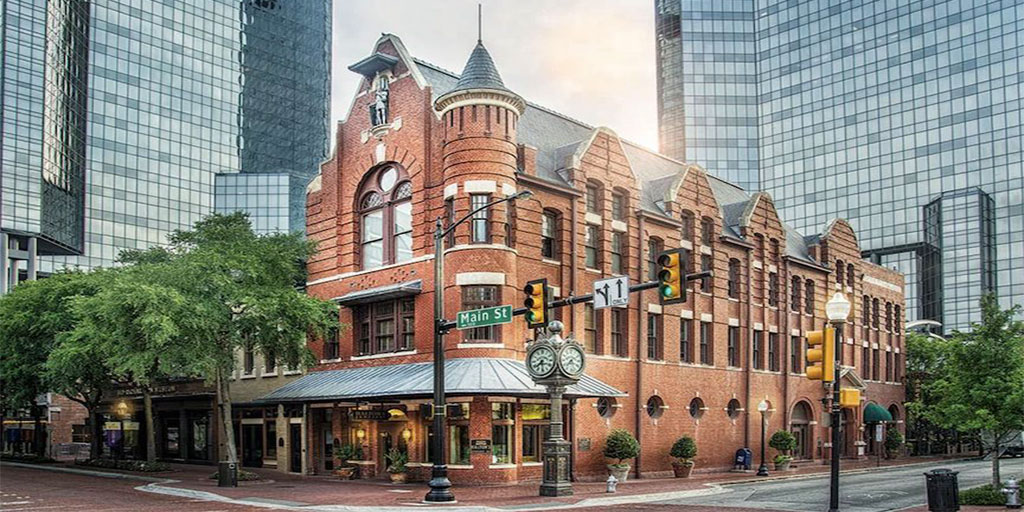
Haltom’s flagship store in the old Knights of Pythias building, a Recorded Texas Historic Landmark. Image credit: Haltom’s
The Stern family, who had owned Patek Philippe since 1932 and passed the business from one generation to the next ever since, recognized in the Millers something they understood well: a family whose name meant something in their city, and whose word, once given, held.
The United States had been one of Patek Philippe’s most important markets for the better part of the brand’s history. When both families agreed it was time to do something that had never been done before, the only question was how far to take it. In true Texan spirit, the answer was as far as possible. The exhibition would be named, fittingly, “The Legendary Watches of Patek Philippe.”
The Exhibition
Patek Philippe and Haltom’s had been preparing for the Fort Worth exhibition for nearly two years before its doors opened from January 17th through January 29th, 1995.
The largest exhibition outside Geneva in Patek Philippe’s history did not take place within a retailer’s premises – a museum had been chosen instead, the Sid Richardson Collection of Western Art Museum, conveniently located next to Haltom’s store. The Stern family was adamant that the event should not be purely commercial: it should be free and open for everyone to visit, whether they were clients of the brand or not, and without the fear often associated with pushing the heavy and intimidating doors of an expensive jewelry store. From the Museum side, it was the very first temporary exhibition held since its opening in 1982.
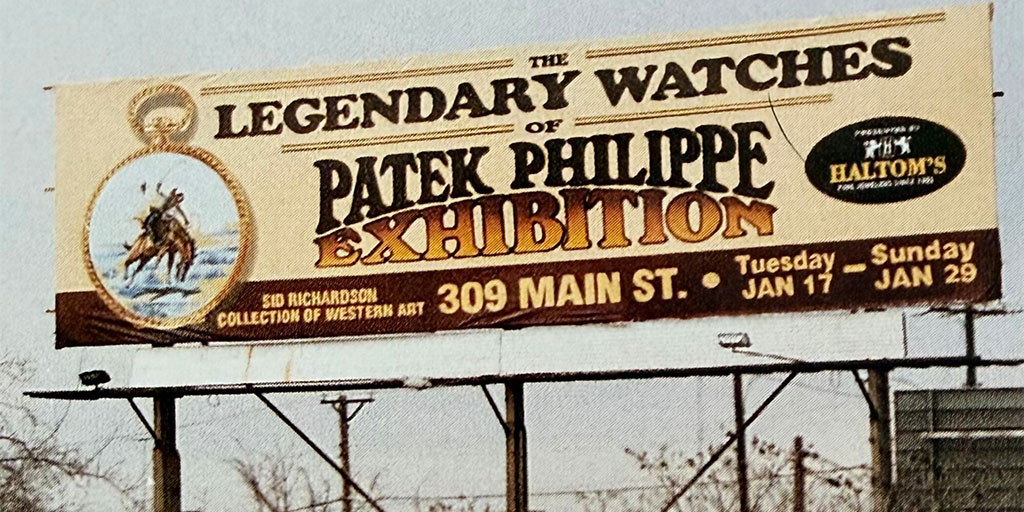
A billboard along the highway advertising the exhibition the Texan way. Image credit: private collection
265 pieces were exhibited: historical pieces from Patek Philippe’s collection, and contemporary pieces from the current production. For the first time since Patek Philippe had acquired it in 1988 for $1.3 million, the illustrious and highly complicated “Packard” pocket watch would return to America. One of the earliest watches with a keyless mechanism once owned by Queen Victoria was also exhibited, and a watch commissioned by Albert Einstein was among the numerous other highlights. The seven traditional watchmaking crafts represented by the designer, the watchmaker, the goldsmith, the chainsmith, the engraver, the enameler, and the jeweler were all presented alongside the timepieces. Visitors could experience Patek Philippe’s entire history and what made it so unique.
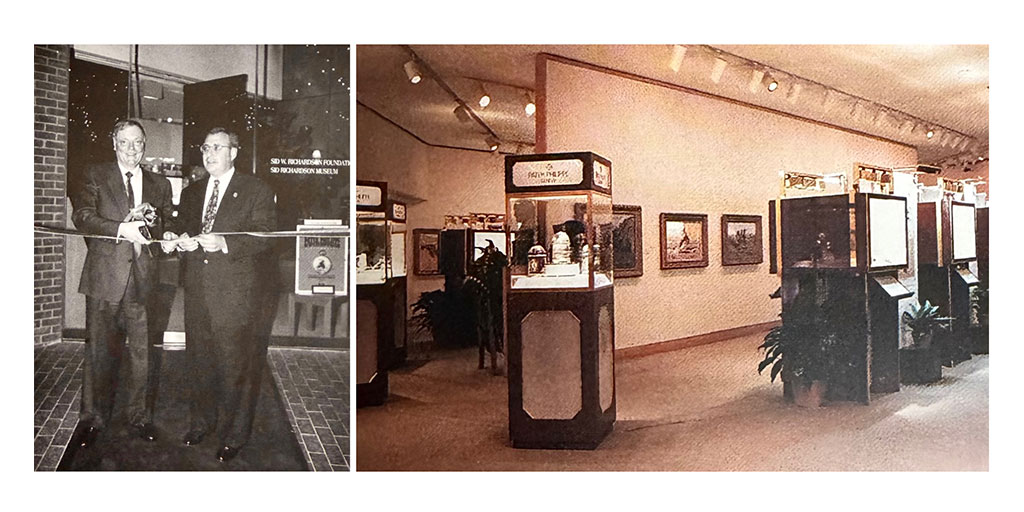
Philippe Stern and Haltom’s Jack Miller at the exhibition inauguration (left) and inside the exhibition. Image credit: private collection
That year, Haltom’s took on the organization of The Jewel Charity Ball, a gala dinner in Fort Worth held since 1954 to raise funds for Cook-Fort Worth Children’s Medical Center. A selection of Patek Philippe’s collection was exhibited in a dedicated room for the 1,500 attendees to discover as a preview. A record-breaking $1.3 million was raised and Jack Miller, then owner of Haltom’s, pledged to donate a percentage of Patek Philippe sales to the charity. The tradition of Patek Philippe directly or indirectly contributing to charitable causes, particularly supporting children in need, continues to this day.
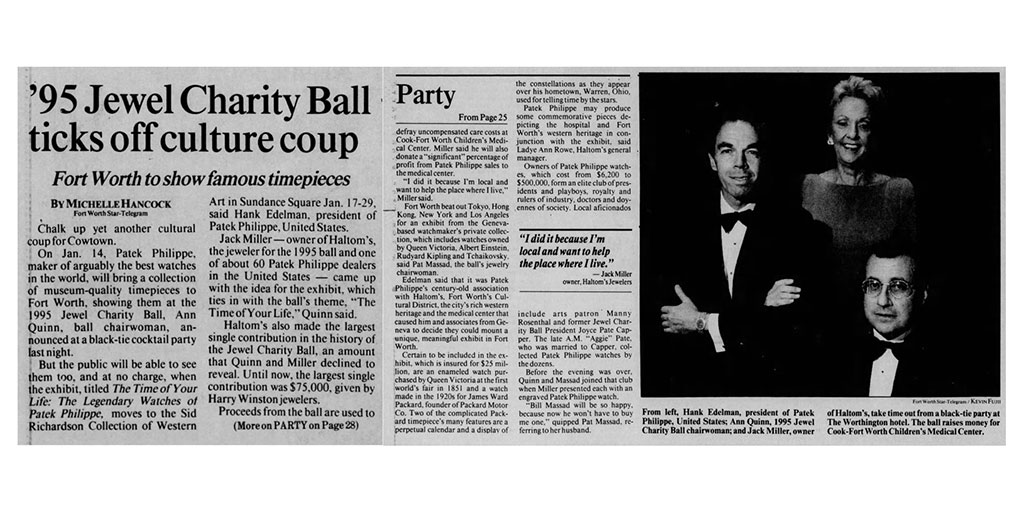
The Fort Worth Star Telegram reporting on the 1995 Jewel Charity Ball. Image credit: FWST Archives
The specially commissioned pieces
Not only had Patek Philippe brought historical pieces from its private collection, it had also chosen to make special pieces for the event. Commemorative pieces had been made in the past to celebrate brand anniversaries, retailer anniversaries, or other special events – but never for an exhibition. Today, specially commissioned pieces for Grand Exhibitions are eagerly anticipated months, if not years, in advance. At the time it was novel territory.
A total of six pieces were created, all with what is now known as Rare Handcraft techniques: four miniature enamel painted pocket watches, one hand engraved pocket watch, and one cloisonné enamel dome clock, each a unique, specially commissioned piece.
The choice of the artworks was a true celebration of American culture. While preparing or the exhibition almost two years in advance, Pamela Cloutier, then in charge of the American market sales at Patek Philippe’s headquarters, visited the Sid Richardson Museum to get a sense of the exhibition space. To be able to show what the exhibition space would look like, she took pictures of the location and of many artworks on display, many of which were by some of America’s greatest artists. She recalls presenting the ideas to Mr. Philippe Stern during a preparatory meeting, and this is where he spontaneously selected the artworks that would be reproduced on timepieces. Not only that, he also chose which artist would execute each piece.
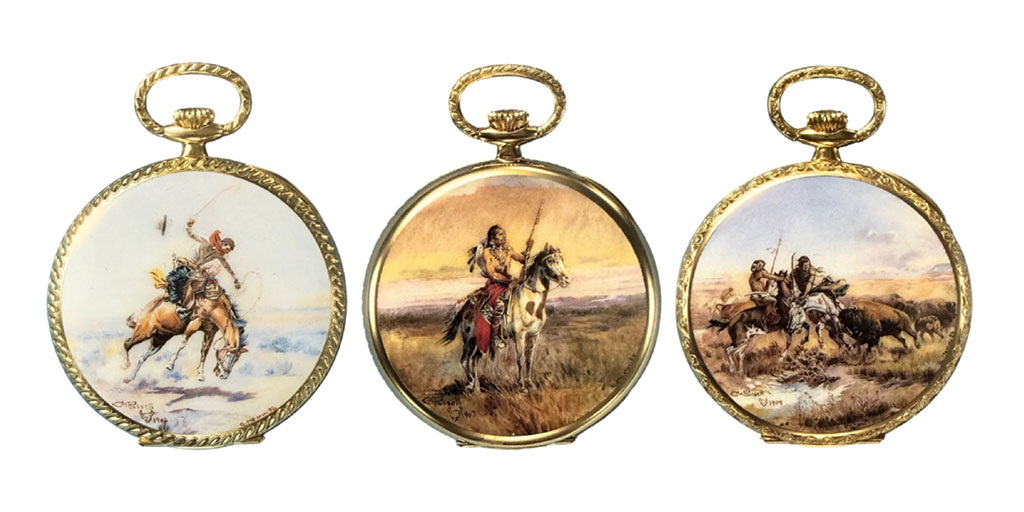
“The Bucker,” “The Scout,” and “The Wounded Buffalo” after C.M. Russell, painted by Giancarlo Menni. Image credit: Patek Philippe
The selected artworks for the miniature enamel pocket watches all reproduce important paintings by Charles Marion Russell (1864-1926). Painted in the early 20th century, these works remain part of the Sid Richardson Museum collection to this day and depict cowboys and Native Americans. C.M. Russell’s original works now regularly sell above $1 million.
Suzanne Rohr made one pocket watch and Giancarlo Menni made three using the particularly demanding miniature enamel painting technique. The first task is for the enameler to “envision” and translate how a large rectangular painting can be adapted to the small and round size of a pocket watch. It is only then that the paintwork begins — a process demanding hundreds of hours of intense concentration, with the enameler alternating between applying minute touches of color and firing the piece in the oven. The smallest mistake can mean losing the entire work. Rohr’s piece was priced at $54,000, while the Menni pieces were priced at $42,000.
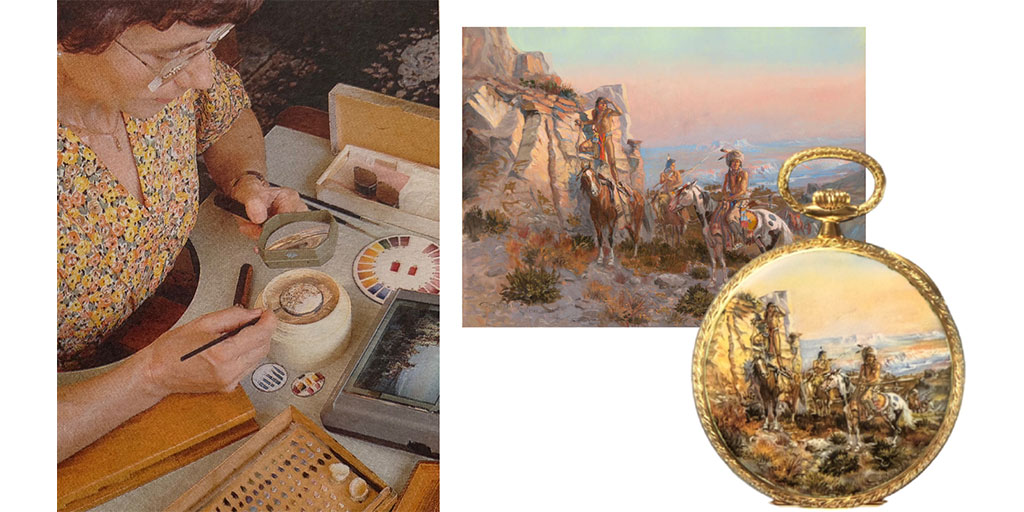
“Trouble Hunters” by and after C.M. Russell, Suzanne Rohr painting the watch. Image credit: Patek Philippe, Sid Richardson Museum
“The Cow Puncher” by Frederic Remington (1861-1909) served as the inspiration for Patek Philippe master engraver Christian Thibert to engrave the cowboy scene on the caseback of a pocket watch. He managed to capture the subtle play of light and shadow in the engraving, which resulted in a life-like texture and depth. It was offered for $42,000.
The final piece that was specially made for the exhibition was a photoelectric dome clock. Since the 1950s, Patek Philippe had been making these clocks, which thanks to their large panels are perfect canvases for enamel artists to reproduce unique motifs. Master enameller Michèle Margueritte Mauris was chosen to work on this project and reproduced Texan ranch scenes with cowboys and longhorns inspired by the Chisholm Trail mural in downtown Fort Worth. It was offered for $37,800.
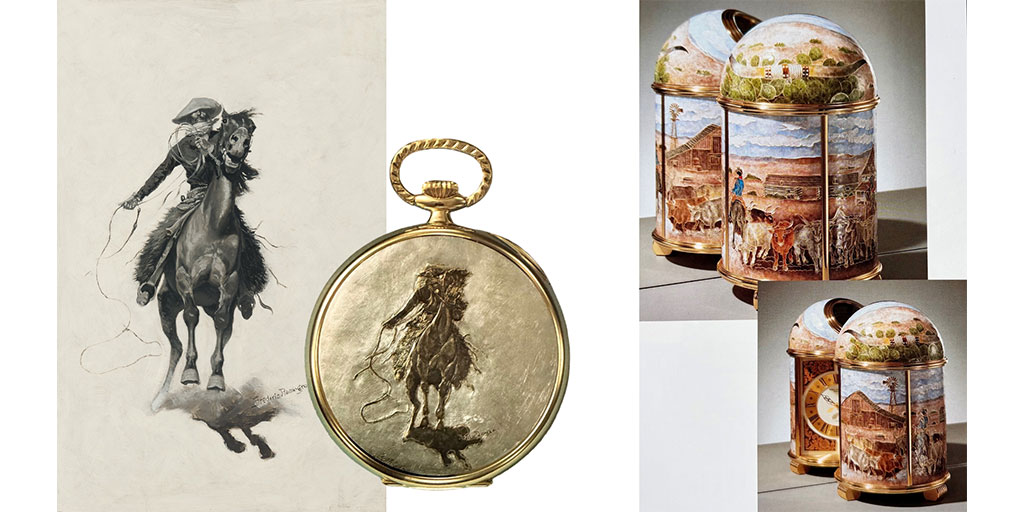
“The Cow Puncher” by and after Frederic Remington, engraved by Christian Thibert. Credit: Patek Philippe, Sid Richardson Museum“Longhorns and Cowboys” Dome Clock painted by Michèle Margueritte Mauris. Image credit: Patek Philippe
It is hard to overstate how important these pieces were and still are. Not only were they remarkable pieces of watchmaking, they also featured exceptional rare handcraft techniques, whose imagery spoke directly to the hearts of local clients. It was Geneva paying tribute to Texas in the most elegant way imaginable. All watches were sold during the exhibition, and in the thirty years since, only one has been documented at public auction, the miniature enamel pocket watch “The Scout”, which sold for an astonishing $520,700 at Christie’s New York in December 2025 – 12 times the original price.
What it meant at the time and now
While early exhibitions in the USA remained largely under the radar, Fort Worth was a huge success, attracting visitors like no exhibition before it. Crowds of visitors were waiting in line around the block for up to one hour in the cold January weather before being able to enter and admire the pieces. More than 10,000 visitors came through the Sid Richardson Museum over the course of the 13-day exhibition. To put it into context, it was over ten times the number of visitors the museum would typically receive. This was unprecedented and exceeded even the most optimistic forecasts. It marked a historic turning point for Patek Philippe.
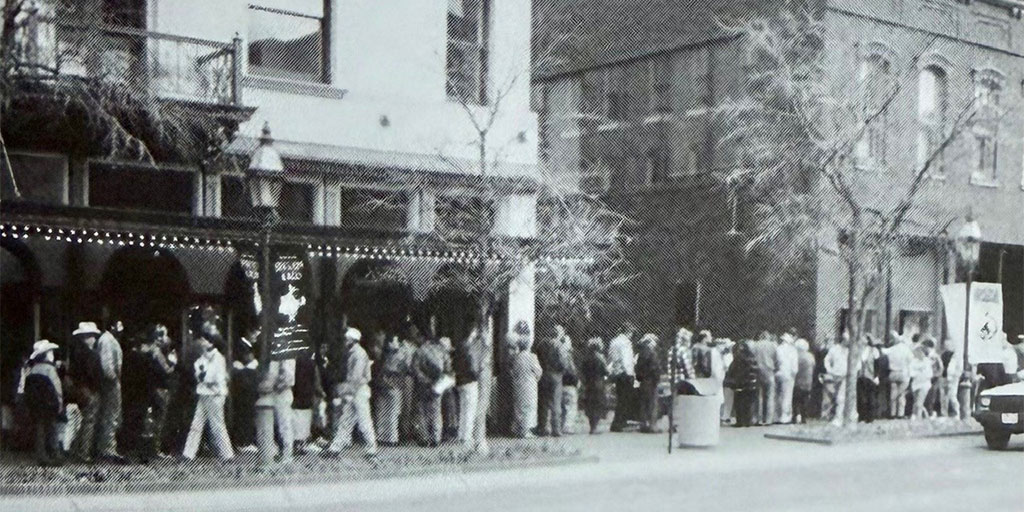
Visitors waiting in line for up to an hour to enter the exhibition. Image credit: private collection
Beyond Fort Worth and Texas, Patek Philippe gained visibility nationwide, with Mr. Philippe Stern giving TV, radio, and newspaper interviews on both national and local outlets. Hank Edelman, President of HSWA, would be interviewed on the number one morning TV program, NBC’s Today Show to talk about the event. That a notable but niche watch brand with limited name recognition could command such attention was itself a sign of changing times.
Commercially, it was an immense success. Beyond the six specially made pocket watches, 59 watches from the collection were sold during the exhibition, ranging from simple Calatravas to high complications like the ref. 5004 split-seconds perpetual calendar, and a jewelry set. Sales of this volume in such a short span of time were, once again, unprecedented.
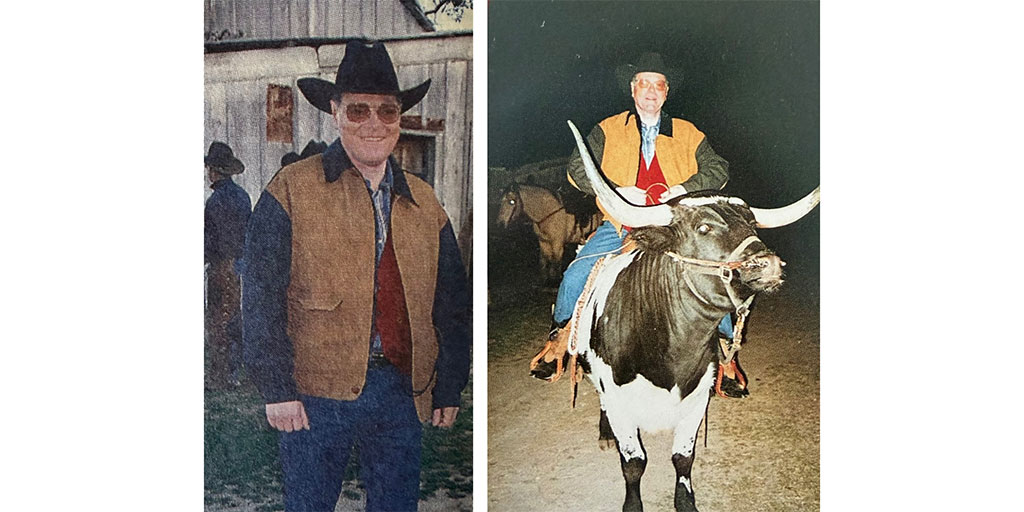
Mr. Philippe Stern in traditional Texan attire in Fort Worth in January 1995. Image credit: Tribune des Arts, private collection
In hindsight, knowing the Grand Exhibitions Patek Philippe would go on to organize, the Fort Worth exhibition might appear to have been part of a grander plan — but this was not the case. The stars aligned to make it happen, driven by Philippe Stern’s vision, with Pamela Cloutier being the driving force behind the event in Geneva, Hank Edelman and Tania Edwards in New York, and the Miller family in Fort Worth.
Almost two decades would pass before the next large-scale exhibition took place. In 2012, the “Watch Art Grand Exhibition” opened in Dubai – a name that has been retained ever since – drawing 3,500 visitors to 400 exhibits. Munich followed in 2013, then London in 2015, New York in 2017, Singapore in 2019, Tokyo in 2023, and Milan, scheduled for October 2026. Each city has a different culture, a different conversation, but the same conviction that watches of this depth deserve to be seen in person, in context, by anyone willing to walk through the door.
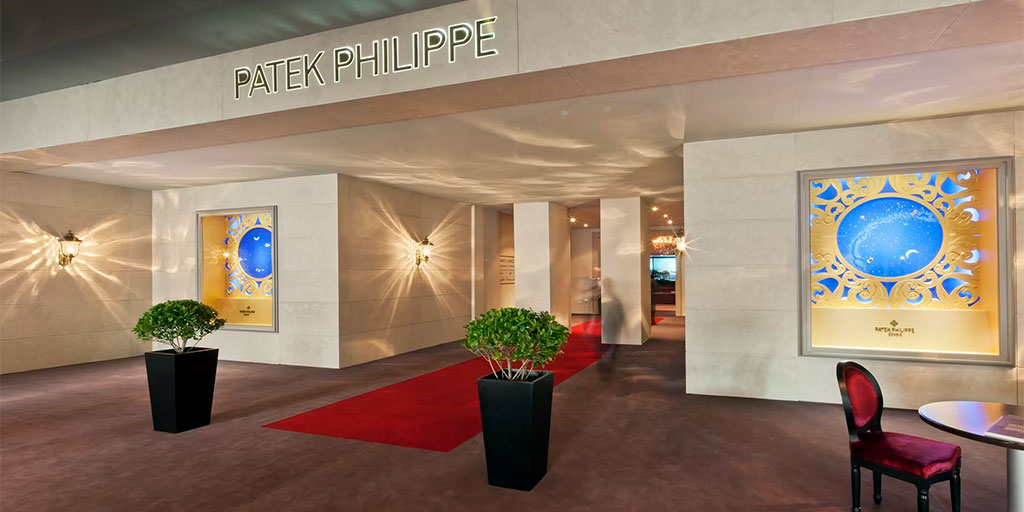
The 2012 Dubai Watch Art Grand Exhibition, almost two decades after the key standards were set at Fort Worth. Image credit: Patek Philippe
Haltom’s closed its doors in January 2025. It was a quiet ending after 132 years as a Fort Worth institution. Some collaborations leave a mark not in the records they set, but in the standard they establish for everything that follows.
That standard endures. A dedicated exhibition space far removed from the traditional retail environment. Museum pieces travel. Specially commissioned pieces – once novel, now among the most anticipated and collectible objects Patek Philippe produces – are traditionally unveiled for each new city. What began in Fort Worth became the template for how one of watchmaking’s great families chooses to meet the world: not through advertising, not through intermediaries, but in person, on their terms, and always with something worth the journey.
The author would like to deeply thank Pamela Cloutier, who was Area Director for the Americas for Patek Philippe at the time of the exhibition, and Tania Edwards, SVP of Marketing for the HSWA at the time, who were both instrumental in the Fort Worth exhibition, for so generously sharing their memories and recollections of the event. On their joint Collectability podcast, Pamela and Tania share a wealth of additional memories from their time working at Patek Philippe.
Edouard Henn (@edouard_henn) has been passionate about horology since his teenage years. He began his professional journey at Girard-Perregaux in Switzerland before transitioning to the luxury industry across Europe and the Middle East. Edouard brings both a product and a collector’s perspective to his writing. Now based between Geneva and Paris, he enjoys sharing horological knowledge and connecting with fellow enthusiasts in the watch community