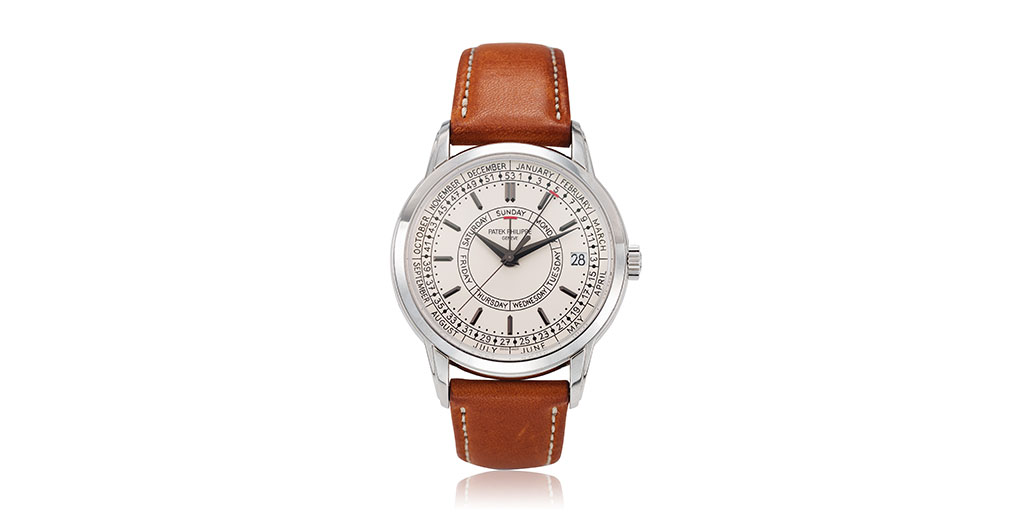
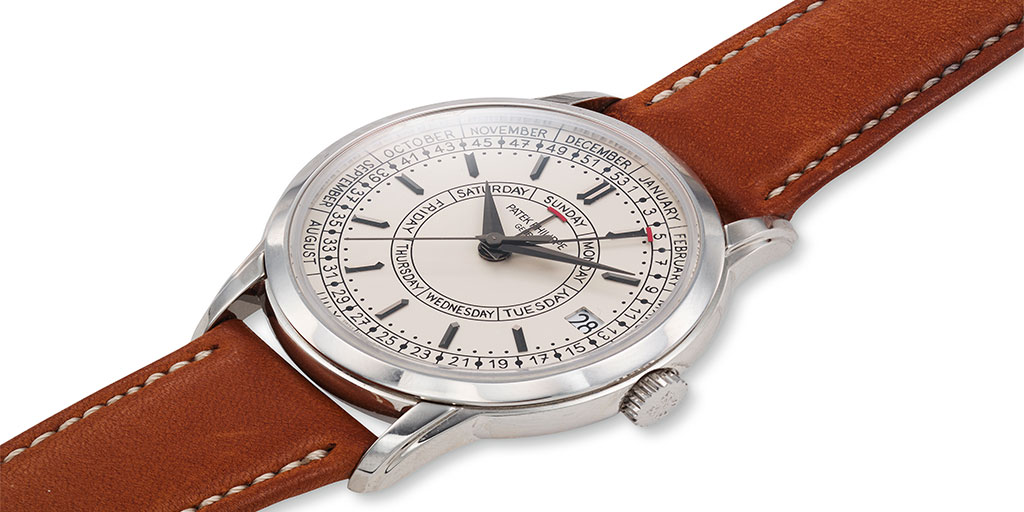
One of Collectability’s favorite modern Patek Philippe watches is the ref. 5212. Known as the Calatrava Weekly Calendar, it was introduced at Basel 2019 where it was met with widespread praise and fascination especially as it added a new, innovative complication to the collection. As well as indicating the day and date, this watch is the first Patek Philippe to indicate the week number, a surprisingly useful complication even in the age of smartphones. The dial also showcases units to which everyone can relate: the seven days of the week. The question “What day is it?” is simply answered by a quick look at the dial! The quirky, handwritten style font on the dial sparked lively debate and was generally congratulated for giving a traditional, formal brand a more human character.
But the seemingly simple complication belies the complexity of this new movement. It’s been quite some time since Patek Philippe introduced a “useful” complication. The previous two examples are the Annual Calendar which debuted in 1996 and the Travel Time in 1997. These two movements opened a whole new category and offered collectors an option between time only and grand complications such as a perpetual calendar or chronograph.

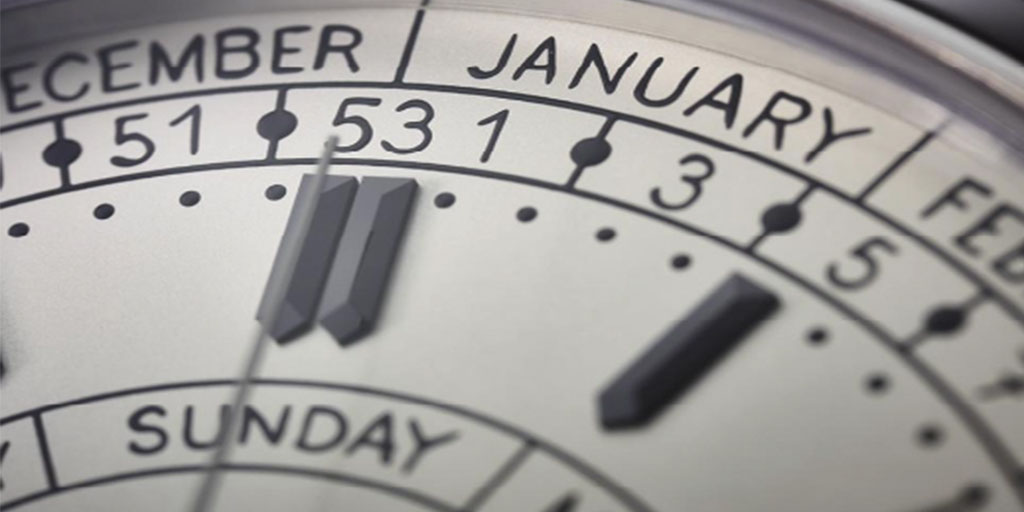
The number of the week is a new complication which required the development of a new module with asymmetric wheels that have differing tooth lengths, calibrated for the weekly cycle. The weeks are numbered in accordance with the ISO 8610 standard, which specifies that the first full week in any year must begin on Monday, not Sunday, and that the first full week of the year is that which contains January 4. This means that occasionally a year will contain 53 rather than 52 weeks, which is accounted for in the calendar mechanism and numbering scheme on the dial. The phenomenon of 53 weeks in a year occurs every 5 to 6 years when the first of the year begins on a Thursday, as with 2026, or when a leap year starts on a Wednesday (which won’t happen until 2040).
ISO stands for International Organization for Standardization and is one of the oldest non-governmental international organizations, established in 1946. 8601 denotes the agreed international standardization for the communication of date and time-related data.The ISO 8601 was first published in 1988 and updated in 1991, 2000, 2004 and 2019 and amended in 2022. The standard provides a defined method of representing calendar dates and times in worldwide communication to avoid any misinterpretation of numeric dates and times when transferred between countries with different conventions. As explained above, Patek Philippe uses the ISO 8601 standard as it relates to the potential number of weeks in a calendar year.
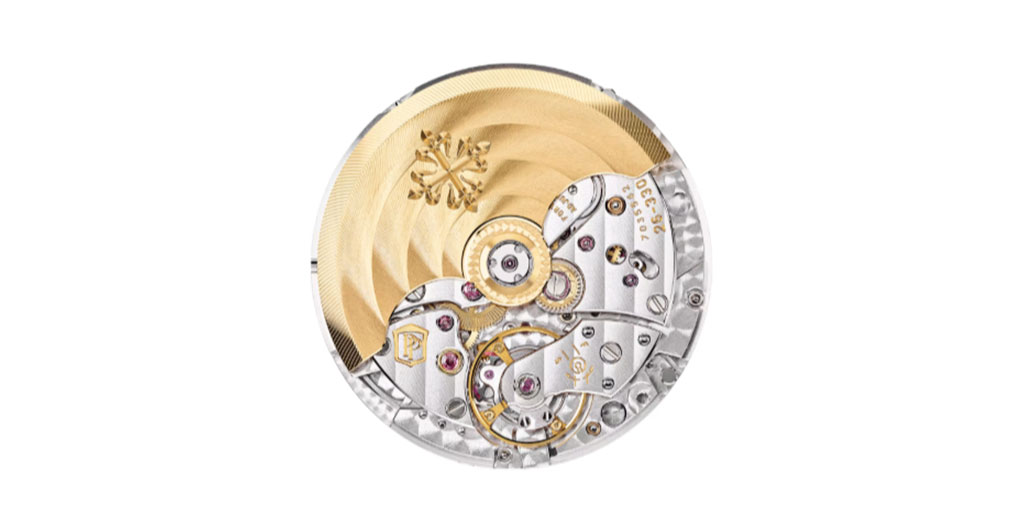
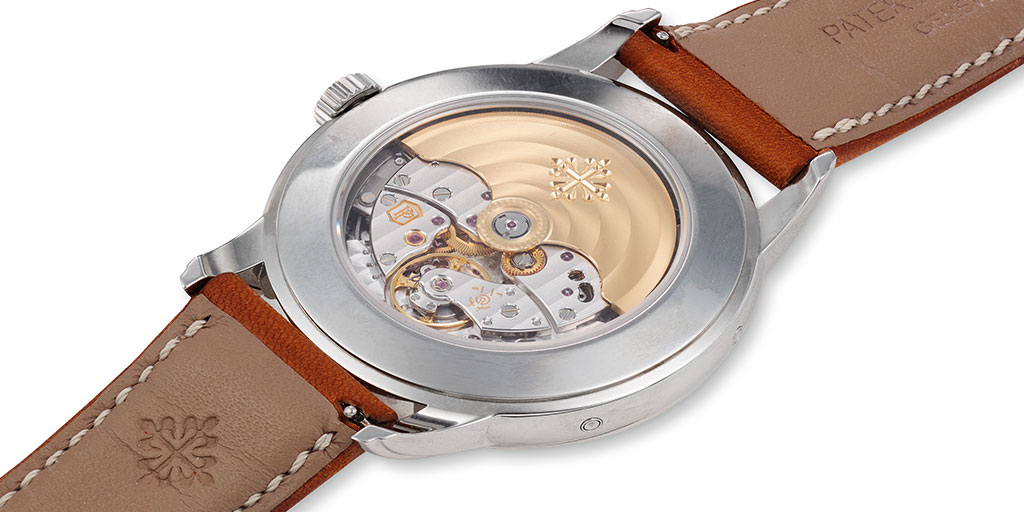
In addition to the development of a new assembly for the week number function, Patek Philippe watchmakers took the opportunity to redesign the entire base caliber as well. The caliber 26-330 S C J SE is vintage Patek Philippe in that although new, it is also familiar. For a start, it is inter-changeable with the company’s self-winding caliber 324 base movement, used in many current collection models but offers significant gains in performance.
For example, the Patek Philippe engineering team spent months working on a new profile for screw threads to address one of the oldest problems in the watch industry: screws working themselves loose. The result is an improvement of 20 percent in terms of performance. This may not be the most exciting improvement, but it is the essence of considered, quality watchmaking.
company’s engineers. Image credit: Patek Philippe
Another improvement has been achieved through refinement of the self-winding system. The rotor has been redesigned, and the central screw has been replaced by a locking nut that secures the oscillating mass in position without exposing the movement to the hazards of last-minute slippage of the screwdriver. Historically, tooth wear on the wheel train and a certain amount of backlash were accepted as part of the functioning of self-winding movements with central seconds. However, this caliber uses LIGA technology to create a patented anti-back-lash wheel that replaces the standard third wheel. Instead of the traditional toothed profile, each “tooth” on this new component is divided into three parts: the leading flank of the tooth, a strip-spring that looks like a tiny hook, and the back flank, which limits the play in case of shocks. This has enabled the inertia of the balance wheel to be increased to that of the hand-wound caliber 215, resulting in greater stability of performance.
Such attention to detail is what Patek Philippe is all about: what you can’t see matters. And yet, what really distinguishes the ref. 5212A is its’ dial. The numbers of the 53 weeks and the names of the seven days, plus the date means there is a lot going on, but the dial remains easy-to-read and beautifully balanced. Part of this harmony is due to the font used for the letters and numbers – which is inspired by the handwriting of one of the designers. It is this human quality, so reminiscent of Patek Philippe’s past that distinguishes this modern watch for Collectability.
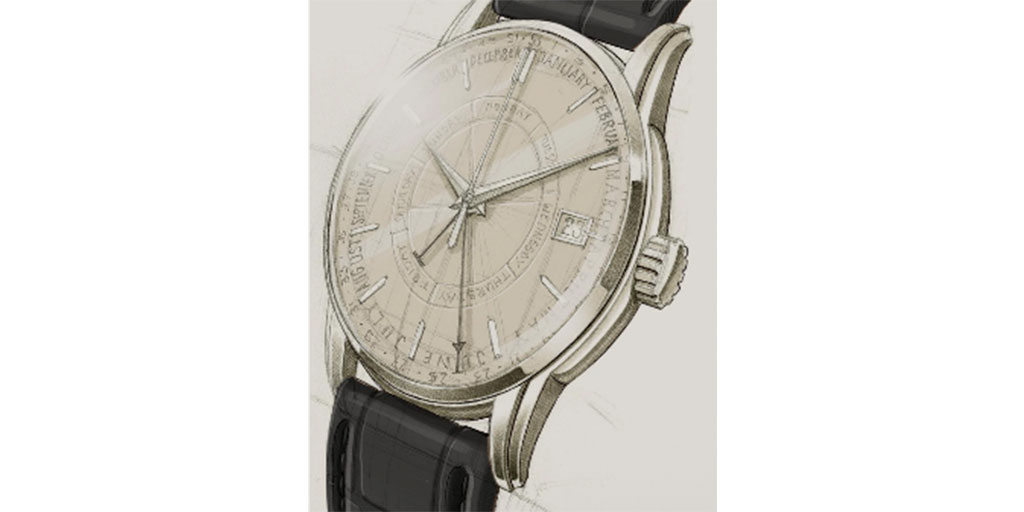
Interviewed at the time of the ref. 5212A launch, Thierry Stern said, “During the creation process, looking at the drawings of the new model, I loved the style that the hand-drawn letters and numerals gave to it. I asked the designer to draw each one individually, creating a manuscript font. Each letter and each numeral is different and unique. This specially created font gives the dial a vintage and poetic look, and I really like it. For me, this new complication is reminiscent of the not-so-distant past, when only printed weekly calendars were available.”
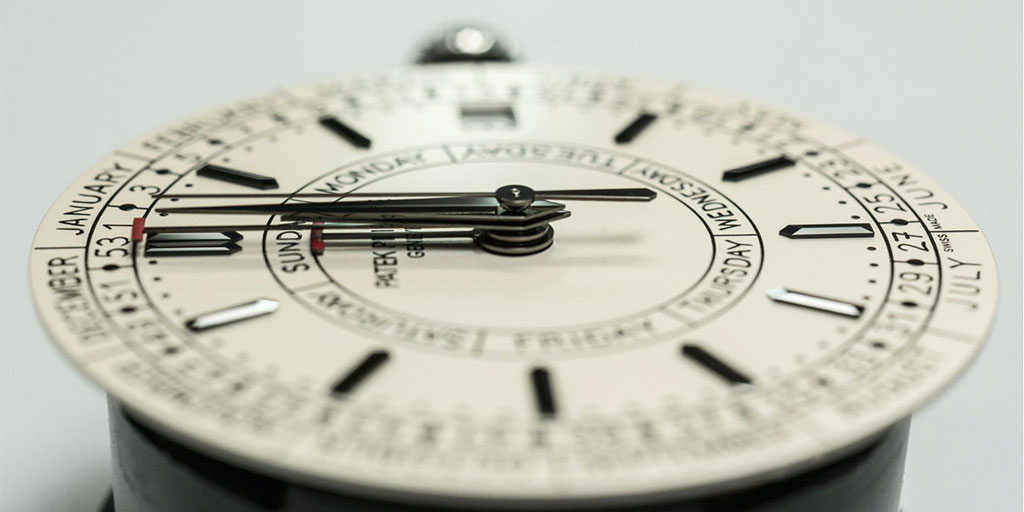
The highly legible indicators make full use of the dial. In addition to the date window, the dial has four concentric rings of information: month, week number, time and day. There are five hands: hours, minutes, seconds and two red-topped hands indicating the week number and the day of the week.
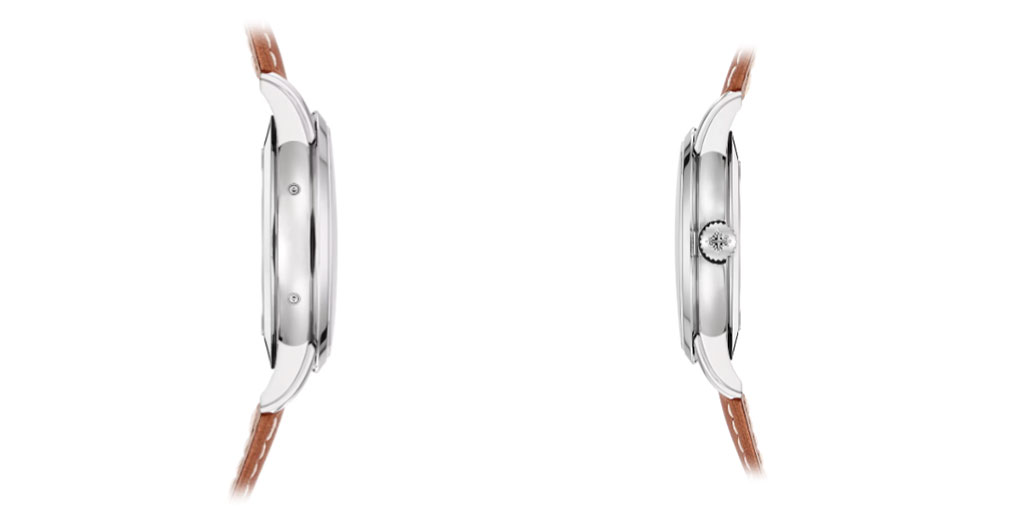
Correction of the day and number of the week is via pushers at eight and ten o’clock respectively (above left), while the date is adjusted via the crown (above right). Image credit: Patek Philippe
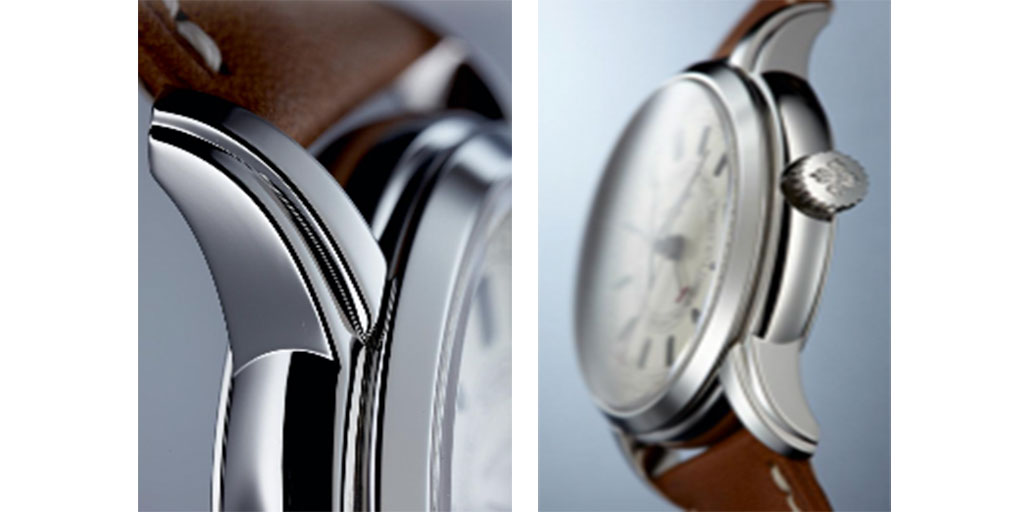
The fact that the case of the ref. 5212A is made of steel is also classic of Thierry Stern-era design. Steel is not a metal commonly used at Patek Philippe and immediately distinguishes the model, as well as being a nod to the tool watches of the 1940s and 50s. The double-stepped lugs and bezel are reminiscent of a watch from 1955, the ref. 2512 (as well as the more modern ref. 5320).
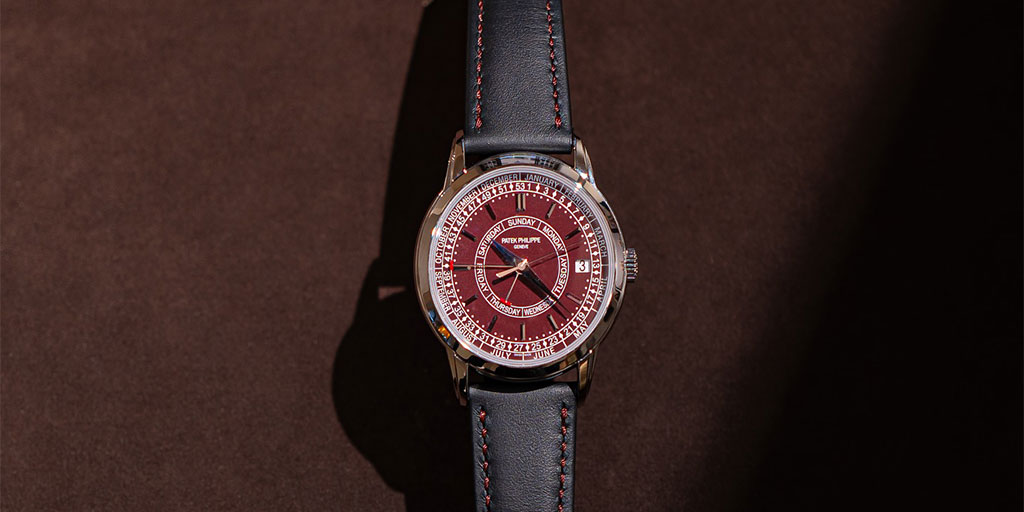
So far, the ref. 5212A has only been used once as a special, limited edition for a retailer anniversary (as well as being the second only retailer anniversary piece made in steel after the Nautilus Tiffany & Co.) Made in only 20 pieces with a burgundy dial, the ref. 5212A-010 celebrated Austria-based Juwelier Heldwein 50 years of retailing Patek Philippe. The sapphire case back says: “Patek Philippe & Juwelier Heldwein 1974-2024 50 years of collaboration”.
All the above combine to make a truly elegant and important complicated Patek Philippe watch which many collectors are predicting will age well, especially once it is discontinued.