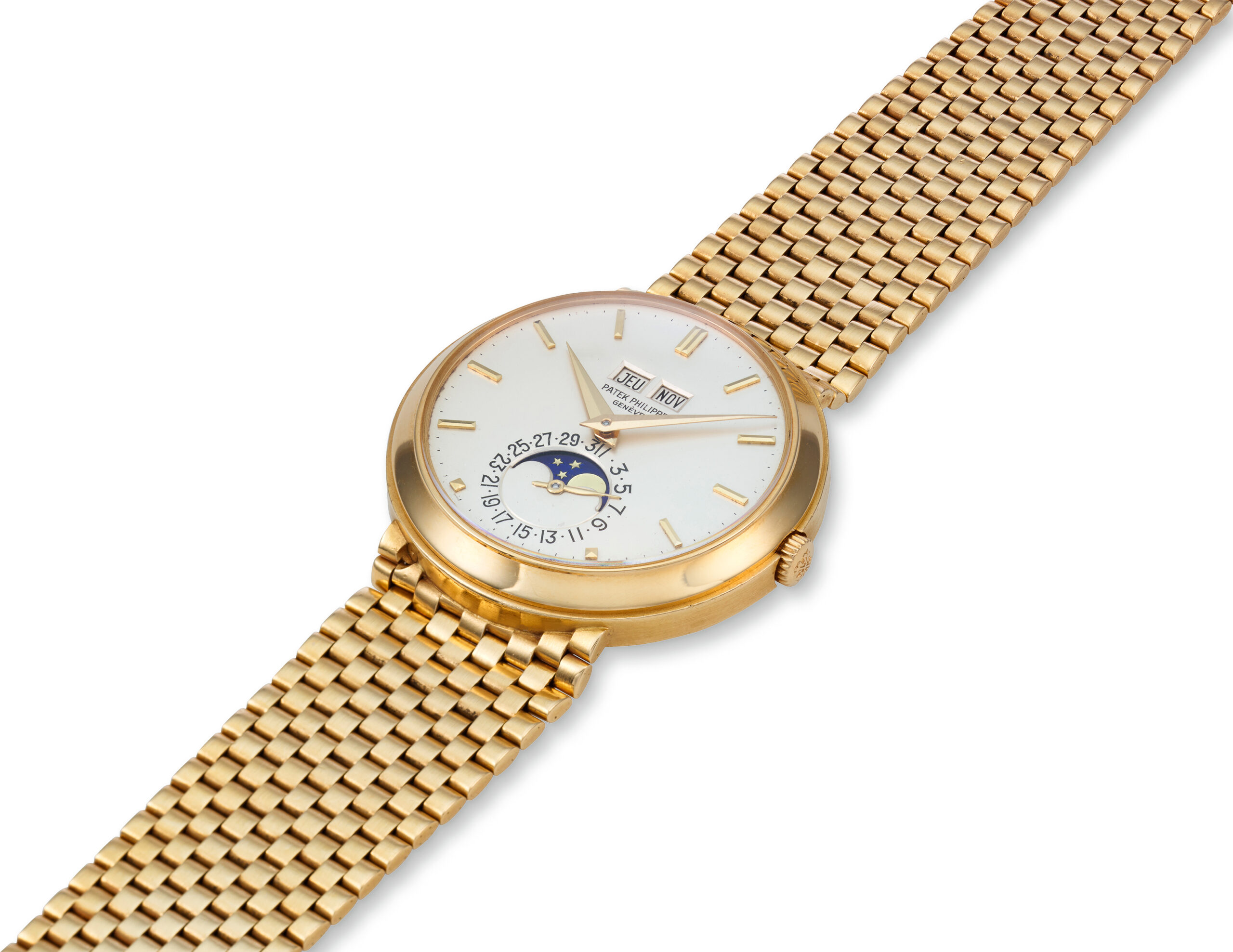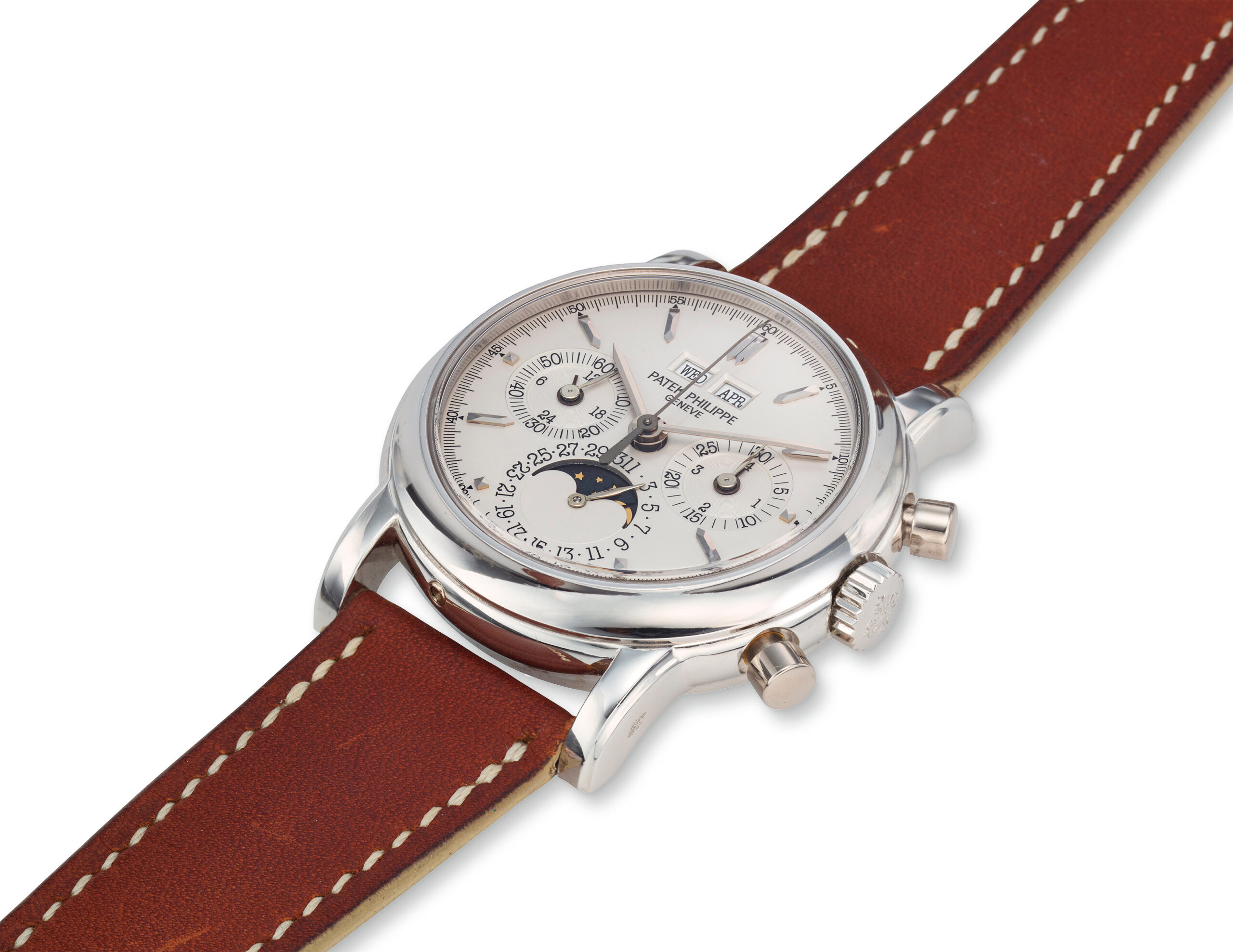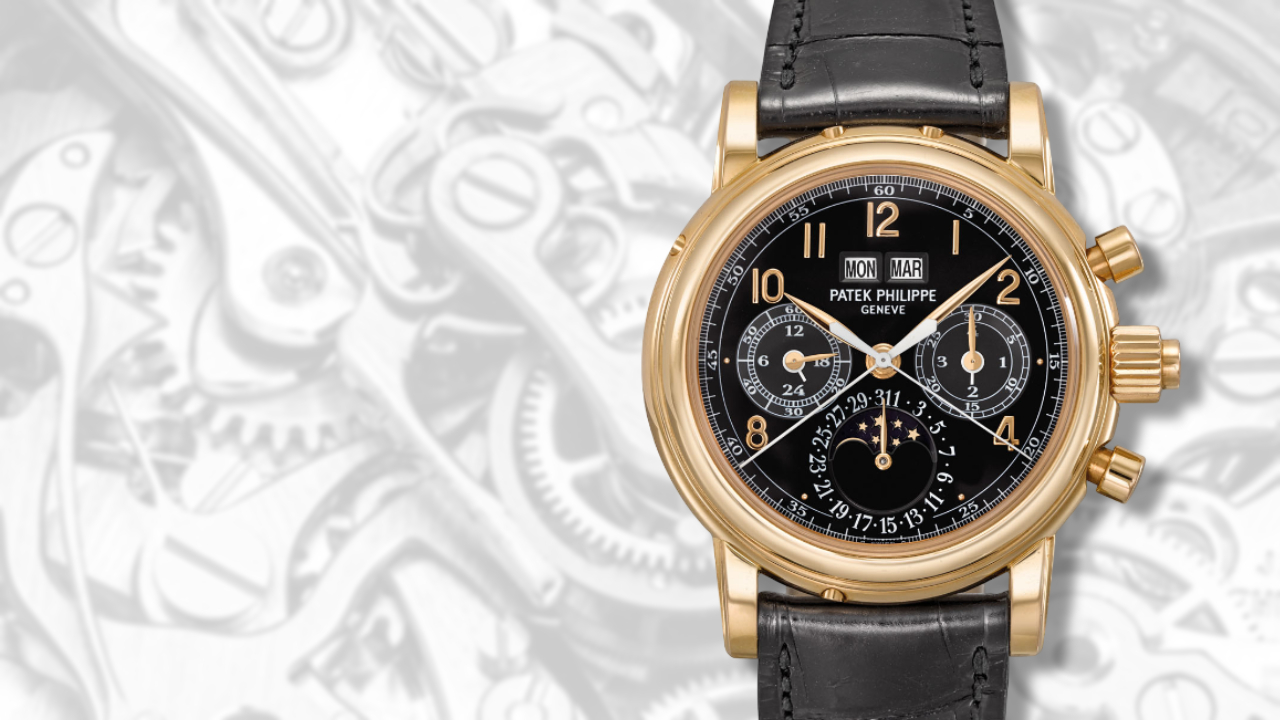
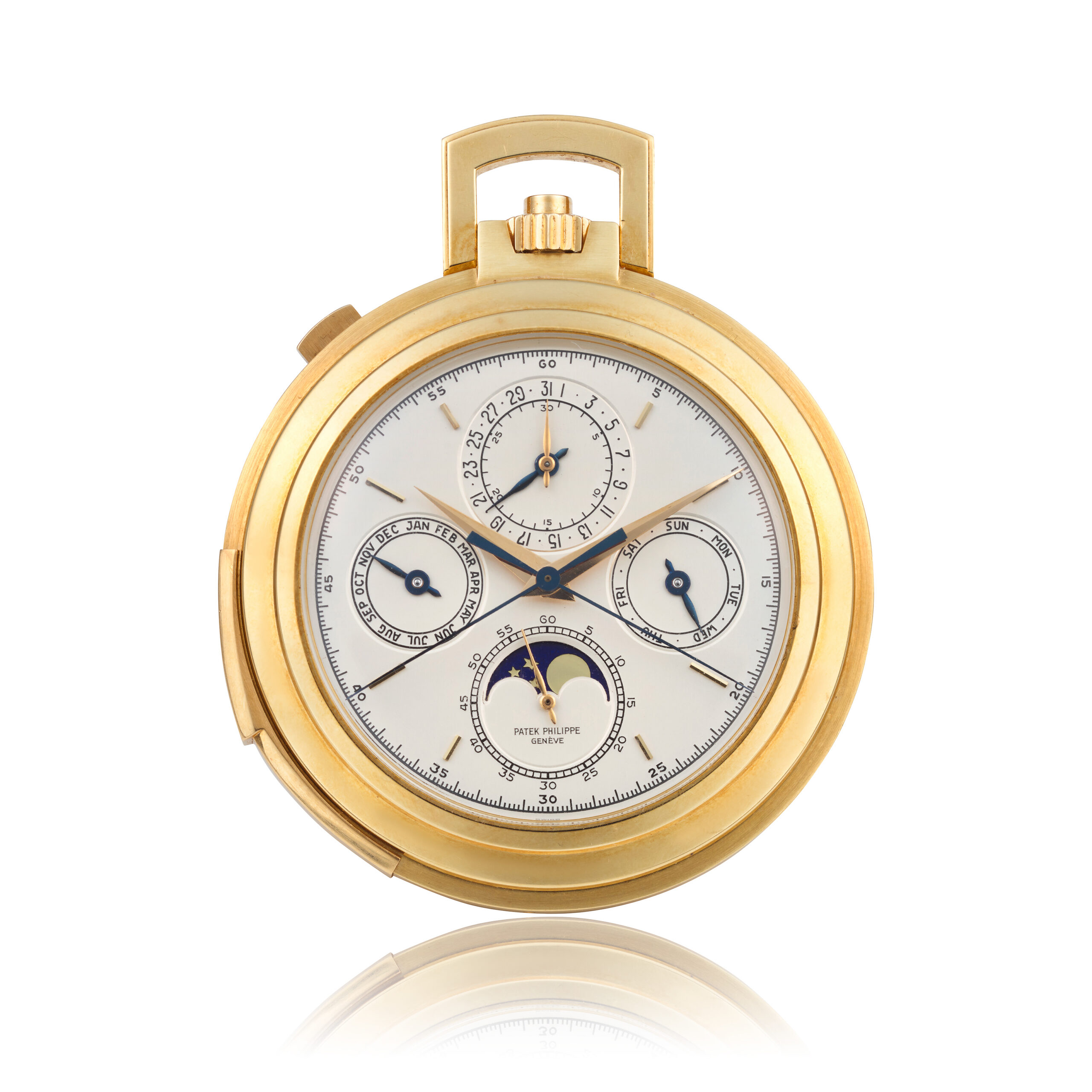
The movement of this watch was first made in 1911 and started as a minute repeater with a split-seconds chronograph. Many years later, Patek Philippe found the ebauche still sitting in their workshops and, between 1963 and 1966, Patek Philippe upgraded it by adding a perpetual calendar and a moon phase display. For a VIP client, they cased it in a so-called “Modern” stepped case in 1967. Here’s where it gets even more interesting — the case maker of this case was Gerlach (Master keymark 4) and not coincidentally this was the same case maker for the celebrated ref. 3449. The ref. 3449 was only made in three examples, all made in the early 1960s for VIP clients. As a variant of the ref. 3448, the ref. 3449 is easily distinguished by its stepped bezel – the same unusual design we see on this ref. 850. Since we know this ref. 850J was made for US market export (note the HOX above Helvetia on the inside case back), it is clear that this watch was sold to an important American collector at the time – George Poston? Very likely.
Two similar watches are shown in Huber and Banbery, Patek Philippe, Vol. 1 (p. 228). Their movement numbers date to 1930 and 1920, but both were later put into cases in 1967. It’s possible those watches also started without the perpetual calendar and moon phase, and were later upgraded for sale around the same time. One of the two even has a dial layout similar to this watch.
After spending more than 30 years in an important private collection, this unique watch remains a special example of Patek Philippe’s history and long-term commitment to craftsmanship. Now available exclusively from Collectability, this massive 56 mm grand complication can be a trophy in your collection as one of the rarest of the rare Patek Philippe watches ever made.