A current watch collecting trend is for shaped watches. But have you ever thought about why watchmakers decided to stop making round watches and experiment with shapes such as tonneau, cushion, rectangular, square and even asymmetrical shapes? In Part 1 of a series which will look at three defining periods of 20th century design, we will first look at a fascinating era of design experimentation roughly between the First and Second World Wars — the 1920s to the early 1940s. This was a time of modernization and design freedom, a time summed up by the expression: ‘Anything Goes.’
In the early 1920s, the wristwatch was still a new invention — barely a teenager, having emerged from the trenches of the First World War as a practical alternative to fumbling for a pocket watch when under fire. As we explored in our article on the History of the Officer Watch, its origins lay in converted pocket and pendant watches strapped to the wrist, and those early conversions had no considered aesthetic of their own. The wristwatch was functional, improvised, but still not defined as a wearable object for everyone. No one yet knew quite what it was supposed to look like. That uncertainty opened a door, and through it walked the one of the most creatively explosive design period of the twentieth century.
Inspired equally by Art Nouveau, Art Deco, Cubism, ancient Egyptian motifs, the straight lines of the Bauhaus, and the glamour of Modernism, this period of creativity permeated architecture, fashion, furniture, jewelry and watches. This design movement was built on a set of convictions that were radical for their time: that the machine age demanded new forms, that ornamentation should follow geometry, that bold angles and deliberate symmetry were as beautiful as the organic curves of what had come before.
The wristwatch was a perfect canvas. Small enough to be worn as jewelry, personal enough to express identity, and unlike the pocket watch, new enough to have no fixed rules. Watch designers in London, Paris and Geneva seized the moment. Between approximately 1920 and 1942, a remarkable profusion of shapes appeared: rectangular cases that recalled the facades of New York skyscrapers, tonneau-shaped cases (barrel-shaped, wide in the middle and tapered at the ends), cushion cases with their softened square corners, and, later, the clean geometry of the pure square. Each shape was a statement; collectively, they represent one of the most inventive periods in the history of personal timekeeping.
Patek Philippe was at the center of it. Already the most respected name in fine watchmaking, the company brought its standards of movement quality to bear on a new and thrilling range of case forms. What resulted was a generation of watches that still feel modern, and that are now among the most sought-after pieces in the vintage market.
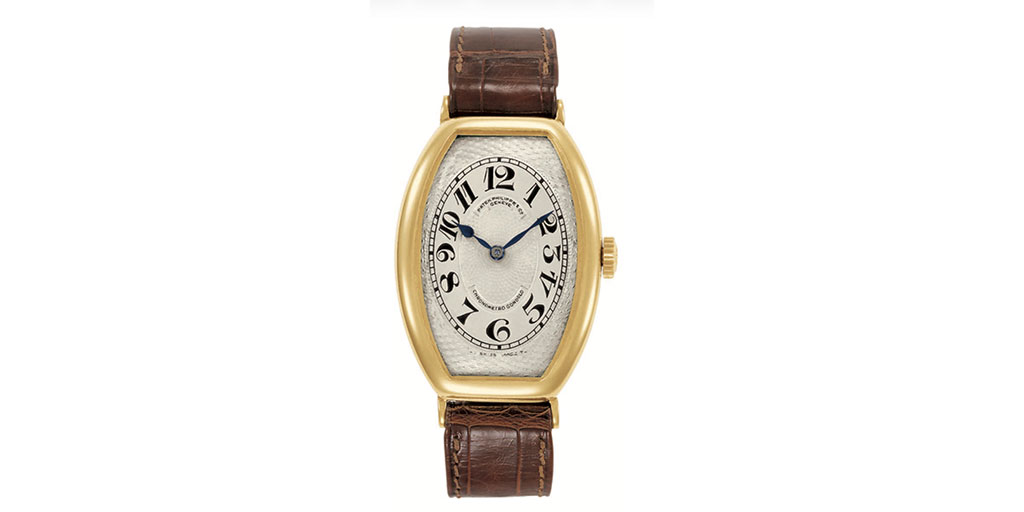
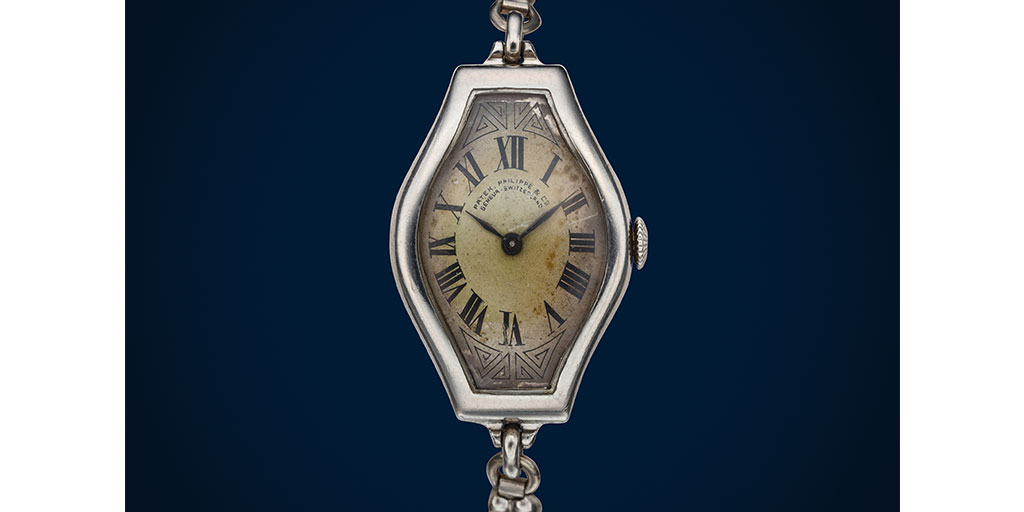
Let’s start with one of the earliest known shaped wristwatches made around 1913 -1920s: the opulent tonneau shape. Often referred to Gondolo Chronometrie because many of these unusual watches were exported to the then number one retailer in the world, Gondolo Labourian in Brazil. These oversized, curved wristwatches are a collector favorite but rarely come onto the market as so few were made. The tonneau case, whose name comes from the French word for ‘barrel’, offered a way to keep geometry at the heart of the design while avoiding the austerity of the pure rectangle. Wide at the center and narrowed symmetrically at the top and bottom, the tonneau fit the wrist naturally and gave watchmakers and dial designers a distinctive silhouette to work within.
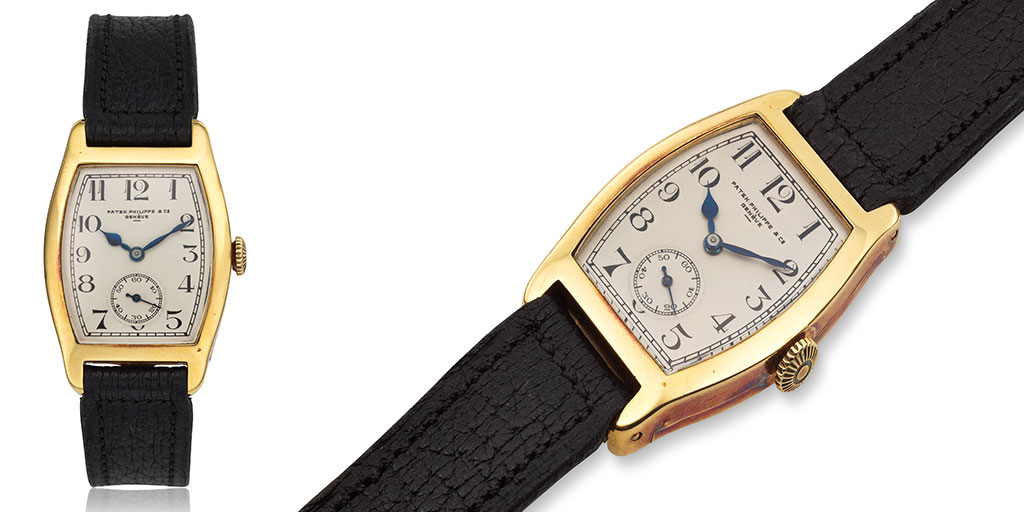
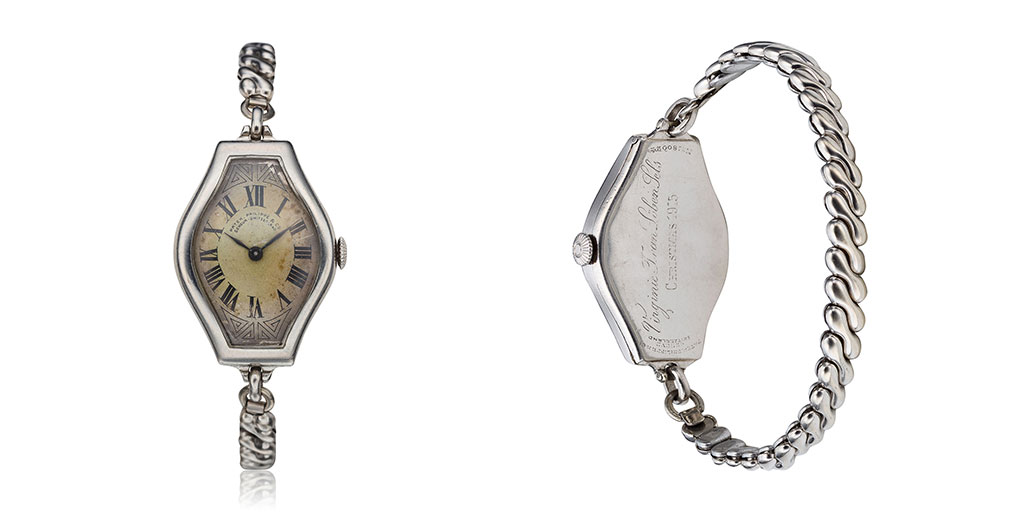
Patek Philippe produced tonneau-shaped wristwatches throughout the 1920s and 1930s, often in yellow gold with enamel dials. The shape proved popular with women (see above) as well as men — its proportions translated gracefully to smaller cases. Tonneau-shaped cases were also a natural complement to the diamond-set jeweled bracelets that were fashionable as watch straps in the 1920s.
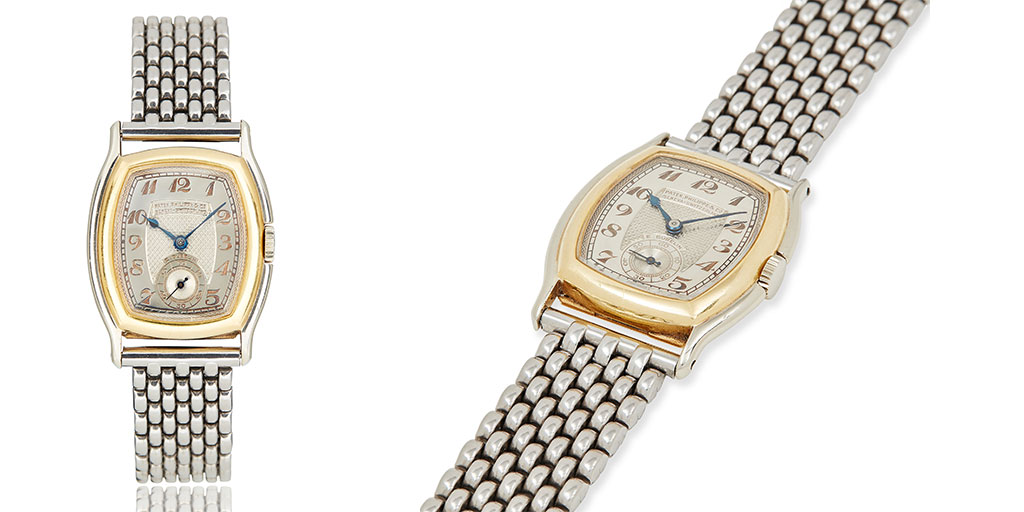
A subset of tonneau shaped watches is the cushion shaped watch, a square with gently curved sides, somewhat like a pillow compressed from four directions at once, that first appeared during the 1920s and keeps returning. Although the original versions are on the smaller size, these works of art exemplify the early development of the wristwatch before the ‘round’ watch dominated from the 1930s onwards with, for example, the ref. 96.
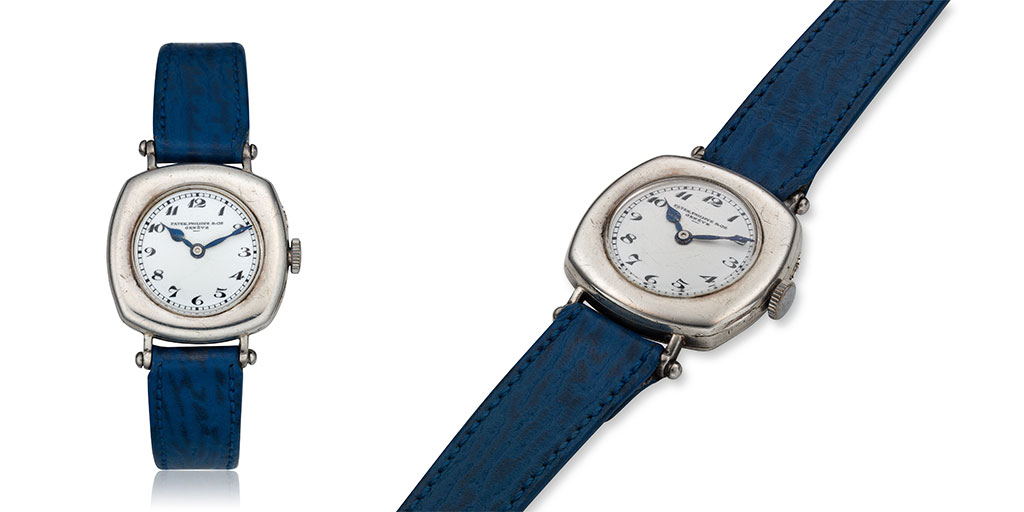
The cushion case had appeared on Patek Philippe pocket watches before the First World War, and when the wristwatch era arrived, it translated naturally. Several cushion-shaped references from the 1920s and 1930s survive, typically featuring the silvered or gilt enamel dials characteristic of the period, with black Breguet numerals or bold Arabic markers (as shown in the example above). Their slightly softened corners give them an approachability that the more geometric cases lack. And their proportions, wide rather than tall, sit beautifully against the wrist, making them surprisingly wearable for a modern collector despite their age.
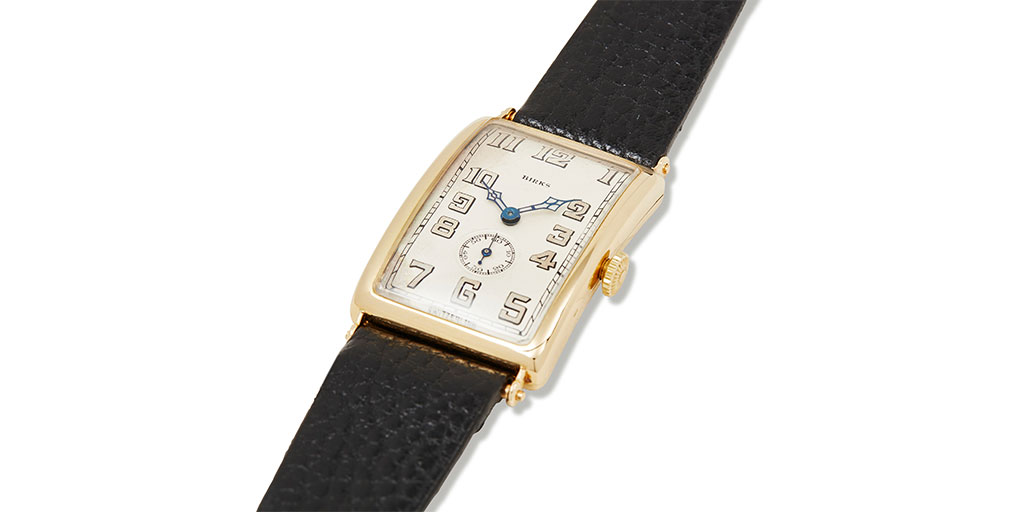
Of all the shaped cases of this era, the rectangle was perhaps the most influenced by the new form of architecture. Flat-fronted, straight-sided, with none of the roundness that might soften its lines, the rectangular wristwatch sat on the wrist like a tiny Chrysler Building. It was emphatically modern and deeply glamorous. Many of the early rectangular wristwatches were sold in Northern and South America where the appetite for modern was perhaps more acute (see the above model 10 made in 1926 for Birks, Montreal).
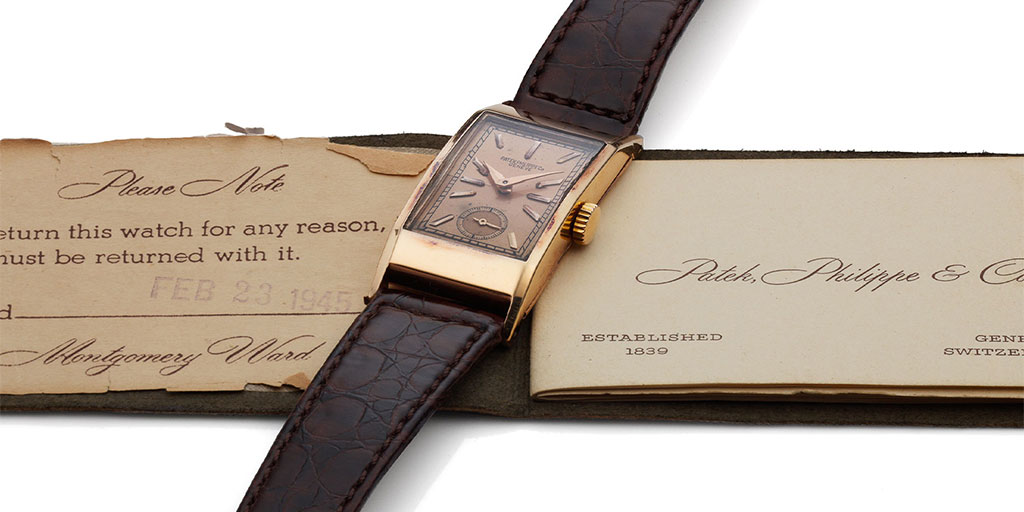
One of the most recognizable, mid-century looks in the Patek Philippe design catalog is the ref. 425, nicknamed the ‘Tegolino’ (due to its resemblance of a classic Italian cake), which was made from 1934 -1960. It’s large case size of 42.8 mm x 20.4 mm makes it a comfortable wear for modern wrists. The case of the ref. 425 was made by the celebrated Genevan case maker Markowski, and the dial by. Stern Frères. Each watch was fitted with the caliber 9-90, a Patek Philippe mechanical work of art.
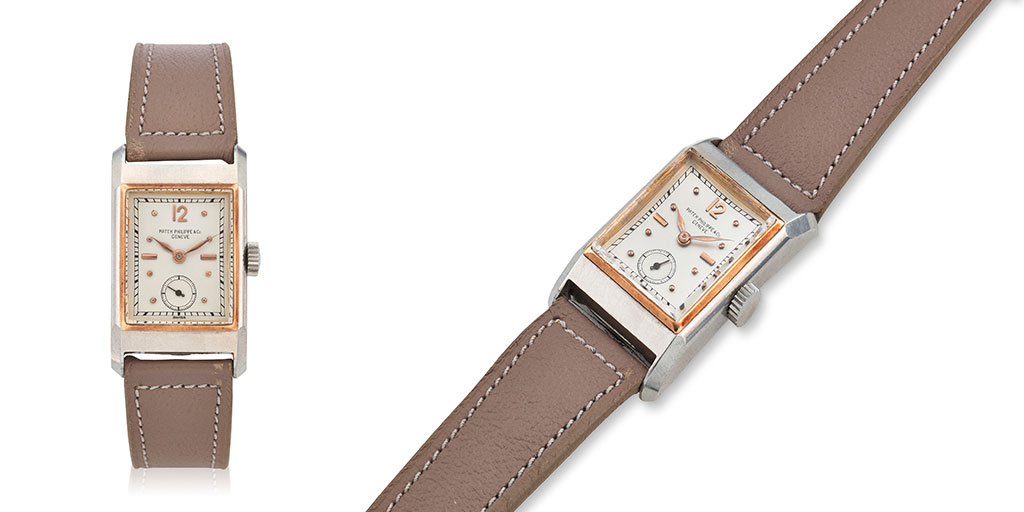
The ref. 425 inspired other rectangular pieces such as the rarer ref. 466 (see above) which was sold for only two years between 1937-1938. Nicknamed the ‘Tegola’ for its tile-like shape, the ref. 466 is a collector’s favorite. The movements were LeCoultre-based and the cases were made by the celebrated Geneva case maker Wenger — a pairing of respected craftsmen that was typical of how Patek Philippe assembled its most interesting pieces in this period.
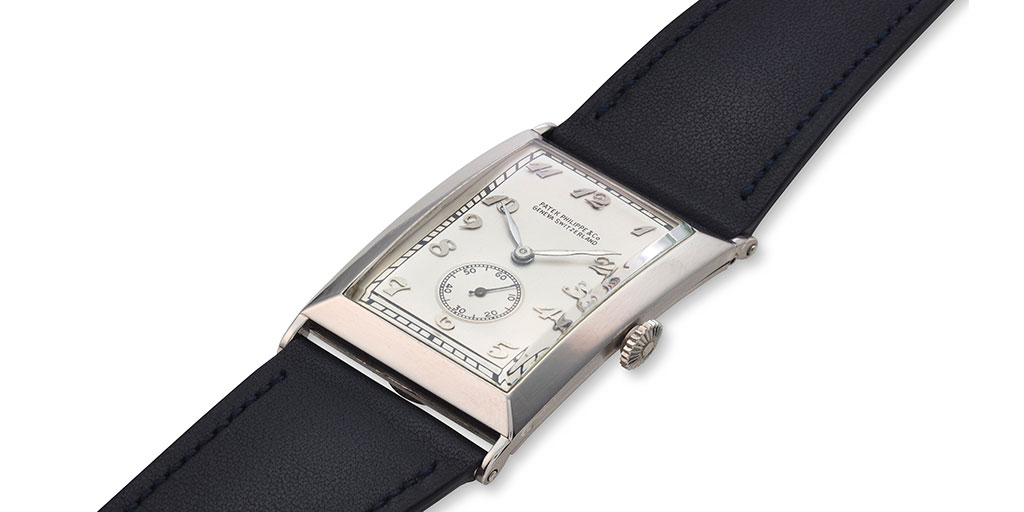
Following World War I, fine watches started to be made in platinum as this precious metal became more available. Cartier had started to use platinum more regularly in its jewelry to highlight diamonds, and the rare, white metal became a distinctive metal choice for high end luxury watches such as Patek Philippe.
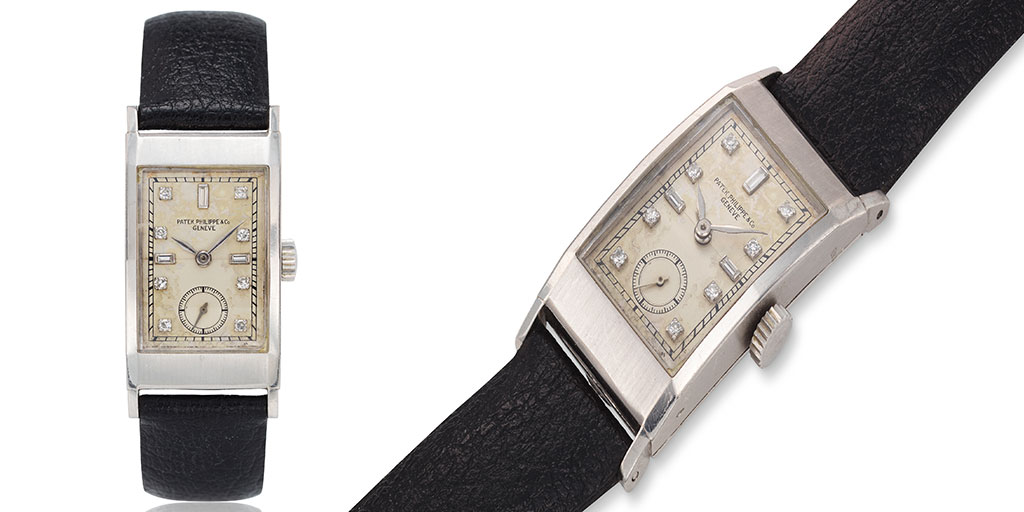
During the ‘Roaring Twenties’ we started to see men wear wristwatches as dress watches for the evening. It was not unusual for a man to wear a watch with a diamond dial. Today, these vintage pieces such as the ref. 425P shown above can be worn by a man or woman.
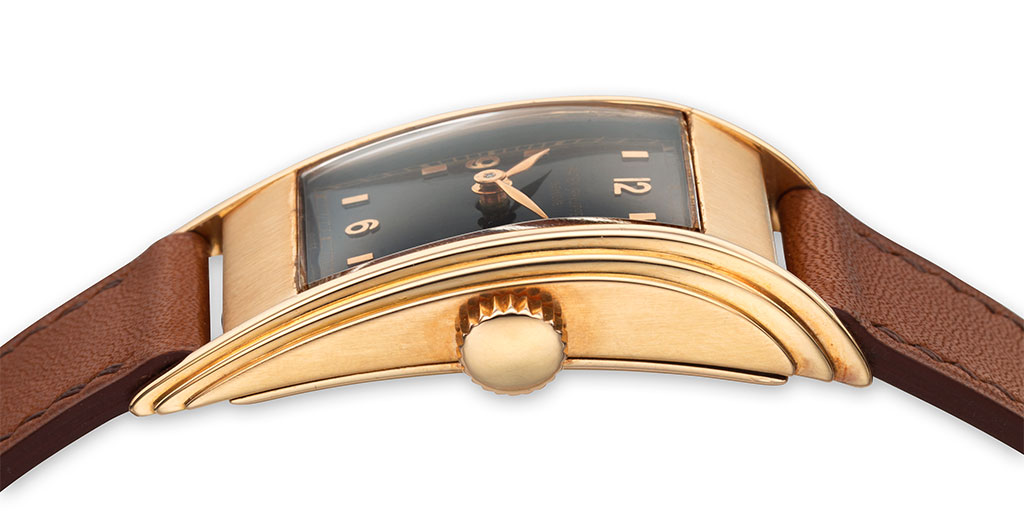
When cars became more common in the 1930s, ‘driver’s watches’ materialized in previously, never-before-seen horizontal shapes with angled crystal that enabled a quick glance at the wrist to tell the time (such as ref 139 and ref. 426). Taking its inspiration from the rectangular shape but pushing the boundary further with an asymmetrical finish is the ref. 524 (see above) that ergonomically enabled the driver to see the time on the wrist due to the raised case shape. The ref. 524 and its predecessor ref. 523 were made between 1932-1940. In the world of Patek Philippe watch collecting, driver’s watches are sought after for their rarity, beauty, elegance, and functionality. It’s worth noting that in 2006, Patek Philippe introduced the ladies ref. 4980 ‘Gemma’, directly inspired from the driver’s watches of the 1930s.
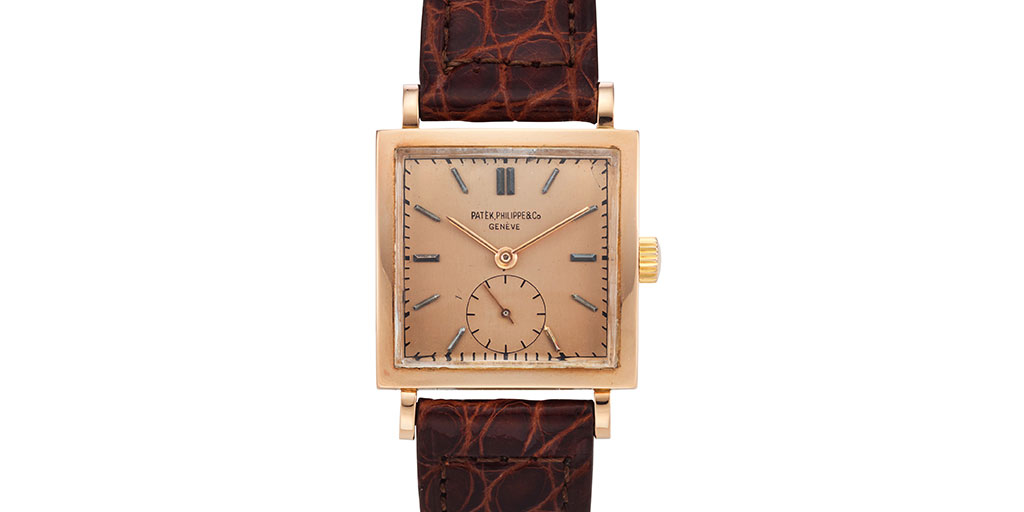
By the late 1930s and into the early 1940s, the square had emerged as the most reduced, most geometric of all the case shapes. Where the cushion softened the right angle and the rectangle extended it, the square presented it without apology. Patek Philippe made square-cased wristwatches from the late 1930s onward, typically in yellow or rose gold with matching dials that emphasized the compact, jewel-like quality of the format as can be seen in the example above.
There is a temptation, when looking at vintage watches, to treat earlier periods as mere preamble — interesting precursors to the references that collectors really want. For Patek Philippe, that means the focus often falls on the great wristwatch references of the 1940s and 1950s such as the ref. 2499 and the ref. 1518. But the shaped watches of the 1920s and 1930s deserve consideration on their own terms, and increasingly, collectors are recognizing these pieces for their intrinsic value and beauty.
Part of the reason is that these watches capture something that was never repeated in quite the same way. The early 19th century was a moment of genuine uncertainty about what the wristwatch should be — uncertainty that produced, through creative necessity, an explosion of shaped watches. Once the Calatrava arrived in 1932 and established the round wristwatch as the Patek Philippe ideal, that experimental spirit quietened. The shaped watches of the intervening decade represent a kind of beautiful parenthesis: a period when everything was still possible, when a watchmaker might look at the same drawing board that produced a pocket watch case and think, why not make it a rectangle? Why not a tonneau? Why not, for once, a perfect square?
Hold a ref. 10 from 1926 in your hand, or turn over a ref. 466 Tegola to examine the case back, and you will find the same meticulous construction that you expect from any Patek Philippe, regardless of era. The geometry has changed. The standard has not.
For collectors who follow Collectability’s advice: look for the unusual, don’t follow the pack, always prioritize condition. The shaped watches of the 1920s – 1940s period represent exactly the kind of under-appreciated category that rewards early attention. Some watches from this period remain well-priced relative to their age and rarity. However, with the current interest in shaped watches, not for much longer.
Collectors often talk not just about why they buy watches, but what they feel when wearing or viewing them. Shaped watches tend to evoke stronger emotional responses because their forms are less familiar and more visually distinctive. A round watch, even an exceptional one, can sometimes feel like a variation on a theme; a shaped watch almost demands attention, challenging the eye and sparking conversation. For many collectors, that emotional connection — the sense of owning something that feels personal, expressive, and memorable — is a powerful driver.
In part 2 of this three part series on the history of shaped watches, we will look at what many regard as the ‘Golden Age’ of watch design, the 1940s through the 1960s.